JSTOR Global Plants Home
  • Home
  • Browse
  • About
  • Access
  • Account
    • Saved Items
    • Profile
  • Log in

Global Plants

Skip to Main Content
  • JSTOR Global Plants Home
  • Global Plants

    • Browse
    • About
    • Access
    • Account
      • Saved Items
      • Profile
Log in
  • Browse
  • About
  • Access
  • Account
    • Saved Items
    • Profile
Advanced Search

Compilation
Ocimum johnstonii

4 Images see all

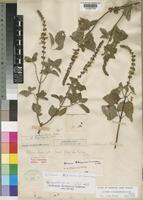
Type of Ocimum johnstonii Baker [family LAMIACEAE]
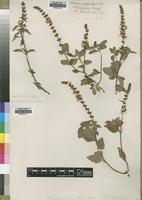
Type of Ocimum gratissimum L. subsp. iringense Ayob. ex A.J.Paton [family LABIATAE]
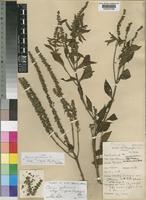
Type of Ocimum johnstonii Baker [family LABIATAE]
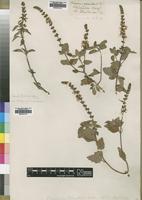
Type of Ocimum johnstonii Baker [family LAMIACEAE]
Previous
Next

Name

Identification
Ocimum johnstonii Baker [family LAMIACEAE ] (stored under name);
Related name
  • Ocimum suave
  • Ocimum dichotomum
  • Ocimum kilimandscharicum
  • Ocimum johnstonii
  • Ocimum gratissimum

Flora

Entry for Ocimum Johnstonii Baker [family LABIATAE]
Herbarium
Royal Botanic Gardens, Kew (K)
Collection
Flora of Tropical Africa
Resource Type
Reference Sources
Entry From
Flora of Tropical Africa, Vol 5, page 332, (1900) Author: (by J. G. Baker)
Names
Ocimum Johnstonii Baker [family LABIATAE]
Information
Perennial, with the habit of O. menthæfolium. Stems erect, densely hairy. Leaves petioled, ovate, membranous, deeply crenate, 1–1 1/2 in. long, thinly pubescent, especially beneath. Racemes long, lax; rhachis densely hairy; flowers many in a whorl; pedicels very short; bracts orbicular, cuspidate, deciduous. Calyx very hairy, 1/8 in. long; upper lip orbicular, as long as the campanulate tube; lower cusps small. Calyx twice as long as the corolla. Stamens much exserted; upper filaments with a tuft of hairs above the base.
Distribution
German East Africa Mozamb. Dist. Kilimanjaro, 6000 ft., Johnston!British East Africa Nile Land Lykipia, 6000–8000 ft., Thomson! Kapte Plateau, 5000–6000 ft., Thomson!

Related Materials

  • Terms and Conditions
  • Privacy Policy
  • Cookie Policy
  • Cookie Settings
  • Accessibility
  • Help
  • Contact Us
  • Facebook
  • Twitter
ITHAKA

JSTOR is part of ITHAKA, a not-for-profit organization helping the academic community use digital technologies to preserve the scholarly record and to advance research and teaching in sustainable ways.

©2000-2026 ITHAKA. All Rights Reserved. JSTOR®, the JSTOR logo, JPASS®, Aluka®, and ITHAKA® are registered trademarks of ITHAKA.

╳