JSTOR Global Plants Home
  • Home
  • Browse
  • About
  • Access
  • Account
    • Saved Items
    • Profile
  • Log in

Global Plants

Skip to Main Content
  • JSTOR Global Plants Home
  • Global Plants

    • Browse
    • About
    • Access
    • Account
      • Saved Items
      • Profile
Log in
  • Browse
  • About
  • Access
  • Account
    • Saved Items
    • Profile
Advanced Search

Compilation
Ocimum hadiense

7 Images see all

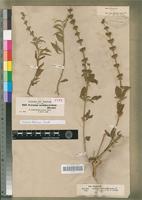
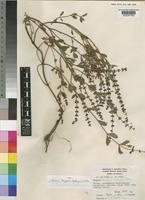
Type of Ocimum menthaefolium Hochst. [family LAMIACEAE]
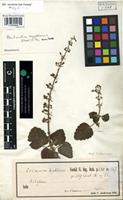
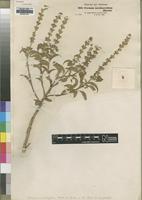
Type of Ocimum kenyense Ayob. ex A.J.Paton [family LABIATAE]
Holotype of Ocimum hadiense Forssk. [family LABIATAE]
Type of Ocimum menthaefolium Hochst. [family LAMIACEAE]
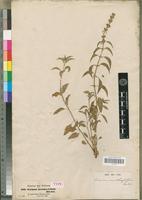
Type of Ocimum menthiifolium Hochst. ex Benth. [family LAMIACEAE]
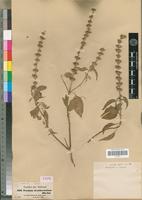
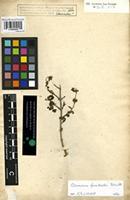
Syntype of Ocimum forskolei Forssk. [family LABIATAE]
Previous
Next

Name

Identification
Ocimum menthiifolium Hochst. ex Benth. [family LAMIACEAE ] Ocimum hadiense Forssk. [family LAMIACEAE ] (stored under name);
Related name
  • Plectranthus hadiensis
  • Ocymum grandiflorum
  • Ocymum filamentosum
  • Ocimum kenyense
  • Becium unrecorded
  • Plectranthus forskalaei
  • Ocimum menthiifolium
  • Ocimum zatarhendi
  • Ocimum forskolei
  • Ocimum hadiense
  • Ocimum menthaefolium
  • Plectranthus aegyptiacus

Flora

Entry for PLECTRANTHUS hadiensis (Forssk.) Schweinf. ex Sprenger [family LABIATAE]
Herbarium
Royal Botanic Gardens, Kew (K)
Collection
Flora Somalia
Resource Type
Reference Sources
Entry From
Flora Somalia, (2000) Author: by O. Ryding (Aeollanthus, Basilicum, Clinopodium, Endostemon, Fuerstia, Hoslundia, Lavandula, Leucas, Micromeria, Nepeta, Ocimum, Orthosiphon, Otostegia, Plectranthus, Renschia, Salvia, Scutellaria, Stachys, Teucrium, Tinnea) and M. Thulin (Clerodendrum, Premna, Rotheca, Vitex) [updated by M. Thulin 2008]
Names
PLECTRANTHUS hadiensis (Forssk.) Schweinf. ex Sprenger [family LABIATAE], (1894);
Ocimum hadiense Forssk. [family LABIATAE], (1775);. [type as above]
PLECTRANTHUS forskaolii Vahl [family LABIATAE], (1790), as ” forskaolaei ”, nom. superfl. [type as above]
PLECTRANTHUS paucicrenatus Franch. [family LABIATAE], (1882);. type: northern Somalia, without precise locality, Révoil s.n. (P holo.).
PLECTRANTHUS hararensis Gürke [family LABIATAE], (1905).
Information
Shrublet or subshrub, 0.1–1.2 m tall. Leaves petiolate, rather fleshy; blade broadly ovate or suborbicular, up to 30–60 × 30–55 mm, lanate or densely pubescent with long greyish hairs, more densely so below, apex rounded, base broadly cuneate or truncate, very shortly attenuate near the petiole, margin deeply crenate. Inflorescences rather lax; bracts usually early deciduous; cymes 3–9-flowered, subsessile; pedicels spreading, 3–5 mm long in the fruiting stage, with short eglandular hairs and few to many often purplish sessile to shortly stalked glands. Fruiting calyx strongly upcurved, 3.5–5 mm long, often with purplish sessile glands; upper lobe broadly ovate, concave, not decurrent (or superficially decurrent as the calyx-wall is double-folded at the margins); lower lobes c. 1.5 mm long, slightly longer than the lateral lobes. Corolla c. 6–9 mm long, blue; tube only slightly curved; upper lip with the suborbicular midlobes folded backwards and the lateral lobes folded forwards; lower lip 3–4 mm long. Stamens free, shorter than or up to as long as the lower lip of the corolla. Nutlets c. 0.8–1 × 0.9–1.1 mm, glossy, brown, producing mucilage when wet.
Range
N1–3 widespread in tropical Africa and on the Arabian peninsula.
Altitude range
1100–2300 m.
Distribution
SOMALIA Newbould 822B; Bally 11275; Bally & Melville 15718.
Notes
The name P. zatarhendi E.A. Bruce has long been used for this species, but the type of this name represents P. aegyptiacus. Material from N1 and N2 consists of relatively large subshrubs or shrublets, while plants from N3 are small and more or less herbaceous.

Related Materials

  • Terms and Conditions
  • Privacy Policy
  • Cookie Policy
  • Cookie Settings
  • Accessibility
  • Help
  • Contact Us
  • Facebook
  • Twitter
ITHAKA

JSTOR is part of ITHAKA, a not-for-profit organization helping the academic community use digital technologies to preserve the scholarly record and to advance research and teaching in sustainable ways.

©2000-2026 ITHAKA. All Rights Reserved. JSTOR®, the JSTOR logo, JPASS®, Aluka®, and ITHAKA® are registered trademarks of ITHAKA.

╳