JSTOR Global Plants Home
  • Home
  • Browse
  • About
  • Access
  • Account
    • Saved Items
    • Profile
  • Log in

Global Plants

Skip to Main Content
  • JSTOR Global Plants Home
  • Global Plants

    • Browse
    • About
    • Access
    • Account
      • Saved Items
      • Profile
Log in
  • Browse
  • About
  • Access
  • Account
    • Saved Items
    • Profile
Advanced Search

Compilation
Ochna ituriensis

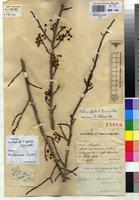
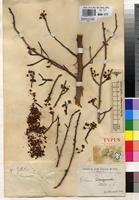
2 Images see all

Type of Ochna ituriensis De Wild. [family OCHNACEAE]
Previous
Next

Name

Identification
Ochna ituriensis De Wild. [family OCHNACEAE ] Verified by Not on sheet, Ochna afzelii R.Br. ex Oliv. [family OCHNACEAE ] (stored under name); Verified by Robson N., 1961
Related name
  • Ochna ituriensis
  • Ochna afzelii

Flora

Entry for Ochna afzelii R.Br. ex Oliv. [family OCHNACEAE]
Herbarium
Royal Botanic Gardens, Kew (K)
Collection
Flora Zambesiaca
Resource Type
Reference Sources
Entry From
FZ, Vol 2, Part 1, page 224, (1963) Author: N. K. B. Robson
Names
Ochna afzelii R.Br. ex Oliv. [family OCHNACEAE], F.T.A. 1: 319 (1868). — Gilg in Engl., Bot. Jahrb. 33: 239 (1903). — Keay, F.W.T.A., ed. 2, 1: 223 (1954). — White, F.F.N.R.: 251, fig. 431 (1962). Type from Sierra Leone.
Ochnella afzelii R.Br. ex Oliv. Van Tiegh. [family OCHNACEAE], in Ann. Sci. Nat., Ser. 8, Bot. 16: 345 (1902). Type as for Ochna afzelii.
Ochna rhodesica R.E.Fr. [family OCHNACEAE], Wiss. Ergebn. Schwed. Rhod.-Kongo-Exped. 1: 149, t. 12 figs. 1–2 (1914). Type: N. Rhodesia, Abercorn, S. end of Lake Tanganyika, Fries 1248 (UPS).
Ochna ituriensis De Wild. [family OCHNACEAE], in Rev. Zool. Afr. 7, Suppl. Bot.: B35 (1919). Type from the Congo (Ituri).
Information
Shrub or tree (1–5) 3–12 m. high, with bark pale grey-brown, flaking (? always); branches densely lenticellate, purplish- or dark brown (more rarely whitish), usually not exfoliating. Leaves petiolate; lamina 4–13 × 1·5–4·5 cm., oblanceolate to oblong-oblanceolate or rarely elliptic, rounded to shortly and ± obtusely acuminate at the apex, with margin densely curved-serrulate to crenulate, cuneate to attenuate at the base, herbaceous to chartaceous, with numerous widely spreading lateral nerves and densely reticulate tertiary venation prominent above (with main and subsidiary laterals almost equally prominent) but almost smooth below; petiole 2·5–5 (8) mm. long, slender, grooved above. Flowers 2–6 (8), in a condensed raceme with rhachis up to 4 mm. long, or pseudumbellate; pedicels 0·8–3·1 (3·5) cm. long in fruit, articulated at or within 1 mm. of the base. Sepals 4–6 (8) mm. long in flower, elliptic-oblong, rounded, becoming deep pink to scarlet, 6–14 (18) mm. long, often ± convex below, and ± spreading in fruit. Petals white to lemon-yellow, 7–13 x 3–7 mm., obovate, scarcely unguiculate. Stamens with anthers bright orange, 1–1·5 (2) mm. long, about -i as long as the filaments, straight, dehiscing by longitudinal slits. Carpels (5) 6–8, with styles completely united; stigma globose or slightly 5–8-lobed. Drupelets 6–8 × 4–6 mm., subglobose to subreniform, inserted below their centre; embryo somewhat curved.
Habitat
In dry evergreen forest, fringing forest or plateau woodland
Range
From Guinea to the Sudan and Uganda and southwards to W. Tanganyika, the Congo, N. Rhodesia and Angola.
Altitude range
900–1650 m.
1650
900
Notes
The above range of O. afzelii includes those of O. mechowiana O. Hoffm. and O. congoensis (Van Tiegh.) Gilg, taxa which cannot be specifically separated from O. afzelii sens. str. Three subspecies can be recognised, however, one northern and eastern (subsp. afzelii), one south-central (subsp. congoensis), and one southwestern with outliers in north-eastern N. Rhodesia and south-western Tanganyika (subsp. mechowiana).

Related Materials

  • Terms and Conditions
  • Privacy Policy
  • Cookie Policy
  • Cookie Settings
  • Accessibility
  • Help
  • Contact Us
  • Facebook
  • Twitter
ITHAKA

JSTOR is part of ITHAKA, a not-for-profit organization helping the academic community use digital technologies to preserve the scholarly record and to advance research and teaching in sustainable ways.

©2000-2026 ITHAKA. All Rights Reserved. JSTOR®, the JSTOR logo, JPASS®, Aluka®, and ITHAKA® are registered trademarks of ITHAKA.

╳