JSTOR Global Plants Home
  • Home
  • Browse
  • About
  • Access
  • Account
    • Saved Items
    • Profile
  • Log in

Global Plants

Skip to Main Content
  • JSTOR Global Plants Home
  • Global Plants

    • Browse
    • About
    • Access
    • Account
      • Saved Items
      • Profile
Log in
  • Browse
  • About
  • Access
  • Account
    • Saved Items
    • Profile
Advanced Search

Compilation
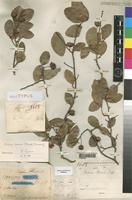
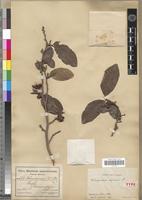
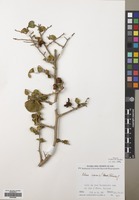
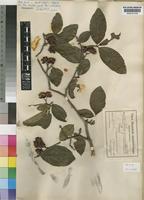
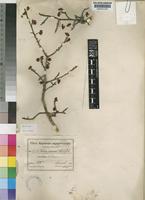
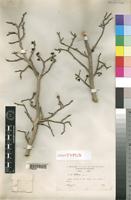
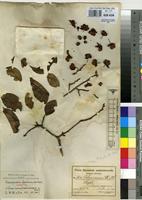
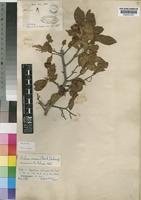
Ochna inermis

17 Images see all

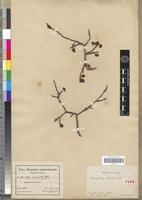
Ochna rivae Engl. [family OCHNACEAE]
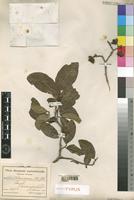
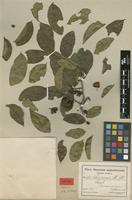
Syntype of Heteroporidium abyssinicum Tiegh. [family OCHNACEAE]
Filed as Ochna inermis (Forssk.) Schweinf. ex Penz. [family OCHNACEAE]
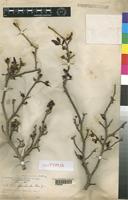
Syntype of Heteroporidium abyssinicum Tiegh. [family OCHNACEAE]
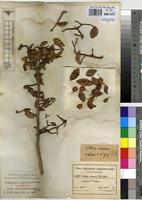
Ochna leucophloeos Hochst. ex A.Rich. [family OCHNACEAE]
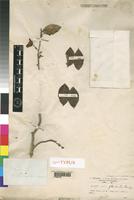
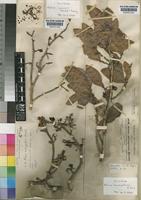
Isosyntype of Heteroporidium abyssinicum Tiegh. [family OCHNACEAE]
Type of Diporidium schimperi Tiegh. [family OCHNACEAE]
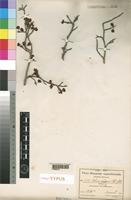
Heteroporidium abyssinicum Tiegh. [family OCHNACEAE]
Ochna leucophloeos Hochst. ex A.Rich. [family OCHNACEAE]
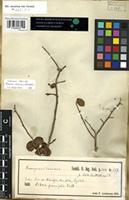
Holotype of Euonymus inermis Forssk. [family CELASTRACEAE]
Isosyntype of Heteroporidium abyssinicum Tiegh. [family OCHNACEAE]
Syntype of Heteroporidium abyssinicum Tiegh. [family OCHNACEAE]
Ochna leucophloeos Hochst. ex A.Rich. [family OCHNACEAE]
Heteroporidium abyssinicum Tiegh. [family OCHNACEAE]
Syntype of Heteroporidium abyssinicum Tiegh. [family OCHNACEAE]
Previous
Next

Name

Identification
Heteroporidium abyssinicum Tiegh. [family OCHNACEAE ] Verified by Not on sheet, Ochna inermis (Forssk.) Schweinf. ex Penz. [family OCHNACEAE ] (stored under name); Verified by Not on sheet,
Related name
  • Ochna rivae
  • Heteroporidium abyssinicum
  • Ochna leucophloeos
  • Euonymus inermis
  • Diporidium schimperi
  • Ochna parvifolia
  • Ochna inermis
  • Ochna micropetala

Flora

Entry for OCHNA inermis (Forssk.) Schweinf. [family OCHNACEAE]
Herbarium
Royal Botanic Gardens, Kew (K)
Collection
Flora Somalia
Resource Type
Reference Sources
Entry From
Flora Somalia, Vol 1, (1993) Author: by P. Cuccuini [updated by M. Thulin 2008]
Names
OCHNA inermis (Forssk.) Schweinf. [family OCHNACEAE], (1892).
OCHNA rivae Engl [family OCHNACEAE], (1897);
OCHNA inermis (Engl.) Chiov. var. rivae [family OCHNACEAE], Fl. Somala: 121 (1929). [type as above]
Information
Shrub or small tree up to 4.5(–6) m high; bark smooth whitish; branches brownish or reddish black at first, then glaucous or whitish, with numerous lenticels. Leaves petiolate; blade 1.4–6.5(–7.2) x 0.9–3.1 cm, elliptic or obovate to suborbicular or oblong, rounded to obtuse and apiculate at the apex, cuneate or truncate at base, ± leathery, margins usually curved-serrulate, with the main nerve and lateral nerves equally prominent and the densely reticulate tertiary venation almost equally prominent on both sides; petiole 1–2.5 mm. Flowers 1(–2), terminating short axillary shoots; pedicels 1.3–3 cm in fruit, articulated 1–3 mm from base. Sepals about 5 mm at flowering, elliptic, enlarging to (10–)11–16 mm in fruit. Petals yellow, (7.5–)9–11 x (4.5–)5–6 mm, obovate or subcircular. Stamens with anthers 1 mm, 1/2–1/3 as long as the filaments, dehiscing by apical pores. Carpels 5; styles united almost to apex. Drupelets 9–10 x 5.5–7 mm.
Range
N1, 2; C1, 2; S1–3
Altitude range
30–1700 m.
Distribution
SOMALIA Moggi & Bavazzano 1754; Gillett & Hemming 24159; Thulin & Warfa 4464.
Distribution (external)
Djibouti
Eritrea
Ethiopia
N Kenya
Uganda
Tanzania
S Zimbabwe
E Botswana
South Africa (Transvaal)
SW Mozambique
Yemen
Notes
Alolgi, biegha (Som.-N); duchi-gerlaf, guduud-maddoni, laf dujit, lebi wandiid, luf, sareedo, ul-guduud (Som.-S); bie, guduud (Som.). This species is considered good forage for camels and goats. The wood is used to make walking sticks, clubs, etc. Gillett & al. 24934, a poor specimen from coastal dunes in S3, has been identified as O. ovata F. Hoffm., a species occurring in the uplands of Kenya and Uganda. Probably it is only a form of O. inermis with fairly large leaves.

Related Materials

  • Terms and Conditions
  • Privacy Policy
  • Cookie Policy
  • Cookie Settings
  • Accessibility
  • Help
  • Contact Us
  • Facebook
  • Twitter
ITHAKA

JSTOR is part of ITHAKA, a not-for-profit organization helping the academic community use digital technologies to preserve the scholarly record and to advance research and teaching in sustainable ways.

©2000-2026 ITHAKA. All Rights Reserved. JSTOR®, the JSTOR logo, JPASS®, Aluka®, and ITHAKA® are registered trademarks of ITHAKA.

╳