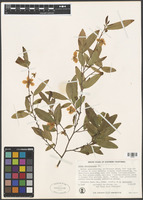
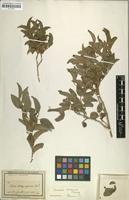
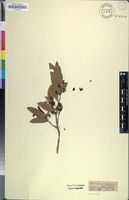
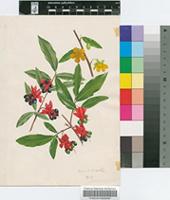
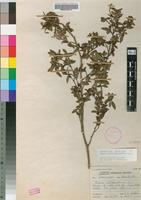
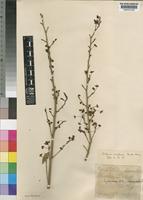
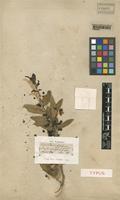
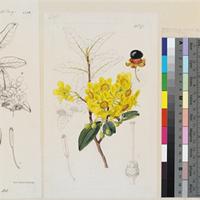
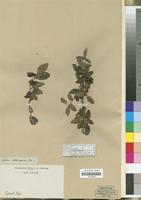
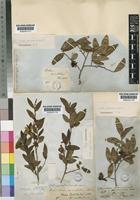
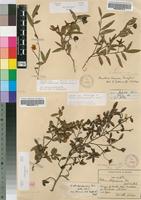
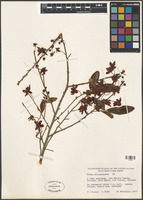
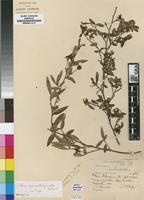
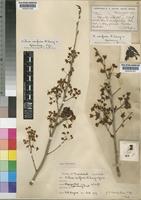
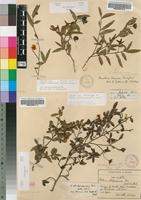
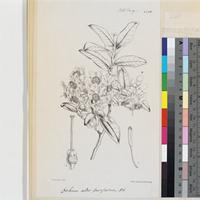
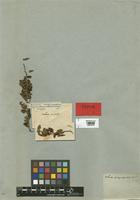
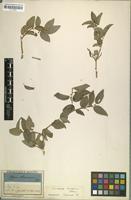
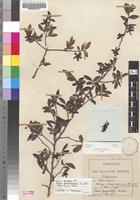
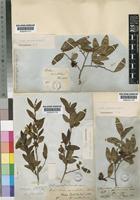
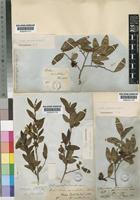
leaves elliptical, oblong or ovate, obtuse, coriaceous, sharply serrulate; pedicels solitary or racemulose, on depauperated, naked branchlets, shorter than the leaves; sepals elliptical, obtuse, enlarged and deep red in fruit; anthers longer than the filaments, opening by short, terminal pores. A shrub, 2–10 feet high. Twigs with greyish bark, often rough with minute pustules. Petioles 1/2–1 1/2 line long. Leaves 1/2 inch to 1 1/2–2 1/2 inches long, 4–6 lines wide, rigid, glossy, but with slender, closely set, raised veinlets, either rounded at each end, or tapering to a more or less acute point. Pedicels 1/2– 3/4 inch long, from the ends of minute, denuded branchlets, 1/4–1 inch long, solitary; or in β. 4–6 or more in a short, imperfect racemule; bracts scale-like, caducous. Calyx enlarging after the petals fall, spreading. Drupes 1–2 or more, dark, as large as peas, widely separated on the hemispherical torus. Style splitting in fruit.—Var. β. appears to be merely a luxuriant form, with larger leaves and more abundant flowers; through Hochstetter's O. serrulata it is connected with the ordinary state. Its characters probably depend on local influences.