JSTOR Global Plants Home
  • Home
  • Browse
  • About
  • Access
  • Account
    • Saved Items
    • Profile
  • Log in

Global Plants

Skip to Main Content
  • JSTOR Global Plants Home
  • Global Plants

    • Browse
    • About
    • Access
    • Account
      • Saved Items
      • Profile
Log in
  • Browse
  • About
  • Access
  • Account
    • Saved Items
    • Profile
Advanced Search

Compilation
Ochna apetala

2 Images see all

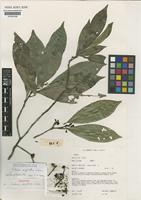
Holotype of Ochna apetala Verdc. [family OCHNACEAE]
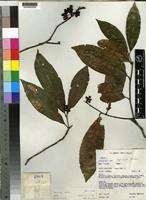
Isotype of Ochna apetala Verd. [family OCHNACEAE]
Previous
Next

Name

Identification
Isotype of Ochna apetala Verd. [family OCHNACEAE ] (stored under name); Verified by Luke WRQ, 1991
Related name
  • Ochna apetala

Flora

Entry for Ochna apetala Verdc. [family OCHNACEAE]
Herbarium
Royal Botanic Gardens, Kew (K)
Collection
Flora of Tropical East Africa
Resource Type
Reference Sources
Entry From
Flora of Tropical East Africa, page 1, (2005) Author: B. Verdcourt, B.Sc., Ph.D.
Names
Ochna apetala Verdc. [family OCHNACEAE], sp. nov. in sect. Ochna ponenda nulla affinitate arcte obvia sed combinatione ut videtur petalorum nullorum cum inflorescentiis parvis 10–25-floris, antheris 3.5 mm longis, costa folii flavo-brunnea distinguenda. Type: Kenya, Kwale District, W Gongoni Forest, Luke 2419 (K!, holo., EA, MO, US, iso.)
Information
Shrub 1.5–3 m or tree to 8 m; stems green and flattened in life, purplish-grey and ridged on drying, rather sparsely lenticellate. Leaves fairly thin to subcoriaceous, oblanceolate to elliptic, 6.5–14(–17) cm long, 1.7–4(–5) cm wide, acuminate to an acute apex, cuneate at the base, rather distantly to rather closely serrulate; midrib yellow-brown in life and drying yellowish beneath; lateral veins ± 25, together with many fainter intermediaries and reticulate tertiary venation ± prominent on both surfaces; apical leaf pair on short lateral shoots often ± sub-opposite; petiole 5–7 mm long; stipules narrowly triangular, 3.5 mm long, deciduous. Flowers 10–25 in small condensed, axillary or pseudoterminal inflorescences 2 cm long which are sometimes closely aggregated; bracts chestnut, oblong, 3 mm long, closely striate; pedicels 0–12 mm long, jointed 1–2 mm from the base; buds at first globose, later oblong. Sepals 4–5, oblong, 7.5–10 mm long, 2–3 mm wide, obtuse, becoming red in fruit, 9–10 mm long, 4 mm wide. Petals absent, not found even in bud. Stamens ± 13; anthers 3.5 mm long dehiscing by apical pores; filaments ± 1 mm long. Carpels 4–5; style 5-branched at apex. Drupelets 3–5, black, subglobose, compressed, 7–9 mm long, 5–6 mm wide, 4 mm thick.
Range
DISTR. K 7; T 3, 8 not known elsewhere
Altitude range
5–200 (240–400 in T 8) m
Distribution
KENYA Kwale District Gongoni Forest Reserve, NE side, 2 June 1990, Robertson & Luke 6348! & Buda Mafisini Forest Reserve, 23 Feb. 1989, Luke & Robertson 1674!;KENYA Kilifi District SW slope of Kaya Jibana, 14 Dec. 1990, Luke & Robertson 2639!TANZANIA Tanga District Pande, 19 Aug. 1982, Hawthorne 1456!;TANZANIA Lindi District Chitoa Forest Reserve, 18 June 1995, Clarke 68!
Notes
Luke mentions on his 2419 (Kwale District, W Gongoni Forest, 9 June 1990) that there are no petals, not even in the buds. A bud I dissected certainly had none, though a minute insect larva had eaten several anthers and pollen. I do not think this can account for the missing petals. Confirmation is needed from other localities that this is a constant feature of this species.

Related Materials

  • Terms and Conditions
  • Privacy Policy
  • Cookie Policy
  • Cookie Settings
  • Accessibility
  • Help
  • Contact Us
  • Facebook
  • Twitter
ITHAKA

JSTOR is part of ITHAKA, a not-for-profit organization helping the academic community use digital technologies to preserve the scholarly record and to advance research and teaching in sustainable ways.

©2000-2026 ITHAKA. All Rights Reserved. JSTOR®, the JSTOR logo, JPASS®, Aluka®, and ITHAKA® are registered trademarks of ITHAKA.

╳