JSTOR Global Plants Home
  • Home
  • Browse
  • About
  • Access
  • Account
    • Saved Items
    • Profile
  • Log in

Global Plants

Skip to Main Content
  • JSTOR Global Plants Home
  • Global Plants

    • Browse
    • About
    • Access
    • Account
      • Saved Items
      • Profile
Log in
  • Browse
  • About
  • Access
  • Account
    • Saved Items
    • Profile
Advanced Search

Compilation
Opuntia ficus-indica

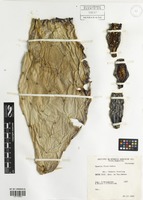
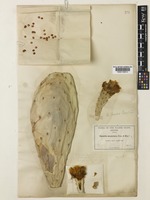
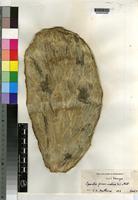
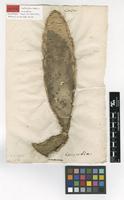
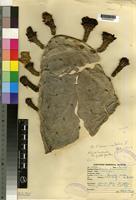
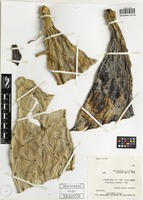
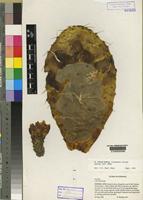
7 Images see all

Opuntia ficus-indica (L.) Mill. [family CACTACEAE]
Isotype of Opuntia laevis J.M.Coult. [family CACTACEAE]
[family ]
Neotype of Cactus ficus-indica L. [family CACTACEAE]
[family ]
Opuntia ficus-indica (L.) Mill. [family CACTACEAE]
Opuntia ficus-indica (Linnaeus) Miller Ryding [family CACTACEAE]
Previous
Next

Name

Identification
Opuntia ficus-indica (L.) Mill. [family CACTACEAE ] (stored under name); null
Related name
  • Opuntia ficus-indica
  • `
Common name
  • Indian-fig pricklypear, Flora of North America Vol. 4
  • tuna cactus, Flora of North America Vol. 4
  • mission pricklypear, Flora of North America Vol. 4

Flora

Entry for Opuntia ficus-indica [family CACTACEAE]
Herbarium
South African National Biodiversity Institute, Compton Herbarium, Cape Town (SAM)
Collection
Flora of Southern Africa
Resource Type
Reference Sources
Entry From
Flora of South Africa, (2003) Author: Dr J.P. Roux
Names
Opuntia ficus-indica [family CACTACEAE]
Common names
Cactus ficus-indicus L., Sp. PI. 1: 468 (1753). Type as above. O. maxima Mill., Gard. Diet. ed. 8, No. 5 (1768); Britton & Rose, The Cactaceae 1: 180 (1919); Phill. in Fmg. S. Afr. 15: 119 t.2 (1940). Type: a cultivated plant of unknown origin. O. megacantha Salm-Dyck, Hort. Dyck. 363 (1834); Phill. in Fmg. S. Afr. 15: 119 (1940); Henderson & Anderson, Mem. Bot. Surv. S. Afr. 37: 225, f.lll (1966). Type: cultivated; probably from Mexico.
Information
Shrubs or trees up to 5 m tall, forming sturdy trunks with age. Joints flattened, nar­rowly elliptic to ovate, varying in size, 30-60 cm long and 6-12 cm broad, attenuate below, often acute above, fairly thick, glaucous-green; areoles small to large, and then raised and woolly, with 3-6 radiating, unequally long, greyish white spines up to 3 (-10) cm long, straight or occasionally slightly curved, or spineless (in older plants and some cultivars). Leaves, if developed, minute, subulate, early deciduous. Flowers about 7 cm long; hypan-thium broadly cylindrical, contracted below, with numerous raised areoles spirally arranged, densely woolly and filled with glochidia, occa­sionally also bearing small spines and minute leaves; petaloid segments yellow or orange. Fruit ellipsoid, c. 7 cm long, reddish, succulent, edible; seeds about 5 mm long.
Habitat
Recorded as a pest in parts of the eastern Cape, being especially plentiful around Uitenhage; also abundant along the Mediterranean and the Red Sea. Thunberg, in his Flora Capensis ed. Schultes on pp. XV and XVIII (1823), enumerates it (as Cactus Ficus) in his list of introduced plants he found there during his travels in the Cape, 1772-1775, recording it as an escape, sometimes used for hedges.
Use
10. Opuntia ficus-indica (L.) Mill., Gard. Diet. ed. 8, No. 2 (1768); Britton & Rose, The Cactaceae 1: 177 (1919); Burtt Davy, Fl. Transv. 1: 236 (1926); Phill. in Fmg. S. Afr. 15: 119, t.3 (1940); Hunt in F.T.E.A. Cactaceae: 2 (1968); Lyman Benson in Fl. Texas 2: 250 (1969). Type: Based on a plant in the Leiden Botanic Garden, of unknown origin.
Range
Benson believes the species to be a native of Mexico. It was introduced to southern Europe, Africa and India very long ago and is used for hedges, fodder and edible fruit. It is the most common and widespread species in South Africa.

Related Materials

  • Terms and Conditions
  • Privacy Policy
  • Cookie Policy
  • Cookie Settings
  • Accessibility
  • Help
  • Contact Us
  • Facebook
  • Twitter
ITHAKA

JSTOR is part of ITHAKA, a not-for-profit organization helping the academic community use digital technologies to preserve the scholarly record and to advance research and teaching in sustainable ways.

©2000-2026 ITHAKA. All Rights Reserved. JSTOR®, the JSTOR logo, JPASS®, Aluka®, and ITHAKA® are registered trademarks of ITHAKA.

╳