JSTOR Global Plants Home
  • Home
  • Browse
  • About
  • Access
  • Account
    • Saved Items
    • Profile
  • Log in

Global Plants

Skip to Main Content
  • JSTOR Global Plants Home
  • Global Plants

    • Browse
    • About
    • Access
    • Account
      • Saved Items
      • Profile
Log in
  • Browse
  • About
  • Access
  • Account
    • Saved Items
    • Profile
Advanced Search

Compilation
Ophrypetalum odoratum

16 Images see all

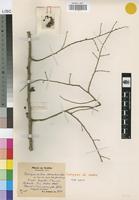
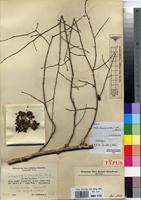
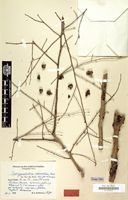
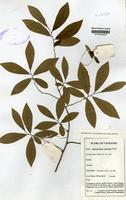
Isotype of Ophrypetalum odoratum Diels [family ANNONACEAE]
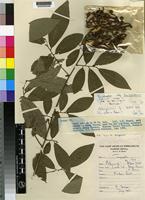
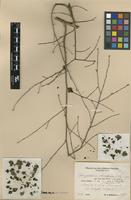
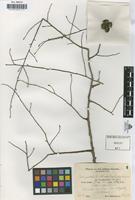
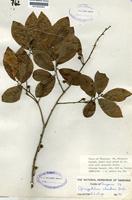
Holotype of Ophrypetalum odoratum Diels ssp. longipedicellatum Verdc. [family ANNONACEAE]
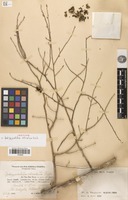
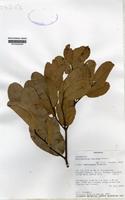
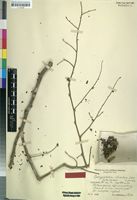
Isotype of Ophrypetalum odoratum Diels [family ANNONACEAE]
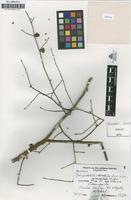
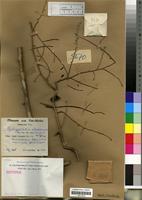
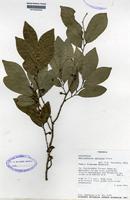
Type of Ophrypetalum odoratum Diels [family ANNONACEAE]
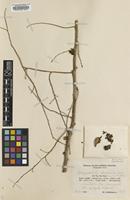
Isotype of Ophrypetalum odoratum Diels [family ANNONACEAE]
Type of Ophrypetalum odoratum Diels [family ANNONACEAE]
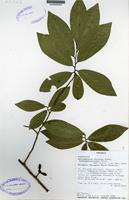
Isotype of Ophrypetalum odoratum Diels [family ANNONACEAE]
Longipedicellatum verdc [family ]
Type of Ophrypetalum odoratum Diels [family ANNONACEAE]
[family ]
Isotype of Ophrypetalum odoratum Diels [family ANNONACEAE]
[family ]
[family ]
Isotype of Ophrypetalum odoratum Diels [family ANNONACEAE]
[family ]
Previous
Next

Name

Identification
Ophrypetalum odoratum Diels [family ANNONACEAE ] (stored under name); Verified by Not on sheet.,
Related name
  • `
  • Ophrypetalum odoratum

Flora

Entry for OPHRYPETALUM odoratum Diels [family ANNONACEAE]
Herbarium
Royal Botanic Gardens, Kew (K)
Collection
Flora of Tropical East Africa
Resource Type
Reference Sources
Entry From
Flora of Tropical East Africa, page 1, (1971) Author: B. Verdcourt
Names
OPHRYPETALUM odoratum Diels [family ANNONACEAE], in N.B.G.B. 13: 270, fig. 9/I (1936); T.T.C.L.: 43 (1949); R. E. Fries in E. & P. Pf., ed. 2, 17a (2): 76 (1959); Verdc. in K.B. 14: 345 (1960); K.T.S.: 37 (1961). Type: Tanganyika, 40 km. W. of Lindi, Lake Lutamba, Schlieben 5670 (B, holo., BM, iso. !)
Information
Shrub or small tree 2.4–6(–9 fide Semsei 770) m. tall, with grey somewhat fissured bark; branchlets brownish, ridged, lenticellate. Leaf-blades elliptic, obovate, narrowly elliptic-obovate or obovate-lanceolate, 2–12 cm. long, 1.2–5.5 cm. broad, rounded, subacute or very obscurely and obtusely acuminate at the apex, rounded or more rarely cuneate at the base, thin, green above, paler and often rather glaucous beneath; venation delicately reticulate, prominent on both surfaces; petioles ± 5 mm. long. Flowers on branches up to 2.5 cm. in diameter; pedicels 0.3–2.2 cm. long, velvety brown hairy, sheathed at the base by the bracteoles up to 2 mm. long and wide; in the very young stage, before the flowers have developed at all, the buds, consisting of overlapping bracteoles, are strongly reminiscent of a grass spikelet and the leaf-buds are also similar. Sepals broadly triangular-reniform or ovate, 6–9 mm. long and wide, concave, glabrous and often verrucose when dry inside. Petals pale yellow or brownish; outer 3 with lamina semicircular, ± 3.5–5.5 mm. long, 0.8–1 cm. wide, claw 3.5–5.5 mm. long, 3.5 mm. wide, sericeous outside, glabrous inside or only minutely puberulous at the apex; inner 3 with lamina transversely oblong-subreniform, 4 mm. long, 8.5 mm. wide, claw 4–6 mm. long, 2.5–3 mm. wide, ciliate or faintly puberulous outside, glabrous inside (save for the brush of brown bristles); in all petals the lamina is irregularly crenulate. Stamens 0.6–0.8 mm. long. Fruiting pedicels up to ?2.5 cm. long; monocarps 8–15, fusiform, 5–6.8 cm. long, 1.8–2.2 cm. wide, irregularly longitudinally 3–ribbed (or sometimes with additional incomplete ribs), 5-seeded, not at all constricted between the seeds, at first ferruginous tomentose with short hairs, later only patchily so; stipe almost obsolete. Seeds brown, irregularly oblong-ellipsoid, ± 2.5 cm. long, 1.4 cm. wide, 8 mm. thick, the testa thickened on each side to form a wing, which at the apex of the seed terminates in a sort of hook, somewhat crenulated around the terminal hilum; actual faces of the seed undulate, the testa following the rumination of the endosperm.

Related Materials

  • Terms and Conditions
  • Privacy Policy
  • Cookie Policy
  • Cookie Settings
  • Accessibility
  • Help
  • Contact Us
  • Facebook
  • Twitter
ITHAKA

JSTOR is part of ITHAKA, a not-for-profit organization helping the academic community use digital technologies to preserve the scholarly record and to advance research and teaching in sustainable ways.

©2000-2026 ITHAKA. All Rights Reserved. JSTOR®, the JSTOR logo, JPASS®, Aluka®, and ITHAKA® are registered trademarks of ITHAKA.

╳