JSTOR Global Plants Home
  • Home
  • Browse
  • About
  • Access
  • Account
    • Saved Items
    • Profile
  • Log in

Global Plants

Skip to Main Content
  • JSTOR Global Plants Home
  • Global Plants

    • Browse
    • About
    • Access
    • Account
      • Saved Items
      • Profile
Log in
  • Browse
  • About
  • Access
  • Account
    • Saved Items
    • Profile
Advanced Search

Compilation
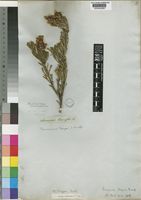
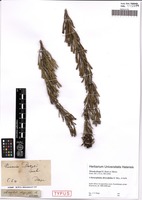
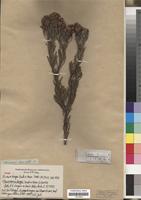
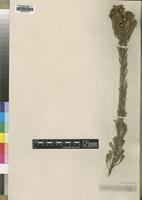
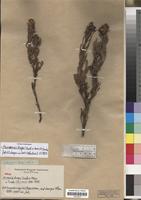
Nivenia dregei

5 Images see all

Paranomus dregei (H.Buek ex Meisn.) Kuntze [family PROTEACEAE]
Syntype of Nivenia dregei H. Buek ex Meisn. [family IRIDACEAE]
Type of Nivenia dregei Buek ex Meisn. [family PROTEACEAE]
Syntype of Nivenia dregei H.Buek ex Meisn. [family PROTEACEAE]
Type of Nivenia dregei Buek ex Meisn. [family PROTEACEAE]
Previous
Next

Name

Identification
Nivenia dregei H.Buek ex Meisn. [family PROTEACEAE ] Sorocephalus diversifolius R.Br. [family PROTEACEAE ] Paranomus dregei ( H.Buek ex Meisn.) Kuntze [family PROTEACEAE ] (stored under name);
Related name
  • Paranomus dregei
  • Sorocephalus diversifolius
  • Nivenia dregei

Flora

Entry for NIVENIA Dregei Buek [family ]
Herbarium
Royal Botanic Gardens, Kew (K)
Collection
Flora Capensis
Resource Type
Reference Sources
Entry From
Flora Capensis, Vol 5, page 502, (1912) Author: By J. HUTCHINSON, E. P. PHILLIPS and O. STAPF.
Names
NIVENIA Dregei Buek [family ], in Drège, Zwei Pfl. Documente, 64, 204;—Meisn. in DC. Prodr. xiv. 300.
Sorocephalus diversifolius Drège ex Meisn. [family PROTEACEAE], l.c. 301, name only, not of R. Br.
Paranomus Dregei O. Kuntze [family PROTEACEAE], Rev. Gen. Pl. ii. 580.
Soranthe Dregei O. Kuntze [family ], l.c. 582.
Information
branches puberulous, at length becoming glabrous or nearly so; leaves all of one kind and divided, or if a few of the upper entire then they are linear, up to 3 in. long, pinnately divided in the upper half or in some specimens only 2–3-lobed, erect, coriaceous, glabrous except when young and then tomentose, the segments in the more divided leaves linear, obtuse, those of the less divided a little broader, all concave on the upper surface; heads 4-flowered, spicate; spikes sessile or subsessile, terminal, solitary or geminate, about 1 1/4 in. long, nearly 1 in. in diam., subcylindric; flowering axis tomentose, bearing ovate acuminate rigidly coriaceous shortly pubescent bracts about 3 lin. long and 2 lin. broad; floral bracts 4, imbricate, the outer 2 larger than the inner, up to 5 lin. long and 2 3/4 lin. broad, oblong, rounded at the apex, rigidly coriaceous, shortly woolly-tomentose outside, glabrous within; flowers surrounded at the base by numerous long hairs; perianth-tube 1 1/2 lin. long, nearly glabrous; segments about 7 lin. long; claws slightly recurved in the open flower, shortly tomentose; limb 1 1/2 lin. long, narrowly oblong-lanceolate, subacute, shortly and densely villous; hypogynous scales 1–1 1/2 lin. long, linear-filiform; ovary surrounded by a ring of long white hairs, puberulous; style 7 lin. long, rather slender, glabrous, gradually passing into the stigma which is 1 1/4 lin. long, cylindric, grooved; fruits 2 3/4 lin. long, ovoid-ellipsoid, tipped by a persistent portion of the style, brightly shining, surrounded by a ring of white hairs. null
Distribution
CENTRAL REGION Prince Albert Div.; Great Zwartberg Range, Drège! Zwartberg Pass, Bolus, 11629!

Related Materials

  • Terms and Conditions
  • Privacy Policy
  • Cookie Policy
  • Cookie Settings
  • Accessibility
  • Help
  • Contact Us
  • Facebook
  • Twitter
ITHAKA

JSTOR is part of ITHAKA, a not-for-profit organization helping the academic community use digital technologies to preserve the scholarly record and to advance research and teaching in sustainable ways.

©2000-2026 ITHAKA. All Rights Reserved. JSTOR®, the JSTOR logo, JPASS®, Aluka®, and ITHAKA® are registered trademarks of ITHAKA.

╳