JSTOR Global Plants Home
  • Home
  • Browse
  • About
  • Access
  • Account
    • Saved Items
    • Profile
  • Log in

Global Plants

Skip to Main Content
  • JSTOR Global Plants Home
  • Global Plants

    • Browse
    • About
    • Access
    • Account
      • Saved Items
      • Profile
Log in
  • Browse
  • About
  • Access
  • Account
    • Saved Items
    • Profile
Advanced Search

Compilation
Nerisyrenia camporum

12 Images see all

Nerisyrenia camporum (A. Gray) Greene [family BRASSICACEAE]
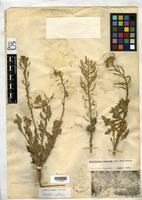
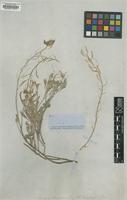
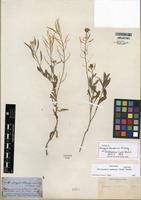
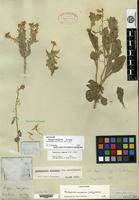
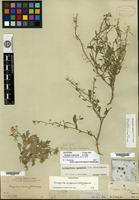
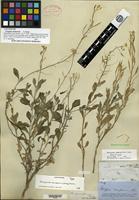
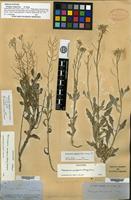
Isolectotype of Greggia camporum A. Gray [family BRASSICACEAE]
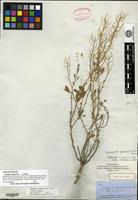
Isosyntype of Greggia camporum A. Gray [family BRASSICACEAE]
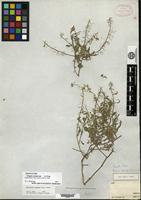
Nerisyrenia camporum (A. Gray) Greene [family BRASSICACEAE]
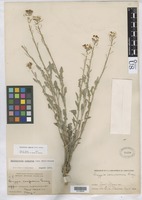
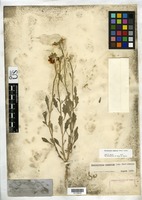
Type of Greggia camporum A.Gray [family BRASSICACEAE]
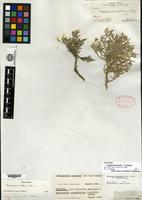
Isotype of Nerisyrenia camporum (A. Gray) Greene [family BRASSICACEAE]
Nerisyrenia camporum (A. Gray) Greene [family BRASSICACEAE]
Syntype of Greggia linearifolia S. Watson [family BRASSICACEAE]
Syntype of Greggia camporum A. Gray [family BRASSICACEAE]
Lectotype of Greggia camporum A. Gray [family BRASSICACEAE]
Isolectotype of Greggia camporum A. Gray [family BRASSICACEAE]
Previous
Next

Name

Identification
Greggia camporum A.Gray [family BRASSICACEAE ] Nerisyrenia camporum (A.Gray) Greene [family BRASSICACEAE ] (stored under name);
Related name
  • Nerisyrenia castillonii
  • Greggia camporum
  • Greggia linearifolia
  • Nerisyrenia camporum
  • Nerisyrenia linearifolia

Flora

Entry for Nerisyrenia camporum (A. Gray) Greene [family CRUCIFERAE]
Herbarium
Flora of North America (FNA)
Collection
Flora of North America
Resource Type
Reference Sources
Entry From
Flora of North America, Vol 7,
Names
Nerisyrenia camporum (A. Gray) Greene [family CRUCIFERAE], Pittonia, 4: 225. 1900
Greggia camporum A. Gray [family ], Smithsonian Contr. Knowl., 3(5): 9, plate 1. 1852
Parrasia camporum (A. Gray) Greene [family CRUCIFERAE]
Treatment Author(s)
Ihsan A. Al-Shehbaz
Information
Plants with woody caudex; moderately to densely pubescent or glabrate. Stems 1–6 dm, woody proximally, pubescent or glabrate with age. Cauline leaves: petiole 0.3–1.5 cm, often not sharply differentiated from blade, or (distal) sessile; blade usually obovate to spatulate or oblanceolate, rarely elliptic, 1–4(–4.5) cm × (4–)7–20(–30) mm (not fleshy), base attenuate, margins dentate, repand, or entire, apex acute to obtuse. Racemes 3.5 dm. Fruiting pedicels (rarely recurved), (7–)10–20 mm, densely pubescent. Flowers: sepals (spreading) oblong to oblong-lanceolate, 5–9 × 1–2 mm; petals obovate, (8–)10–14(–15) × 5–9 mm, claw (often flattened, margin dentate) to 2 mm; filaments 4.5–7.5 mm; anthers 2–3.5 mm. Fruits angustiseptate, 1.5–3(–4) cm × 1.5–3(–4) mm; ovules 40–100 per ovary; style (1.5–)2–3.8(–4.3) mm. Seeds 0.8–1.1 × 0.5–0.7 mm. 2n = 18, 19, 21, 22, 27, 32, 34, 36, 40, 41, 58.
Phenology
feb (winter), mar-may (spring), jun-aug (summer), sep (fall)
Altitude range
200–1300 m;
Distribution
Mexico (Chihuahua).Mexico (Coahuila).Mexico (Durango).Mexico (Nuevo León).Mexico (Tamaulipas).Mexico (Zacatecas).USA N.Mex.USA Tex.

Related Materials

  • Terms and Conditions
  • Privacy Policy
  • Cookie Policy
  • Cookie Settings
  • Accessibility
  • Help
  • Contact Us
  • Facebook
  • Twitter
ITHAKA

JSTOR is part of ITHAKA, a not-for-profit organization helping the academic community use digital technologies to preserve the scholarly record and to advance research and teaching in sustainable ways.

©2000-2026 ITHAKA. All Rights Reserved. JSTOR®, the JSTOR logo, JPASS®, Aluka®, and ITHAKA® are registered trademarks of ITHAKA.

╳