JSTOR Global Plants Home
  • Home
  • Browse
  • About
  • Access
  • Account
    • Saved Items
    • Profile
  • Log in

Global Plants

Skip to Main Content
  • JSTOR Global Plants Home
  • Global Plants

    • Browse
    • About
    • Access
    • Account
      • Saved Items
      • Profile
Log in
  • Browse
  • About
  • Access
  • Account
    • Saved Items
    • Profile
Advanced Search

Compilation
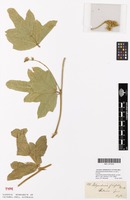
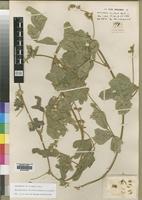
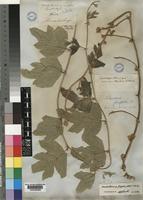
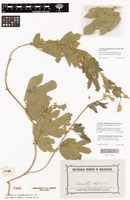
Neorautanenia ficifolia

7 Images see all

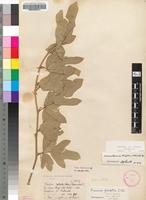
Type of Rhynchosia ficifolia Benth. ex Harv. [family FABACEAE]
Syntype of Rhynchosia ficifolia Benth. ex Harv. [family LEGUMINOSAE]
Neorautanenia ficifolius (Benth.) C.A. Sm. [family LEGUMINOSAE-PAPILIONOIDEAE]
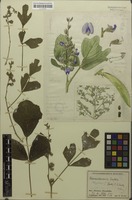
Type of Rhynchosia ficifolia Benth. ex Harv. [family FABACEAE]
Isotype of Dolichos robustus Bolus [family FABACEAE]
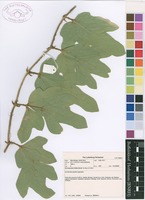
Filed as Neorautanenia ficifolia (Benth.) C.A.Sm. [family FABACEAE]
Filed as Neorautanenia ficifolia (Benth. ex Harv.) C.A.Sm. [family FABACEAE]
Previous
Next

Name

Identification
Rhynchosia ficifolia Benth. ex Harv. [family LEGUMINOSAE ] Neorautanenia ficifolia (Benth. ex Harv.) C.A.Sm. [family LEGUMINOSAE ] (stored under name); Verified by VanDerMaesen,L.J.G.,
Related name
  • Rhynchosia ficifolia
  • Neorautanenia ficifolia
  • Dolichos robustus

Flora

Entry for Neorautanenia ficifolia Benth. ex Harv. C.A. Smith [family LEGUMINOSAE]
Herbarium
Royal Botanic Gardens, Kew (K)
Collection
Flora Zambesiaca
Resource Type
Reference Sources
Entry From
FZ, Vol 3, Part 5, (2001) Author: B. Mackinder, R. Pasquet, R. Polhill and B. Verdcourt
Names
Neorautanenia ficifolia Benth. ex Harv. C.A. Smith [family LEGUMINOSAE], in Burtt Davy, Fl. Pl. Ferns Transvaal, part 2: xxviii, 417 (1932). —Verdcourt in Kew Bull. 24: 306 (1970) as “ficifolius”. —Lock, Leg. Afr. Check-list: 419 (1989). Syntypes from South Africa (Free State and Gauteng).
Rhynchosia ficifolia Benth. ex Harv. [family LEGUMINOSAE], in F.C. 2: 251 (1862).
Pueraria ficifolia Benth. ex Harv. L. Bolus [family LEGUMINOSAE], in Ann. Bolus Herb. 1: 189 (1915).
Dolichos ficifolius Benth. ex Harv. Harms [family LEGUMINOSAE], in Engler, Pflanzenw. Afrikas [Veg. Erde 9] 3: 681 (1915).
Neorautanenia deserticola C.A. Smith [family LEGUMINOSAE], in Burtt Davy, Fl. Pl. Ferns Transvaal, part 2: xxvii, 417 (1932). Type from South Africa (North-West Province).
Information
Prostrate trailing plant up to c. 1.5 m long. Stems branched or unbranched, pubescent with ± appressed or spreading rather stiff hairs, or densely hirsute. Leaflets (1)3; terminal leaflet 2.5–14.5 × 2–12.5 cm, broadly ovate or obovate in outline, always 3–5-lobed, the central lobe narrowly oblong to ovate; lateral leaflets smaller, asymmetrically 3-lobed, densely setose-pubescent when young but eventually glabrescent, venation strongly reticulate beneath; stipules 7–12 × 1.5–4 mm, narrowly oblong-lanceolate; petiole 0.2–4 cm long and rhachis 1.5–3.5 cm long, the two ± equal or rhachis longer than the petiole, less often slightly shorter, the two together up to 1.5–7.5 cm long. Inflorescences often densely woolly, 1.5–28 cm long but often shorter than the leaves, (1)5–10-flowered. Flowers purple, ± as in Neorautanenia mitis; calyx lobes up to 9 mm long. Pods 4–10 × 1.4–2 cm, oblong-cylindric, 1–2-seeded. Seeds black, 11–14 × 8.6–11 × 4–5.5 mm, oblong-reniform, compressed.
Habitat
Low rainfall Terminalia sericea–Acacia giraffae wooded grasssland with Anthephora, Brachiaria, Schmidtia etc.
Altitude range
1030 m.
1030
1030
Distribution
Botswana SE Morapedi Ranch, fl. 5.ii.1977, O.J. Hansen 3030 (C; GAB; K; PRE; SRGH).Zimbabwe S Masvingo Distr., fr. vii.1916, Walters 2329 (K).Botswana SW Chooi Desert, Burchell 2330/2 (K).
Distribution (external)
South Africa
Notes
None of the material seen from the Flora Zambesiaca area is typical for this species, and all the specimens examined are intermediate in character. In O.J. Hansen 3030 the petioles are slightly longer than the rhachises but together only up to 3.5 cm and the inflorescences are much shorter than the leaves, only 1.5–4 cm long.

Related Materials

  • Terms and Conditions
  • Privacy Policy
  • Cookie Policy
  • Cookie Settings
  • Accessibility
  • Help
  • Contact Us
  • Facebook
  • Twitter
ITHAKA

JSTOR is part of ITHAKA, a not-for-profit organization helping the academic community use digital technologies to preserve the scholarly record and to advance research and teaching in sustainable ways.

©2000-2026 ITHAKA. All Rights Reserved. JSTOR®, the JSTOR logo, JPASS®, Aluka®, and ITHAKA® are registered trademarks of ITHAKA.

╳