JSTOR Global Plants Home
  • Home
  • Browse
  • About
  • Access
  • Account
    • Saved Items
    • Profile
  • Log in

Global Plants

Skip to Main Content
  • JSTOR Global Plants Home
  • Global Plants

    • Browse
    • About
    • Access
    • Account
      • Saved Items
      • Profile
Log in
  • Browse
  • About
  • Access
  • Account
    • Saved Items
    • Profile
Advanced Search

Compilation
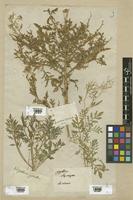
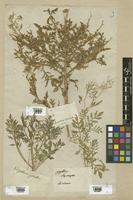
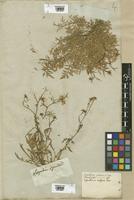
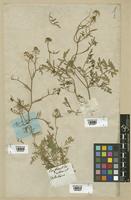
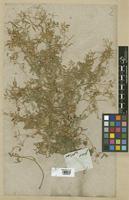
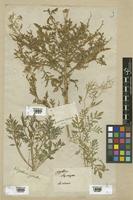
Nasturtium sylvestre

10 Images see all

[family ]
[family ]
[family ]
[family ]
[family ]
[family ]
[family ]
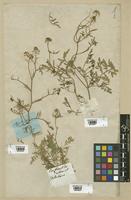
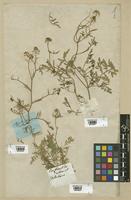
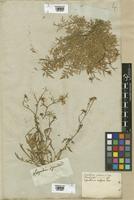
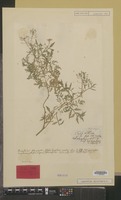
Syntype of Sisymbrium sylvestre L. [family CRUCIFERAE]
[family ]
[family ]
Previous
Next

Name

Identification
Nasturtium sylvestre (L.) R. Br. [family BRASSICACEAE ] (stored under name); Verified by Data not digitized, null Verified by Data not digitized,
Related name
  • `
  • Nasturtium sylvestre

Flora

Entry for Rorippa sylvestris (Linnaeus) Besser [family CRUCIFERAE]
Herbarium
Flora of North America (FNA)
Collection
Flora of North America
Resource Type
Reference Sources
Entry From
Flora of North America, Vol 7,
Names
Rorippa sylvestris (Linnaeus) Besser [family CRUCIFERAE], Enum. Pl., 27. 1821
Sisymbrium sylvestre Linnaeus [family CRUCIFERAE], Sp. Pl., 2: 657. 1753
Brachiolobos sylvestris (Linnaeus) Allioni [family ]
Nasturtium sylvestre (Linnaeus) W. T. Aiton [family CRUCIFERAE]
Radicula sylvestris (Linnaeus) Druce [family ]
Past names
Roripa
Treatment Author(s)
Ihsan A. Al-Shehbaz
Information
Perennials; glabrous or sparsely pubescent. Stems prostrate, decumbent, ascending, or suberect, branched mainly basally, (0.5–)1.5–8(–10) dm. Basal leaves not rosulate; similar to cauline. Cauline leaves petiolate, or (distal) often subsessile; blade deeply pinnatisect, (lobes 3–6 on each side, sublinear, lanceolate, oblong, elliptic, or ovate), (2–)3.5–15(–20) cm × (7–)10–45(–60) mm, base usually not auriculate, rarely minutely auriculate, margins dentate, serrate, subentire, or (distally) pinnatisect, (lobes 1–3 on each side). Racemes elongated. Fruiting pedicels divaricate, straight, (3–)4–10(–12) mm. Flowers: sepals ascending or spreading, oblong, 1.8–3(–3.5) × 0.7–1.5 mm; petals yellow, spatulate or obovate, (2.2–)2.8–5.5(–6) × 1.5–2.5 mm; median filaments (1.5–)1.8–3.5(–4) mm; anthers oblong, 0.7–1 mm. Fruits siliques, straight, usually linear, rarely oblong-linear, 10–20(–25) × (0.7–)1–1.3(–1.6) mm; valves glabrous; ovules 24–80 per ovary; style 0.5–1(–1.5) mm. Seeds (rarely produced), usually uniseriate, rarely sub-biseriate, reddish brown, ovoid, 0.5–0.9 mm (0.4–0.5 mm diam.), colliculate. 2n = 32, 40, 48.
Phenology
may (spring), jun-aug (summer)
Altitude range
0–2500 m;
Distribution
Europesw Asiaintroduced also in South America.USA Ala.USA Ark.USA Colo.USA Conn.USA Del.USA D.C.USA IdahoUSA Ill.USA Ind.USA IowaUSA Kans.USA Ky.USA La.USA MaineUSA Md.USA Mass.USA Mich.USA Minn.USA Miss.USA Mo.USA Mont.USA N.H.USA N.J.USA N.Y.USA N.C.USA N.Dak.USA OhioUSA Oreg.USA Pa.USA R.I.USA Tenn.USA UtahUSA Vt.USA Va.USA Wash.USA W.Va.USA Wis.Canada Alta.Canada B.C.Canada N.B.Canada Nfld. and Labr. (Nfld.)Canada Ont.Canada P.E.I.Canada Que.
Native/Introduced
introduced;

Related Materials

  • Terms and Conditions
  • Privacy Policy
  • Cookie Policy
  • Cookie Settings
  • Accessibility
  • Help
  • Contact Us
  • Facebook
  • Twitter
ITHAKA

JSTOR is part of ITHAKA, a not-for-profit organization helping the academic community use digital technologies to preserve the scholarly record and to advance research and teaching in sustainable ways.

©2000-2026 ITHAKA. All Rights Reserved. JSTOR®, the JSTOR logo, JPASS®, Aluka®, and ITHAKA® are registered trademarks of ITHAKA.

╳