JSTOR Global Plants Home
  • Home
  • Browse
  • About
  • Access
  • Account
    • Saved Items
    • Profile
  • Log in

Global Plants

Skip to Main Content
  • JSTOR Global Plants Home
  • Global Plants

    • Browse
    • About
    • Access
    • Account
      • Saved Items
      • Profile
Log in
  • Browse
  • About
  • Access
  • Account
    • Saved Items
    • Profile
Advanced Search

Compilation
Myrothamnus flabellifolia

5 Images see all

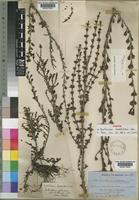
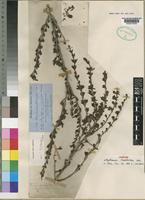
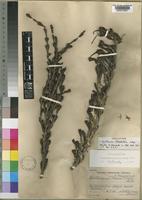
Myrothamnus flabellifolius Welw. [family MYROTHAMNACEAE]
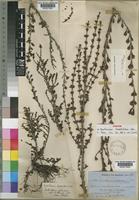
Syntype of Myrothamnus flabellifolius Welw. [family MYROTHAMNACEAE]
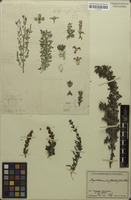
Filed as Myrothamnus flabellifolia Welw. [family MYROTHAMNACEAE]
Syntype of Myrothamnus flabellifolius Welw. [family MYROTHAMNACEAE]
Holotype of Myrothamnus flabellifolia Welw. subsp. robusta H.Weimarck [family MYROTHAMNACEAE]
Previous
Next

Name

Identification
Myrothamnus flabellifolia Welw. [family MYROTHAMNACEAE ] Myrothamnus flabellifolius Welw. [family MYROTHAMNACEAE ] (stored under name); Verified by [illegible],
Related name
  • Myrothamnus flabellifolius
  • Myrothamnus flabellifolia

Flora

Entry for MYROTHAMNUS flabellifolia Welw. [family MYROTHAMNACEAE]
Herbarium
Royal Botanic Gardens, Kew (K)
Collection
Flora of Tropical Africa
Resource Type
Reference Sources
Entry From
Flora of Tropical Africa, Vol 2, page 403, (1871) Author: (By Mr. J. G. Baker.)
Names
MYROTHAMNUS flabellifolia Welw. [family MYROTHAMNACEAE], Apont. Phytog. Angol. Linn. Trans. xxvii. 23. t. 8.
Cliffortia? flabellifolia Sond. [family ], Fl. Cap. ii. 597.
Information
Shrub varying from 1–7 ft., extremities early woody, tetragonous, bark fissuring longitudinally. Leaves 1/3– 1/2 in. long more or less, 1/4– 1/3 in. broad, toothed, during the dry season closely plicate. Bracts broadly ovate. Stamens 4–8 (5); anthers subsessile. Ovary 3-celled, carpels connate half-way.
Distribution
Angola Lower Guinea Pungo Andongo, 3–4000 ft., and Huilla, 5–5500 ft., Dr. Welwitsch!Mozamb. Dist. “The Boss,” 4000 ft., Mgunda-Mkhali, Speke and Grant!
Distribution (external)
at the Cape
Notes
M. Baillon's plant differs in its tetramerous pistil, and in the presence of a pair of lateral bracteoles to each flower, but it is doubtless a congener.

Related Materials

  • Terms and Conditions
  • Privacy Policy
  • Cookie Policy
  • Cookie Settings
  • Accessibility
  • Help
  • Contact Us
  • Facebook
  • Twitter
ITHAKA

JSTOR is part of ITHAKA, a not-for-profit organization helping the academic community use digital technologies to preserve the scholarly record and to advance research and teaching in sustainable ways.

©2000-2026 ITHAKA. All Rights Reserved. JSTOR®, the JSTOR logo, JPASS®, Aluka®, and ITHAKA® are registered trademarks of ITHAKA.

╳