JSTOR Global Plants Home
  • Home
  • Browse
  • About
  • Access
  • Account
    • Saved Items
    • Profile
  • Log in

Global Plants

Skip to Main Content
  • JSTOR Global Plants Home
  • Global Plants

    • Browse
    • About
    • Access
    • Account
      • Saved Items
      • Profile
Log in
  • Browse
  • About
  • Access
  • Account
    • Saved Items
    • Profile
Advanced Search

Compilation
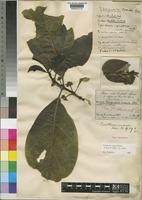
Multidentia crassa

13 Images see all

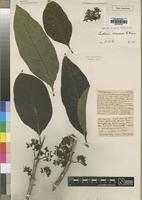
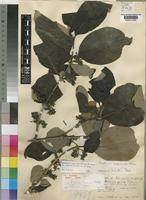
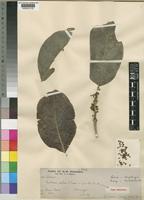
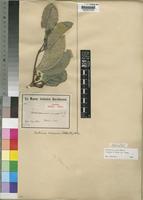
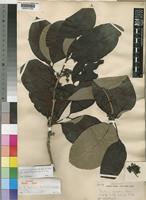
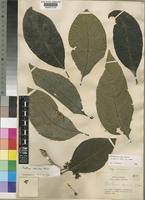
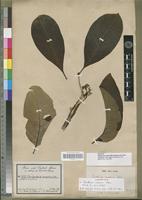
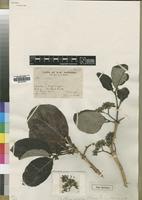
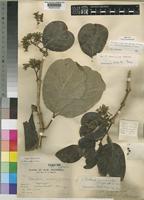
Type of Canthium opimum S.Moore [family RUBIACEAE]
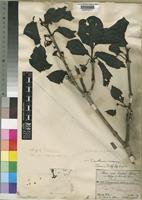
Isosyntype of Plectronia buarica Mildbr. [family RUBIACEAE]
Type of Canthium amplum S.Moore [family RUBIACEAE]
Isotype of Craterispermum orientale K.Schum. [family RUBIACEAE]
Isosyntype of Plectronia buarica Mildbr. [family RUBIACEAE]
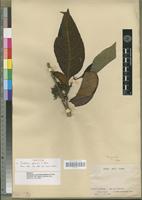
Multidentia crassa (Hiern) Bridson & Verdc. [family RUBIACEAE]
Isotype of Canthium opimum S. Moore [family RUBIACEAE]
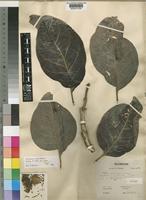
Isotype of Canthium dictyophlebum S.Moore [family RUBIACEAE]
Multidentia crassa (Hiern) Bridson & Verdc. [family RUBIACEAE]
Isolectotype of Canthium crassum Hiern [family RUBIACEAE]
Type of Canthium amplum S.Moore [family RUBIACEAE]
Multidentia crassa (Hiern) Bridson & Verdc. var. crassa [family RUBIACEAE]
Previous
Next

Name

Identification
Canthium amplum S.Moore [family RUBIACEAE ] Canthium crassum Hiern [family RUBIACEAE ] (stored under name); Multidentia crassa (S.Moore) Bridson & Verdc. [family RUBIACEAE ]
Related name
  • Plectronia buarica
  • Vangueria crassa
  • Canthium amplum
  • Canthium crassum
  • Canthium lactescens
  • Multidentia crassa
  • Canthium opimum
  • Plectronia crassa
  • Canthium dictyophlebum
  • Plectronia unrecorded
  • Plectronia opima
  • Plectronia emarginata
  • Craterispermum orientale

Flora

Entry for Multidentia crassa Hiern Bridson & Verdc. [family RUBIACEAE]
Herbarium
Royal Botanic Gardens, Kew (K)
Collection
Flora Zambesiaca
Resource Type
Reference Sources
Entry From
FZ, Vol 5, Part 2, (1998) Author: D. Bridson
Names
Multidentia crassa Hiern Bridson & Verdc. [family RUBIACEAE], in Kew Bull. 42: 652, fig. 1F & M, fig. 2, A–C (1987); in F.T.E.A., Rubiaceae: 845, fig. 149 (1991). TAB. 47/C1. Type from Sudan.
Canthium crassum Hiern [family RUBIACEAE], in F.T.A. 3: 145 (1877), pro parte (Schweinfurth 1695 excluded). —Bullock in Bull. Misc. Inform., Kew 1932: 379 (1932), pro parte, excluding C. platyphyllum Hiern in syn. —Brenan, Check-list For. Trees Shrubs Tang. Terr.: 488 (1949). —Dale & Greenway, Kenya Trees & Shrubs: 428 (1961). —F. White, F.F.N.R.: 404, fig. 68, J (1962), pro parte, excluding C. randii in syn. —A.E. Gonçalves in Garcia de Orta, Sér. Bot. 5: 186 (1982). Type as above.
Information
Shrub or small tree 0.6–6 m tall, the main trunk with almost black bark or rough grey bark, which peels to expose a reddish undersurface; shoots usually rather stout with thick often powdery very white-grey or straw-coloured wrinkled corky bark; sap copious, sometimes apparently milky.Leaves mostly restricted to apices of branches; blades 3–27.5 × 1.7–15.5 cm, oblong-elliptic to oblong or sometimes round, obtuse or acute at the apex or sometimes tapering-acute, cuneate to rounded at the base, rather fleshy or coriaceous or sometimes papery, often drying yellow-green and mostly markedly paler and glaucous beneath, glabrous or occasionally densely velvety tomentose on lower surface; lateral nerves in 5–7 main pairs; tertiary nerves finely reticulate, sometimes drying pale yellowish above and dark beneath; domatia present as tufts of hair; petioles 3–25 mm long; stipules with broad basal part 3.5–5 mm long and subulate apex 1.5–7.5 mm long, pubescent within.Flowers 5-merous, borne in axillary many-flowered divaricate cymes, all parts of inflorescence mostly pubescent and sometimes densely woolly tomentose; peduncle 10–50 mm long; pedicels 1–3 mm long; bracts 3–5 mm long, linear.Calyx tube 1.5–2 mm long, obconic, glabrous or sometimes pubescent; limb-tube short, 1–3 mm long, almost truncate or undulate or with short triangular teeth about 0.5–1 mm long.Corolla greenish-yellow, fleshy, thick, wrinkled when dry; tube 2.5–4.5 mm long, pilose at throat and with a ring of deflexed hairs one third of the way from the top; lobes 3 mm long, narrowly triangular.Pollen presenter distinctly exserted, green, 2 mm long, ellipsoid, ridged.Fruit green mottled brown, yellow or dull red or brown spotted white, fleshy and edible, 22–30 × 26–37 mm (probably at least 35–40 mm wide in life), depressed globose, lenticellate.Pyrenes 18–22 × 11–17 × 11–15 mm, ellipsoid; the walls ridged, exceedingly thick and woody, up to 5–7 mm thick, with a deep lateral semicircular groove on either side above the point of attachment, meeting on the apical edge.

Related Materials

  • Terms and Conditions
  • Privacy Policy
  • Cookie Policy
  • Cookie Settings
  • Accessibility
  • Help
  • Contact Us
  • Facebook
  • Twitter
ITHAKA

JSTOR is part of ITHAKA, a not-for-profit organization helping the academic community use digital technologies to preserve the scholarly record and to advance research and teaching in sustainable ways.

©2000-2026 ITHAKA. All Rights Reserved. JSTOR®, the JSTOR logo, JPASS®, Aluka®, and ITHAKA® are registered trademarks of ITHAKA.

╳