JSTOR Global Plants Home
  • Home
  • Browse
  • About
  • Access
  • Account
    • Saved Items
    • Profile
  • Log in

Global Plants

Skip to Main Content
  • JSTOR Global Plants Home
  • Global Plants

    • Browse
    • About
    • Access
    • Account
      • Saved Items
      • Profile
Log in
  • Browse
  • About
  • Access
  • Account
    • Saved Items
    • Profile
Advanced Search

Compilation
Moschosma riparium

12 Images see all

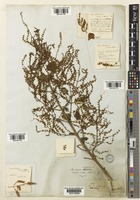
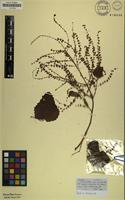
Tetradenia riparia (Hochst.) L.E.Codd [family LAMIACEAE]
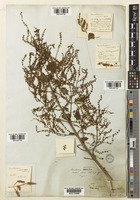
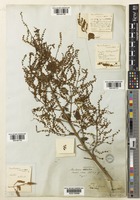
Isotype of Moschosma riparium Hochst. [family LAMIACEAE]
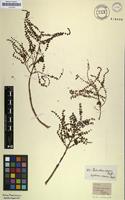
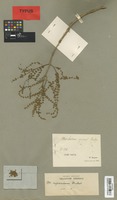
Tetradenia riparia (Hochst.) L.E.Codd [family LAMIACEAE]
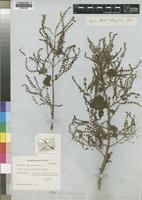
Type of Moschosma riparium Hochst. [family LAMIACEAE]
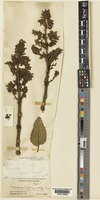
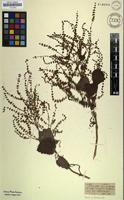
Tetradenia riparia (Hochst.) L.E.Codd [family LAMIACEAE]
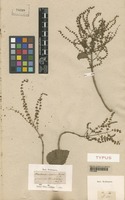
Holotype of Moschosma riparium Hochst. [family LAMIACEAE]
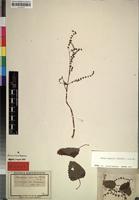
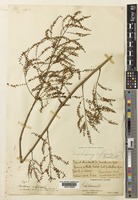
Type of Moschosma myriostachya Benth. & Hook.f. [family LAMIACEAE]
Isotype of Iboza riparia (Hochst.) N.E.Br. [family LABIATAE]
Holotype of Moschosma riparium Hochst. [family LAMIACEAE]
Isotype of Moschosma riparium Hochst. [family LABIATAE]
Holotype of Moschosma riparium Hochst. [family LAMIACEAE]
Type of Moschosma myriostachyum Benth. [family LAMIACEAE]
Previous
Next

Name

Identification
Isotype of Moschosma riparium Hochst. [family LAMIACEAE ] Iboza riparia (Hochst.) N.E.Br. [family LAMIACEAE ] (stored under name);
Related name
  • Moschosma riparium
  • Iboza riparia

Flora

Entry for IBOZA riparia N. E. Br. [family LABIATAE]
Herbarium
Royal Botanic Gardens, Kew (K)
Collection
Flora Capensis
Resource Type
Reference Sources
Entry From
Flora Capensis, Vol 5, page 226, (1912) Author: By N. E. BROWN, T. COOKE and S. A. SKAN.
Names
IBOZA riparia N. E. Br. [family LABIATAE]
Moschosma riparium Hochst. [family LABIATAE], in Flora, 1845, 67; Krauss, Beitr. Fl. Capund Natal. 131; Benth. in DC. Prodr. xii. 49; Wood & Evans, Natal Pl. i. tt. 1 and 2; Gard. Chron. 1902, xxxi. 122, fig. 35, and 1904, xxxv. 30, fig. 13.
Information
a stout herb 2 1/2–5 ft. high; stems obtusely 4-angled, branching above, puberulous, at least on the upper part; leaves with a pubescent petiole 1/2–3 1/2 in. long and blade 1 1/4–6 in. long, 1–5 in. broad, broadly ovate, notched (or some on the panicle entire and rounded) at the base, acute or subacute at the apex, coarsely and obtusely toothed, with the lower margin of the teeth denticulate, not rugose and the tertiary veins not at all prominent beneath, pubescent on both sides, with the hairs longer than the thickness of the veins on which they stand and not hiding the surface between them; panicle 6–15 in. long, 4–8 in. in diam.; male spikes 1–3 in. long, 1/4– 1/3 in. in diam., lax, with the flower-whorls 1/8– 1/4 in. apart; bracts about 1 lin. long, 1 1/4–1 1/3 lin. broad, very broadly triangular-ovate, subacute, concave, minutely pubescent, ciliate; pedicels 1/4 lin. long; calyx 1/2 lin. long, cup-like, 3-lobed to the middle, puberulous; dorsal lobe elliptic or suborbicular, obtuse; lateral lobes elliptic-oblong, acutely bifid at the apex; corolla unequally 5- (or occasionally 4-) lobed, minutely and thinly pubescent outside, white or pale-lilac; tube about 1 lin. long, 3/4 lin. in diam. at the oblique mouth, with a tuft of hairs near the base inside; lower lobe larger than the others, 3/4–1 lin. long, oblong, obtuse; stamens 4, about 3/4 lin. long, subequal, exserted; ovary 4-lobed, abortive; style shortly bifid at the apex; female spikes 1/2–1 in. long, 1/6 in. in diam., with flower-whorls somewhat crowded or 1/2–1 lin. apart; bracts 1/2– 2/3 lin. long, otherwise as in the male; pedicels as in the male; corolla very like that of the male but smaller, 2/3– 3/4 lin. long; stamens none; ovary perfecting seeds; styles much exserted; stigmas linear, spreading. null
Distribution
EASTERN REGION Natal; banks of streams, Krauss, 331! Inanda, Wood, 141! near Durban, Wood in MacOwan & Bolus, Herb. Norm. 1001! Tugela Valley, Sutherland! common throughout the colony, Gerrard, 1889!KALAHARI REGION Transvaal; near Shilovane, Junod, 538! Marovunye forest, Junod, 1275!

Related Materials

  • Terms and Conditions
  • Privacy Policy
  • Cookie Policy
  • Cookie Settings
  • Accessibility
  • Help
  • Contact Us
  • Facebook
  • Twitter
ITHAKA

JSTOR is part of ITHAKA, a not-for-profit organization helping the academic community use digital technologies to preserve the scholarly record and to advance research and teaching in sustainable ways.

©2000-2026 ITHAKA. All Rights Reserved. JSTOR®, the JSTOR logo, JPASS®, Aluka®, and ITHAKA® are registered trademarks of ITHAKA.

╳