JSTOR Global Plants Home
  • Home
  • Browse
  • About
  • Access
  • Account
    • Saved Items
    • Profile
  • Log in

Global Plants

Skip to Main Content
  • JSTOR Global Plants Home
  • Global Plants

    • Browse
    • About
    • Access
    • Account
      • Saved Items
      • Profile
Log in
  • Browse
  • About
  • Access
  • Account
    • Saved Items
    • Profile
Advanced Search

Compilation
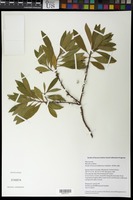
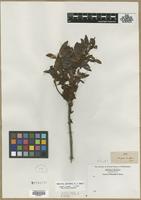
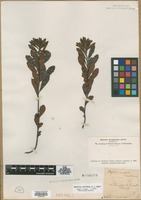
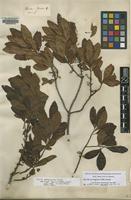
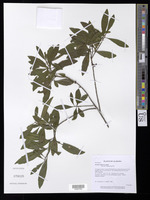
Morella cerifera

10 Images see all

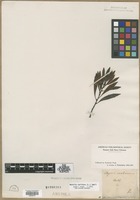
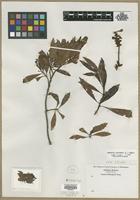
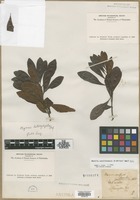
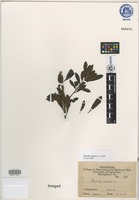
Morella cerifera (L.) Small [family MYRICACEAE]
Filed as Myrica cerifera L. [family MYRICACEAE]
Filed as Morella cerifera (L.) Small [family MYRICACEAE]
Type of Myrica caroliniensis Mill. [family MYRTACEAE]
Filed as Morella cerifera (L.) Small [family MYRICACEAE]
Filed as Myrica cerifera L. [family MYRICACEAE]
Filed as Myrica sp. [family MYRICACEAE]
Filed as Morella caroliniensis (Mill.) Small [family MYRICACEAE]
Filed as Morella cerifera (L.) Small [family MYRICACEAE]
Morella cerifera (L.) Small [family MYRICACEAE]
Previous
Next

Name

Identification
Myrica cerifera L. [family MYRICACEAE ] (stored under name); Verified by Not on Sheet, Myrica gale L. [family MYRICACEAE ] Verified by Not on Sheet, Morella cerifera (L.) Small [family MYRICACEAE ] Verified by Wilbur, R.L., 1993
Related name
  • Myrica cerifera
  • Morella cerifera
  • Myrica gale
  • Myrica sp.
Common name
  • Southern bayberry, Flora of North America Vol. 3
  • southern wax-myrtle, Flora of North America Vol. 3

Flora

Entry for Myrica cerifera Linnaeus [family MYRICACEAE]
Herbarium
Flora of North America (FNA)
Collection
Flora of North America
Resource Type
Reference Sources
Entry From
Flora of North America, Vol 3,
Names
Myrica cerifera Linnaeus [family MYRICACEAE], Sp. Pl., 2: 1024. 1753
Cerophora lanceolata Rafinesque [family ]
Cerothamnus arborescens (Castiglioni) Tidestrom [family ]
Cerothamnus ceriferus (Linnaeus) Small [family ]
Cerothamnus pumilus (Michaux) Small [family ]
Morella cerifera (Linnaeus) Small [family MYRICACEAE]
Myrica cerifera var. angustifolia Aiton [family MYRICACEAE]
Myrica cerifera var. arborescens Castiglioni [family MYRICACEAE]
Myrica cerifera var. dubia A. Chevalier [family MYRICACEAE]
Myrica cerifera var. pumila Michaux [family MYRICACEAE]
Myrica pumila (Michaux) Small [family MYRICACEAE]
Myrica pusilla Rafinesque [family MYRICACEAE]
Information
Shrubs or small trees, evergreen, often forming large, rhizomatous colonies of much-branched specimens, to 14 m. Branchlets reddish brown, densely gland-dotted when young, otherwise glabrous to densely pilose, eventually glabrate; glands yellow. Leaf blade aromatic when crushed, linear-oblanceolate to obovate, (1.1-)2-10.5(-13.3) × 0.4-3.3 cm, leathery, base cuneate to attenuate, margins entire or coarsely serrate beyond middle, apex acute to slightly rounded; surfaces abaxially pale yellow-green, glabrous except for pilose midrib, adaxially dark green, glabrous to pilose, both surfaces densely glandular; glands yellow to orange. Inflorescences: staminate 0.4-1.9 cm; pistillate 0.3-1.5 cm. Flowers unisexual, staminate and pistillate on different plants. Staminate flowers: bract of flower shorter than staminal column, margins opaque, densely ciliate, abaxially densely gland-dotted; stamens mostly 3-4. Pistillate flowers: bracteoles persistent in fruit, 4, not accrescent or adnate to fruit wall, margins ciliate, abaxially densely gland-dotted; ovary glandular, especially at apex near style base. Fruits globose-ellipsoid, 2-3.5(-4) mm; fruit wall glabrous or sparsely glandular when young, obscured by enlarged protuberances and thick coat of blue-white wax.
Phenology
Flowering mid winter-spring, fruiting summer-fall
Altitude range
0-450 m
Distribution
MexicoWest IndiesBermudaCentral America.USA Ala.USA Ark.USA Del.USA Fla.USA Ga.USA La.USA Md.USA Miss.USA N.J.USA N.C.USA Okla.USA S.C.USA Tex.USA Va.
Discussion
Myrica cerifera is an extremely variable species with respect to habitat and corresponding habit/vegetative morphology. In general, plants that occupy dry, sandy (more xeric) areas tend to be strongly rhizomatous, colonial, and smaller in stature, and to possess smaller leaves (commonly recognized as M. cerifera var. pumila). In contrast, plants of more mesic areas are seldom rhizomatous, not colonial, and often large and treelike, and they have larger leaves. These "extremes pass insensibly into each other" (J. W. Thieret 1966). I agree with Thieret's contention that these differences do not constitute reliable criteria upon which one should base taxonomic distinctions. Until it can be determined with certainty whether these differences are due to genetics or environment, the question will remain open. I have chosen the conservative route.
Myrica cerifera has often been confused with M. pensylvanica and with M. heterophylla. It is distinguished from M. pensylvanica on the basis of gland density on the leaves, the presence of glands versus hirsute pubescence on the fruit wall and protuberances (especially visible on young fruits), and less reliably on the size of the fruit (2-3.5 versus 3.5-5.5 mm). Myrica cerifera is distinguished from M. heterophylla by the density of the glands on the leaves and the glandular versus glabrous (usually) fruit wall.
Native Americans used a decoction of the leaves and stems of Myrica cerifera to treat fevers; and roots, to treat inflamed tonsils and stomachaches, and as a stimulant (D. E. Moerman 1986).

Related Materials

  • Terms and Conditions
  • Privacy Policy
  • Cookie Policy
  • Cookie Settings
  • Accessibility
  • Help
  • Contact Us
  • Facebook
  • Twitter
ITHAKA

JSTOR is part of ITHAKA, a not-for-profit organization helping the academic community use digital technologies to preserve the scholarly record and to advance research and teaching in sustainable ways.

©2000-2026 ITHAKA. All Rights Reserved. JSTOR®, the JSTOR logo, JPASS®, Aluka®, and ITHAKA® are registered trademarks of ITHAKA.

╳