JSTOR Global Plants Home
  • Home
  • Browse
  • About
  • Access
  • Account
    • Saved Items
    • Profile
  • Log in

Global Plants

Skip to Main Content
  • JSTOR Global Plants Home
  • Global Plants

    • Browse
    • About
    • Access
    • Account
      • Saved Items
      • Profile
Log in
  • Browse
  • About
  • Access
  • Account
    • Saved Items
    • Profile
Advanced Search

Compilation
Montia hallii

4 Images see all

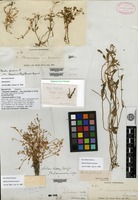
Syntype of Claytonia hallii A. Gray [family PORTULACACEAE]
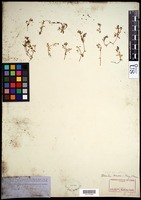
Montia hallii (A. Gray) Greene [family PORTULACACEAE]
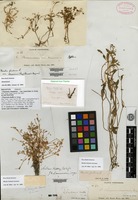
Lectotype of Claytonia hallii A. Gray [family PORTULACACEAE]
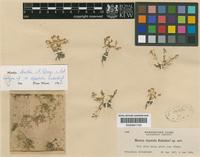
Isotype of Montia dipetala Suksd. [family PORTULACACEAE]
Previous
Next

Name

Identification
Montia hallii (A.Gray) Greene [family PORTULACACEAE ] (stored under name); Verified by Nilsson, O., Isotype of Montia dipetala Suksd. [family PORTULACACEAE ] Verified by Nilsson, O.,
Related name
  • Montia dipetala
  • Montia hallii
Common name
  • Water blinks, Flora of North America Vol. 4

Flora

Entry for Montia fontana Linnaeus [family PORTULACACEAE]
Herbarium
Flora of North America (FNA)
Collection
Flora of North America
Resource Type
Reference Sources
Entry From
Flora of North America, Vol 4,
Names
Montia fontana Linnaeus [family PORTULACACEAE], Sp. Pl., 1: 87. 1753
Claytonia hallii A. Gray [family PORTULACACEAE]
Montia clara Ö. Nilsson [family PORTULACACEAE]
Montia funstonii Rydberg [family PORTULACACEAE]
Montia hallii (A. Gray) Greene [family PORTULACACEAE]
Montia minor C. C. Gmelin [family PORTULACACEAE]
Treatment Author(s)
John M. Miller
Information
Plants annual or biennial, never bulbiferous. Stems prostrate or decumbent, 1–30 cm, freely rooting at nodes, forming mats. Leaves opposite, sessile; blade oblanceolate to rhombic, 2–20 × 0.5–10 mm. Inflorescences leafy. Flowers 1–8, slightly bilateral; sepals 1–1.5 mm; petals 5, connate proximally, white, unequal, 1–2 mm; stamens 3, anther pink or yellow. Seeds 0.7–1.2 mm, tuberculate; elaiosome present. 2n = 20, 40.
Phenology
mar-may (spring)
Altitude range
0–3700 m;
Distribution
GreenlandSt. Pierre and MiquelonCentral AmericaSouth AmericaEuropeAsiaAfricaArctic regions.USA AlaskaUSA Calif.USA IdahoUSA MaineUSA Mass.USA Mont.USA Nev.USA N.H.USA N.Y.USA Oreg.USA UtahUSA Vt.USA Wash.USA Wyo.Canada B.C.Canada Man.Canada N.B.Canada Nfld. and Labr.Canada N.S.Canada NunavutCanada N.W.T.Canada Ont.Canada P.E.I.Canada Que.Canada Yukon
Discussion
Montia fontana displays a multitude of forms varying in stature, leaf shape, and seed size. Segregate species, varieties, and subspecies have been named. Based on my study of worldwide collections of the species, much variation in M. fontana is attributable to phenotypic differentiation of ramets produced by local environmental conditions and unrelated to genetic variation. Until macromolecular or other studies shed light on the variation in M. fontana, it seems pointless to recognize infraspecific taxa or segregate species.

Related Materials

  • Terms and Conditions
  • Privacy Policy
  • Cookie Policy
  • Cookie Settings
  • Accessibility
  • Help
  • Contact Us
  • Facebook
  • Twitter
ITHAKA

JSTOR is part of ITHAKA, a not-for-profit organization helping the academic community use digital technologies to preserve the scholarly record and to advance research and teaching in sustainable ways.

©2000-2026 ITHAKA. All Rights Reserved. JSTOR®, the JSTOR logo, JPASS®, Aluka®, and ITHAKA® are registered trademarks of ITHAKA.

╳