JSTOR Global Plants Home
  • Home
  • Browse
  • About
  • Access
  • Account
    • Saved Items
    • Profile
  • Log in

Global Plants

Skip to Main Content
  • JSTOR Global Plants Home
  • Global Plants

    • Browse
    • About
    • Access
    • Account
      • Saved Items
      • Profile
Log in
  • Browse
  • About
  • Access
  • Account
    • Saved Items
    • Profile
Advanced Search

Compilation
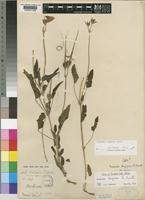
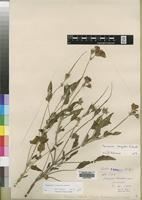
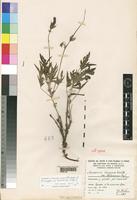
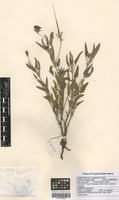
Monsonia longipes

5 Images see all

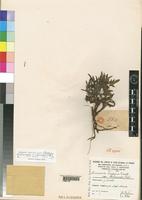
Monsonia longipes Knuth [family GERANIACEAE]
Type of Monsonia longipes Knuth [family GERANIACEAE]
Syntype of Monsonia longipes R.Knuth var. boranensis Cufod. [family GERANIACEAE]
Filed as Monsonia longipes R. Knuth [family GERANIACEAE]
Syntype of Monsonia longipes R.Knuth var. boranensis Cufod. [family GERANIACEAE]
Previous
Next

Name

Identification
Monsonia longipes Knuth [family GERANIACEAE ] (stored under name); Monsonia longipes Knuth [family GERANIACEAE ]
Related name
  • Monsonia biflora
  • Monsonia longipes

Flora

Entry for MONSONIA longipes Knuth [family GERANIACEAE]
Herbarium
Royal Botanic Gardens, Kew (K)
Collection
Flora of Tropical East Africa
Resource Type
Reference Sources
Entry From
Flora of Tropical East Africa, page 1, (1971) Author: J. O. KOKWARO (University College Nairobi)
Names
MONSONIA longipes Knuth [family GERANIACEAE], in E.J. 40: 66 (1907) & in E.P. IV. 129: 294, fig. 38/B (1912); W.F.K.: 22 (1948); E.P.A.: 348 (1956). Type: Kenya, Machakos District, Makindu, Kassner 538 (BM, K, iso.!)
Information
Perennial decumbent herb up to 6 dm. long, generally with a thick rootstock; stems profusely branched from the rootstock and frequently forming a spreading mat, woolly with long as well as short hairs (long hairs sometimes glandular, filled with honey-like juice which gives a creamish pubescence to the whole plant); internodes (0.5–)2–10(–15) cm. long. Leaves mostly opposite, sometimes alternate especially the lower ones, or occasionally in apparent whorls in short-stemmed plants; lamina usually hastate in outline, 1.5–5.5 cm. long, 0.7–2.7 cm. wide, acuminate at the apex, margins dentate or double-serrate to almost entire at the broadly hastate base (the whole margin ciliate under magnification), hispid on the upper surface to tomentose on the lower surface particularly along the veins; petiole 1–7 cm. long, pubescent; stipules acicular, 5–18 mm. long, hairy. Inflorescence of 1–5 flowers; peduncle (3–)6–18 cm. long, leaf-opposed or in the axil of the smaller of the 2 apparently opposite leaves, hispid or pubescent; pedicels 5–20 mm. long, pubescent. Sepals spathulate to oblong and with an acicular 2–4.5 mm. long apical appendage, 10–18 mm. long, 3.5–7 mm. wide, hispid on the outer surface, glabrous inside, ciliate along the margins. Petals obovate to broadly oblanceolate, 15–25 mm. long, 7–11 mm. wide, mucronate to obtuse, bright yellow to cream-lemon (sometimes white). Stamens: filaments 9–12 mm. long, pubescent; anthers 1.6–2 mm. long, 0.6–0.8 mm. wide, yellow. Extrastaminal glands rather inconspicuous. Ovary tomentose; stigmas clavate, 1.5–2.5 mm. long. Fruit 6–9.2 cm. long; mericarps 10–13 mm. long, 1.8–2.3 mm. wide, pubescent. Seeds 4–5.5 mm. long, 1.8–2.5 mm. wide (usually widest at the apex); testa minutely reticulate, pale brown or pinkish-brown.
Range
DISTR. K1, 3, 4, 6; T1, 2, 7
Altitude range
750–2500 m.
Distribution
KENYA Northern Frontier Province Marsabit, July 1942, Bally 1859!;KENYA Machakos District Emali Station, 30 Jan. 1953, Bally 8606 !;KENYA Masai District Nairobi–Magadi road about 80 km. from Nairobi, 8 Apr. 1956, Greenway 8986!TANGANYIKA Shinyanga, 3 Apr. 1932, B. D. Burtt 3741 !;TANGANYIKA Mbulu District W. slopes of Mt. Hanang, Kendabi [Gendabi], 10 Feb. 1946, Greenway 7689 !;TANGANYIKA Mbeya District Usangu Plain near Utengule, 28 Jan. 1963, Richards 17590 !
Distribution (external)
; Ethiopia

Related Materials

  • Terms and Conditions
  • Privacy Policy
  • Cookie Policy
  • Cookie Settings
  • Accessibility
  • Help
  • Contact Us
  • Facebook
  • Twitter
ITHAKA

JSTOR is part of ITHAKA, a not-for-profit organization helping the academic community use digital technologies to preserve the scholarly record and to advance research and teaching in sustainable ways.

©2000-2026 ITHAKA. All Rights Reserved. JSTOR®, the JSTOR logo, JPASS®, Aluka®, and ITHAKA® are registered trademarks of ITHAKA.

╳