JSTOR Global Plants Home
  • Home
  • Browse
  • About
  • Access
  • Account
    • Saved Items
    • Profile
  • Log in

Global Plants

Skip to Main Content
  • JSTOR Global Plants Home
  • Global Plants

    • Browse
    • About
    • Access
    • Account
      • Saved Items
      • Profile
Log in
  • Browse
  • About
  • Access
  • Account
    • Saved Items
    • Profile
Advanced Search

Compilation
Monolepis spathulata

10 Images see all

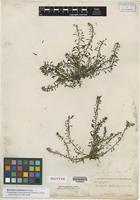
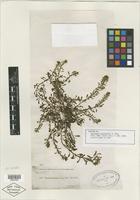
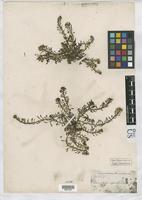
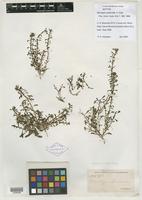
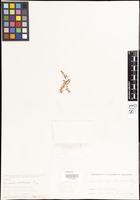
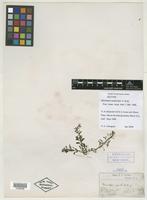
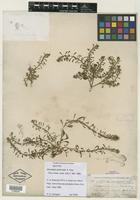
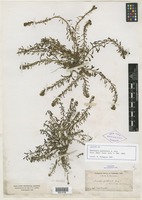
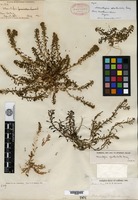
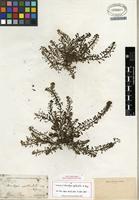
Isotype of Monolepis spathulata A. Gray [family AMARANTHACEAE]
Isotype of Monolepis spathulata A. Gray [family CHENOPODIACEAE]
Filed as Monolepis spathulata Gray, A. 1868 [family CHENOPODIACEAE]
Filed as Monolepis spathulata A. Gray [family CHENOPODIACEAE]
Monolepis spathulata A. Gray [family CHENOPODIACEAE]
Isotype of Monolepis spathulata A. Gray [family CHENOPODIACEAE]
Type of Monolepis spathulata A. Gray [family CHENOPODIACEAE]
Isotype of Monolepis spathulata A. Gray [family AMARANTHACEAE]
Previous
Next

Name

Identification
Isotype of Monolepis spathulata A. Gray [family AMARANTHACEAE ] (stored under name); Verified by Not on sheet,
Related name
  • Monolepis spathulata

Flora

Entry for Monolepis spathulata A. Gray [family CHENOPODIACEAE]
Herbarium
Flora of North America (FNA)
Collection
Flora of North America
Resource Type
Reference Sources
Entry From
Flora of North America, Vol 4,
Names
Monolepis spathulata A. Gray [family CHENOPODIACEAE], Proc. Amer. Acad. Arts, 7: 389. 1868
Treatment Author(s)
Noel H. Holmgren
Information
Stems prostrate to decumbent-ascending, 0.2–1.5(–2) dm, herbage glabrous to sparingly farinose. Leaves: blade of principal leaves oblanceolate to spatulate, 0.4–2.2 cm × 1–4(–6) mm, attenuate into petiolar base, margins entire, apex obtuse to rounded. Flowers: outer pistillate, usually lacking perianth; central bisexual, perianth segments 2–3, spatulate or obovate, ca. 0.5 mm; stamens 1–2. Utricles 0.5–0.7 mm; pericarp readily separating from seed, pale brown, turning black and dull, tuberculate-papillose. Seeds brown, ± lenticular, shiny. 2n = 18.
Phenology
mar-may (spring), jun-aug (summer)
Altitude range
100–2600 m;
Distribution
Mexico (Baja California).USA Calif.USA Nev.USA Oreg.

Related Materials

  • Terms and Conditions
  • Privacy Policy
  • Cookie Policy
  • Cookie Settings
  • Accessibility
  • Help
  • Contact Us
  • Facebook
  • Twitter
ITHAKA

JSTOR is part of ITHAKA, a not-for-profit organization helping the academic community use digital technologies to preserve the scholarly record and to advance research and teaching in sustainable ways.

©2000-2026 ITHAKA. All Rights Reserved. JSTOR®, the JSTOR logo, JPASS®, Aluka®, and ITHAKA® are registered trademarks of ITHAKA.

╳