JSTOR Global Plants Home
  • Home
  • Browse
  • About
  • Access
  • Account
    • Saved Items
    • Profile
  • Log in

Global Plants

Skip to Main Content
  • JSTOR Global Plants Home
  • Global Plants

    • Browse
    • About
    • Access
    • Account
      • Saved Items
      • Profile
Log in
  • Browse
  • About
  • Access
  • Account
    • Saved Items
    • Profile
Advanced Search

Compilation
Monechma cleomoides

9 Images see all

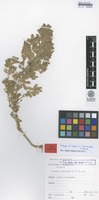
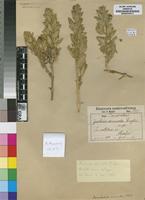
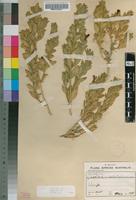
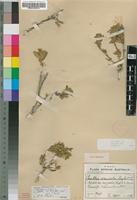
Monechma cleomoides (S.Moore) C.B.Clarke [family ACANTHACEAE]
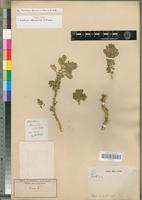
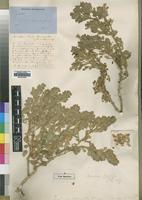
Isotype of Justicia cleomoides S. Moore [family ACANTHACEAE]
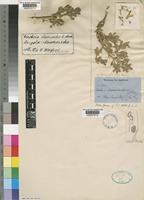
Isotype of Justicia cleomoides S.Moore [family ACANTHACEAE]
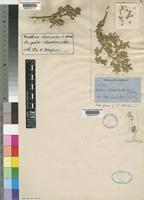
Isotype of Justicia cleomoides S. Moore [family ACANTHACEAE]
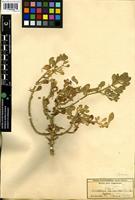
Isotype of Justicia arenicola Engl. [family ACANTHACEAE]
Syntype of Monechma arenicola (Engl.) C.B.Clarke [family ACANTHACEAE]
Type of Justicia cleomoides S.Moore [family ACANTHACEAE]
Previous
Next

Name

Identification
Monechma cleomoides (S.Moore) C.B.Clarke [family ACANTHACEAE ] (stored under name); Verified by C.B.Clarke, Justicia cleomoides S.Moore [family ACANTHACEAE ]
Related name
  • Justicia cleomoides
  • Monechma arenicola
  • Justicia arenicola
  • Monechma cleomoides

Flora

Entry for Monechma cleomoides [family ACANTHACEAE]
Herbarium
South African National Biodiversity Institute, Compton Herbarium, Cape Town (SAM)
Collection
Flora of Southern Africa
Resource Type
Reference Sources
Entry From
Flora of South Africa, (2003) Author: Dr J.P. Roux
Names
Monechma cleomoides [family ACANTHACEAE]
Common names
Justicia cleomoides S. Moore: 313 (1880). J. arenicola Engl.: 264 (1889). M. arenicola (Engl.) C.B. Clarke: 218(1900). Syntypes: Namibia, Hereroland, Marloth 1247 (SAM, iso.!); Hereroland, grassveld near Ubib, 1 100 m, Marloth 1445 (not seen).
Information
Shrub, dwarf shrub or suffrutex, 0.3-0.6 m high, compact, often dome-shaped and wider than high. Branches hairy or glabrescent, indumentum variable but mostly a double layer of short hairs and glands with second layer of longer, shining hairs. Leaves sessile or petiolate, variably hairy with single or double layer of hairs, shape variable, from spathulate, elliptic or lanceolate to occasionally linear-lanceolate, up to 47 mm long but usually less, midrib prominent; petiole up to 16 mm long. Flowers solitary, subsessile or pedicellate. Bracteoles densely hairy, 6-8 mm long, acute. Calyx hairy, lobes up to 9 mm long, lengthening slightly in fruit. Corolla 16-20 mm long, blue, blue-and-white or mauve. Capsule 10-13 mm long. Seeds round or oval, 3 x 2.5-3.0 mm, pale grey with black blotches.
Habitat
This species includes many discordant elements and only the nature of the indumentum holds the widely differing plants together. This consists, typically, of long, multicellular, uniseriate hairs interspersed through a shorter layer of pin-shaped glands and straight eglandular hairs. The hairs, both glandular and eglandular, are always transparent and usually shining, and it is this quality that characterises the hairs of this complex species. It is virtually certain that this unwieldy complex will readily be split into several species as soon as sufficient data are available.
Use
12. Monechma cleomoides (S. Moore) C.B. Clarke in Flora of tropical Africa 5: 220 (1900); P.G. Mey.: 44 (1968). Type: Angola, between Mossamedes and Cavalheiras, Welwitsch 5006 (BM, holo.!; K, iso.!).
Range
Distributed from the Angolan border of Namibia to Sandverhaar in southwestern Namibia; also in Angola (see type). Occurs in a wide variety of habitats, e.g. rocky ledges, mountain slopes, ravines, dry gravelly or sandy watercourses, between rocks, along river banks or beds and on sandy or gravel plains. Map 31.

Related Materials

  • Terms and Conditions
  • Privacy Policy
  • Cookie Policy
  • Cookie Settings
  • Accessibility
  • Help
  • Contact Us
  • Facebook
  • Twitter
ITHAKA

JSTOR is part of ITHAKA, a not-for-profit organization helping the academic community use digital technologies to preserve the scholarly record and to advance research and teaching in sustainable ways.

©2000-2026 ITHAKA. All Rights Reserved. JSTOR®, the JSTOR logo, JPASS®, Aluka®, and ITHAKA® are registered trademarks of ITHAKA.

╳