JSTOR Global Plants Home
  • Home
  • Browse
  • About
  • Access
  • Account
    • Saved Items
    • Profile
  • Log in

Global Plants

Skip to Main Content
  • JSTOR Global Plants Home
  • Global Plants

    • Browse
    • About
    • Access
    • Account
      • Saved Items
      • Profile
Log in
  • Browse
  • About
  • Access
  • Account
    • Saved Items
    • Profile
Advanced Search

Compilation
Mitracarpus villosus

18 Images see all

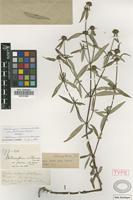
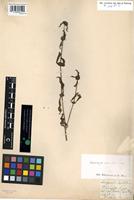
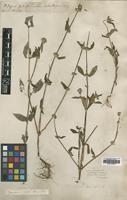
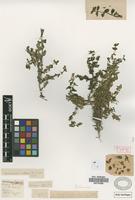
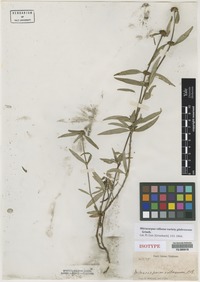
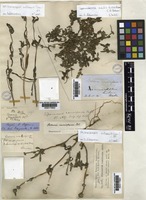
Holotype of Mitracarpus villosus (Sw.) DC. var. glabrescens Griseb. [family RUBIACEAE]
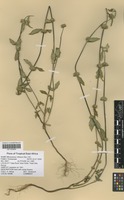
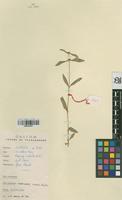
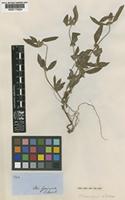
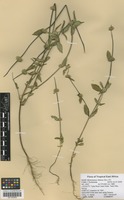
Filed as Mitracarpus villosus (Sw.) DC. [family RUBIACEAE]
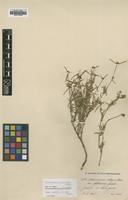
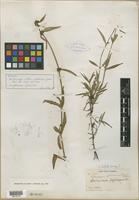
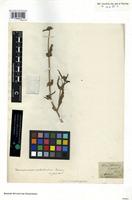
Isotype of Mitracarpus polycladus Urb. [family RUBIACEAE]
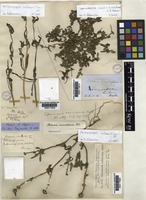
Syntype of Staurospermum verticillatum Schumach. and Thonn. [family RUBIACEAE]
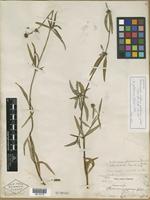
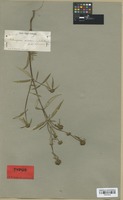
Mitracarpus hirtus (L.) DC. [family RUBIACEAE]
Holotype of Mitracarpus villosus (L.) DC. var. glabrescens Griseb. [family RUBIACEAE]
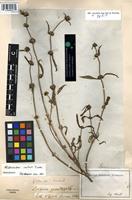
Syntype of Staurospermum verticillatum Schumach. and Thonn. [family RUBIACEAE]
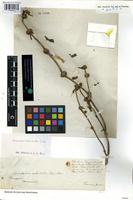
Type? of Mitracarpus villosus Cham. & Schltdl. [family RUBIACEAE]
Filed as Mitracarpus villosus (Sw.) DC. [family RUBIACEAE]
Type of Spermacoce villosa Sw. [family RUBIACEAE]
Filed as Mitracarpus villosus (Sw.) DC. [family RUBIACEAE]
Syntype of Staurospermum verticillatum Schumach. and Thonn. [family RUBIACEAE]
Isotype of Mitracarpus villosus (Sw.) DC. var. glabrescens Griseb. [family RUBIACEAE]
Mitracarpus hirtus (L.) DC. [family RUBIACEAE]
Filed as Mitracarpus villosus (Sw.) DC. [family RUBIACEAE]
Mitracarpus hirtus (L.) DC. [family RUBIACEAE]
Isotype of Mitracarpus villosus (Sw.) Cham. & Schltdl. var. glabrescens Griseb. [family RUBIACEAE]
Previous
Next

Name

Identification
Mitracarpus villosus (Sw.) DC. [family RUBIACEAE ] (stored under name); Spermacoce villosa Sw. [family RUBIACEAE ]
Related name
  • Mitracarpus radinophyllus
  • Mitracarpus glabrescens
  • Mitracarpus villosus
  • Crucispermum capitat
  • Mitracarpus scaber
  • Spermacoce villosa
  • Crucispermum spermacocioides
  • Borreria unrecorded
  • Mitracarpus puberulus
  • Crucispermum capitatum
  • Mitracarpus polycladus
  • Mitracarpus hirtus
  • Mitracarpum verticillatum
  • Staurospermum verticillatum

Flora

Entry for MITRACARPUS villosus (Sw.) DC. [family RUBIACEAE]
Herbarium
Royal Botanic Gardens, Kew (K)
Collection
Flora of Tropical East Africa
Resource Type
Reference Sources
Entry From
Flora of Tropical East Africa, page 1, (1976) Author: B. VERDCOURT
Names
MITRACARPUS villosus (Sw.) DC. [family RUBIACEAE], Prodr. 4: 572 (1830); Rendle in Fl. Jam. 7: 127, fig. 39 (1936); Gooding, Loveless & Proctor, Fl. Barbados: 405 (1965); Adams, Fl. Pl. Jam.: 733 (1972); Verdc., in K.B. 30: 317–322 (1975). Type: Jamaica, Swartz (S, holo.!, BM, iso.!)
Spermacoce hirta L. [family RUBIACEAE], Sp. Pl., ed. 2: 148 (1762); Sw., Obs. Bot.: 45 (1791),. Type: Jamaica, P. Browne (LINN, holo.!)
Spermacoce villosa Sw. [family RUBIACEAE], Prodr. Veg. Ind. Occ.: 29 (1788)
Mitracarpus scaber Zucc. [family RUBIACEAE], in Schultes & Schultes, Mant. Syst. Veg. 3: 210, 399 (1827); Hiern in F.T.A. 3: 243 (1877); Hepper, F.W.T.A., ed. 2, 2: 222 (1963). Type: ? country, Forte Louis,? collector (not found)
Staurospermum verticillatum Schumach. & Thonn. [family RUBIACEAE], Beskr. Guin. Pl.: 73 (1827);. Type: Ghana [Guinea], Thonning (C, holo.)
Mitracarpus senegalensis DC. [family RUBIACEAE], Prodr. 4: 572 (1839); Oliv. in Trans. Linn. Soc. 29: 89 (1873), nom superfl., based on Staurospermum verticillatum
Mitracarpus verticillatus (Schumach. & Thonn.) Vatke [family RUBIACEAE], in Linnaea 40: 196 (1876); K. Schum. in P.O.A. C: 394 (1895); F.W.T.A. 2: 136 (1931); Verdc., in K.B. 7: 360 (1952); Sebastine & Ramamurthy in Bull. Bot. Surv. India 9: 291 (1968); U.K.W.F.: 409 (1974)
Mitracarpus hirtus [family RUBIACEAE], [sensu K. Schum. in Martius, Fl. Bras. 6(6): 84 (1888) & in E. & P. Pf. IV.4: 142, fig. 46/U (1891); Standley in Field Mus. Publ. Bot. 7: 157 (1930), 331 (1931) & 473 (1931), non (Sw.) DC.]
Information
Erect or spreading annual herb (5–)9–40 cm. tall, with unbranched or sparsely to much-branched stems; branchlets pubescent with short curled ± adpressed hairs and often with spreading ones as well, the older with epidermis eventually peeling; sometimes quite woody at the base. Leaf-blades elliptic, 1–6 cm. long, 0.3–2.3 cm. wide, subacute at the apex, cuneate at the base, glabrescent to scabrid pubescent above, glabrescent or glabrous beneath save for hairs on the main nerves; margins often scabrid; petiole ± 1 mm. long, often densely pubescent and with ciliate margins; stipule-sheath 1–3 mm. long, divided into 6–9(–15) often colleter-tipped fimbriae, 1–5 mm. long, ciliate. Inflorescences numerous, present in most axils, subglobose, (0.5–)0.8–1.8 cm. in diameter; flowers sessile or almost so; bracteoles filamentous, white, 1–2 mm. long. Calyx-tube 1–1.4 mm. long; limb-tube 0.15–0.4 mm. long; lobes 4, 2 oblong-lanceolate, green with hyaline margins, rather thick, 1.3–2.3(–3) mm. long, and 2 hyaline, triangular-lanceolate, 0.55–1.5 mm. long, narrower than the others, all with usually ciliate margins and often hairy below. Corolla white, glabrous or slightly hairy outside; tube 1.4–1.9 mm. long; lobes ovate, 0.6–1 mm. long, 0.3–0.9 mm. wide. Flowers showing very slight heterostyly, the anthers varying in their degree of exsertion; style 1.1–1.6 mm. long; stigma 0.3–0.5 mm. long. Capsule straw-coloured, ± 1 mm. long and wide. Seeds pale yellow-brown, compressed ellipsoid-rectangular, of very characteristic appearance (see fig. 55/10), dorsally resembling a rectangle with a square portion removed from each corner, ventrally separated into 4 distinct areas by 4 impressed lines radiating from the hilum, 0.8 mm. long, 0.5 mm. wide, rugulose and reticulate. Fig. 55.
Range
DISTR. U1–4; K5, 7; T1, 3–6, 8 widespread in tropical Africa from Mauritania to Angola, Zaire & Central African Repuplic, Sudan, Malawi, Zambia, Seychelles and Cape Verde Is., also in India, Burma, Selangor, New Guinea and Marianas Is., West Indies and tropical S. America
Altitude range
0–1500 m.
Distribution
KENYA N. Kavirondo District near Uganda border, Bungoma, Nov. 1961, Tweedie 2256!KENYA Central Kavirondo District about 6.4 km. N. of Kisumu, Kisumu–Mutet road, Escarpment, 27 Sept. 1953, Drummond & Hemsley 4486!TANZANIA Mwanza, 30 May 1931, B. D. Burtt 2482!TANZANIA Tanga District E. Usambara foothills, Mt. Mlinga, 17 Aug. 1950, Verdcourt 316!TANZANIA Uzaramo District Vikindu Forest Reserve, Aug. 1953, Semsei 1343!UGANDA W. Nile District Maracha, 23 July 1953, Chancellor 24!UGANDA Teso District Serere, Dec. 1931, Chandler 261!UGANDA Mengo District near Entebbe, Bukiberu, 9 May 1969, Lye 2823!
Notes
This has always been considered a native African species, but I have been unable to separate it from M. villosus; it makes good sense that this sole African example of a genus widespread in tropical and subtropical America should have been introduced long ago (it has been known in Africa since the early part of the nineteenth century), probably from the West Indies. I am following Mr Dandy’s advice on the nomenclature of this species. Those using the name M. villosus usually claim that there is a bar to using the Linnean epithet hirtus since M. hirtus (Sw.) DC. is different, but the reference to Swartz is to a paper where Swartz divides Spermacoce hirta into two. He refers directly back to Reichard, Syst. Pl. 291. 3 where the references are to Syst. Veg., ed. 13 (Murray): 124 (1774) and to Browne Jam.: 141, i.e. directly back to Linnaeus’s original description. Under his treatment of M. villosus (Sw.) DC., DeCandolle does say “and almost certainly the same as Spermacoce hirta L.” which must be taken as an exclusion of this from consideration as the true basionym of M. hirtus (Sw.) DC. A full account of this problem is given in my paper in the K.B.

Related Materials

  • Terms and Conditions
  • Privacy Policy
  • Cookie Policy
  • Cookie Settings
  • Accessibility
  • Help
  • Contact Us
  • Facebook
  • Twitter
ITHAKA

JSTOR is part of ITHAKA, a not-for-profit organization helping the academic community use digital technologies to preserve the scholarly record and to advance research and teaching in sustainable ways.

©2000-2026 ITHAKA. All Rights Reserved. JSTOR®, the JSTOR logo, JPASS®, Aluka®, and ITHAKA® are registered trademarks of ITHAKA.

╳