JSTOR Global Plants Home
  • Home
  • Browse
  • About
  • Access
  • Account
    • Saved Items
    • Profile
  • Log in

Global Plants

Skip to Main Content
  • JSTOR Global Plants Home
  • Global Plants

    • Browse
    • About
    • Access
    • Account
      • Saved Items
      • Profile
Log in
  • Browse
  • About
  • Access
  • Account
    • Saved Items
    • Profile
Advanced Search

Compilation
Mitella diphylla

14 Images see all

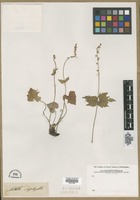
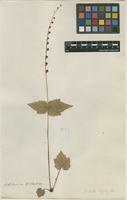
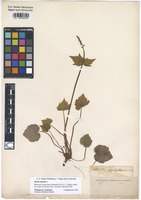
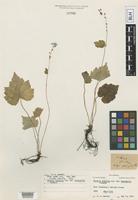
Filed as Mitella diphylla L. [family SAXIFRAGACEAE]
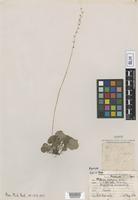
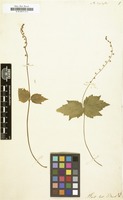
Type of Mitella trifida Graham [family SAXIFRAGACEAE]
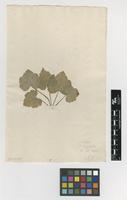
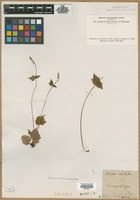
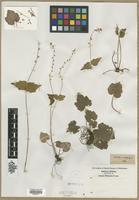
Filed as Mitella diphylla L. [family SAXIFRAGACEAE]
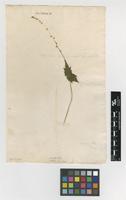
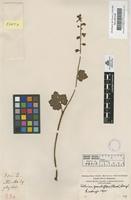
Holotype of Mitella diphylla L. f. efoliata Farw. [family SAXIFRAGACEAE]
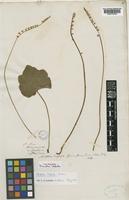
Filed as Mitella diphylla L. [family SAXIFRAGACEAE]
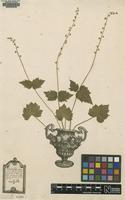
Lectotype of Mitella diphylla L. [family SAXIFRAGACEAE]
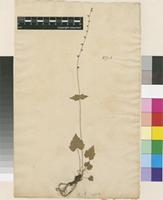
Filed as Mitella diphylla L. [family SAXIFRAGACEAE]
Filed as Mitella diphylla [family SAXIFRAGACEAE]
Filed as Mitella diphylla L. [family SAXIFRAGACEAE]
Filed as Tellima grandiflora (Pursh) Douglas [family SAXIFRAGACEAE]
Holotype of Mitella diphylla L. var. monophylla Farw. [family SAXIFRAGACEAE]
Filed as Mitella diphylla L. [family SAXIFRAGACEAE]
Previous
Next

Name

Identification
Mitella diphylla L. [family SAXIFRAGACEAE ] (stored under name); Verified by Not on sheet, Mitella diphylla L. [family SAXIFRAGACEAE ] Verified by Not on sheet,
Related name
  • Mitella diphylla
  • Tellima grandiflora
  • Mitella trifida
Common name
  • Two-leaf mitrewort, Flora of North America Vol. 8
  • mitrelle à deux feuilles, Flora of North America Vol. 8

Flora

Entry for Mitella diphylla Linnaeus [family SAXIFRAGACEAE]
Herbarium
Flora of North America (FNA)
Collection
Flora of North America
Resource Type
Reference Sources
Entry From
Flora of North America, Vol 8,
Names
Mitella diphylla Linnaeus [family SAXIFRAGACEAE], Sp. Pl., 1: 406. 1753 ,
Treatment Author(s)
Douglas E. Soltis
Craig C. Freeman
Information
Plants not stoloniferous. Flowering stems 10–45(–51) cm. Leaves: petiole 1.8–18 cm, medium and long stipitate-glandular, longer hairs retrorse, white or tan; blade ovate to broadly ovate, ± as long as or longer than wide, 1.4–8.5 × 1.4–9.6 cm, margins shallowly to prominently 3- or 5-lobed, crenate or dentate, irregularly to regularly ciliate, apex of terminal lobe acute, rarely obtuse, surfaces subglabrous or sparsely short and long stipitate-glandular; cauline leaves 2, mid cauline or distal, opposite or subopposite, subsessile to short-petiolate, blade (1.1–)1.6–8 × 0.7–6.5 cm. Inflorescences 1–5, remotely or closely 5–22(–27)-flowered, 1 flower per node, not secund, 10–45(–51) cm, sparsely to densely spreading or retrorsely long stipitate-glandular proximally, short stipitate-glandular distally. Pedicels 1–3 mm, short stipitate-glandular. Flowers: hypanthium broadly campanulate, 1–1.6 × 2–3.4 mm; sepals spreading, greenish white or yellowish green, triangular, 1–1.3 × 0.8–1.1 mm; petals white, 9–11(–15)-lobed, 2–4 mm, lobes linear, lateral lobes spreading or ascending; stamens 10, opposite and alternate with sepals; filaments white, 0.2–0.3 mm; anthers 0.1–0.3 × 0.1–0.2 mm; ovary nearly superior; styles divergent, flattened, 0.1–0.2 mm; stigmas unlobed. Seeds dark reddish brown or blackish, 1.2–1.6 mm, nearly smooth. 2n = 14.
Phenology
Flowering Apr–Jun
Altitude range
300–2000 m
Distribution
USA Ala.USA Ark.USA Conn.USA Del.USA D.C.USA Ga.USA Ill.USA Ind.USA IowaUSA Ky.USA Md.USA Mass.USA Mich.USA Minn.USA Miss.USA Mo.USA N.H.USA N.J.USA N.Y.USA N.C.USA OhioUSA Pa.USA S.C.USA Tenn.USA Vt.USA Va.USA W.Va.USA Wis.Canada Ont.Canada Que.
Discussion
A decoction from whole plants of Mitella diphylla was used by the Iroquois as an emetic, eye medicine, and good-luck charm; seeds were used by the Menominee as sacred items in medicine dances (D. E. Moerman 1998).
Mitella intermedia T. A. Bruhin ex Small & Rydberg is a presumed interspecific hybrid between M. diphylla and M. nuda. It has been reported from New York and Wisconsin.

Related Materials

  • Terms and Conditions
  • Privacy Policy
  • Cookie Policy
  • Cookie Settings
  • Accessibility
  • Help
  • Contact Us
  • Facebook
  • Twitter
ITHAKA

JSTOR is part of ITHAKA, a not-for-profit organization helping the academic community use digital technologies to preserve the scholarly record and to advance research and teaching in sustainable ways.

©2000-2026 ITHAKA. All Rights Reserved. JSTOR®, the JSTOR logo, JPASS®, Aluka®, and ITHAKA® are registered trademarks of ITHAKA.

╳