JSTOR Global Plants Home
  • Home
  • Browse
  • About
  • Access
  • Account
    • Saved Items
    • Profile
  • Log in

Global Plants

Skip to Main Content
  • JSTOR Global Plants Home
  • Global Plants

    • Browse
    • About
    • Access
    • Account
      • Saved Items
      • Profile
Log in
  • Browse
  • About
  • Access
  • Account
    • Saved Items
    • Profile
Advanced Search

Compilation
Mitella caulescens

9 Images see all

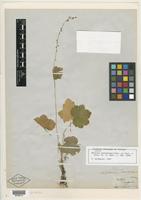
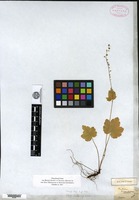
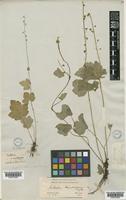
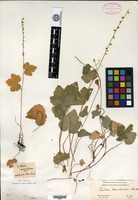
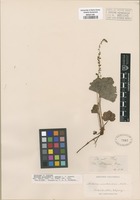
Type of Mitella caulescens Nutt. ex Torr. & A. Gray [family SAXIFRAGACEAE]
Type of Mitella caulescens Nuttall ex Torrey & A. Gray [family SAXIFRAGACEAE]
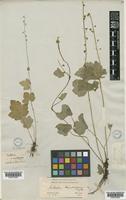
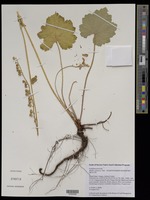
Mitella caulescens Nutt. [family SAXIFRAGACEAE]
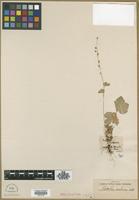
Type of Mitella caulescens Nutt. [family SAXIFRAGACEAE]
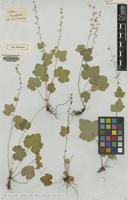
Mitella caulescens Nutt. [family SAXIFRAGACEAE]
Type? of Mitella caulescens Nuttall ex Torrey & A. Gray [family SAXIFRAGACEAE]
Mitella caulescens [family SAXIFRAGACEAE]
Type? of Mitella caulescens Nutt. [family SAXIFRAGACEAE]
Holotype of Mitella pentandra Hook. [family SAXIFRAGACEAE]
Previous
Next

Name

Identification
Mitella caulescens Nutt. [family SAXIFRAGACEAE ] (stored under name);
Related name
  • Mitella caulescens
Common name
  • Creeping mitrewort, Flora of North America Vol. 8

Flora

Entry for Mitella caulescens Nuttall [family SAXIFRAGACEAE]
Herbarium
Flora of North America (FNA)
Collection
Flora of North America
Resource Type
Reference Sources
Entry From
Flora of North America, Vol 8,
Names
Mitella caulescens Nuttall [family SAXIFRAGACEAE], in J. Torrey and A. Gray, Fl. N. Amer., 1: 586. 1840 ,
Mitellastra caulescens (Nuttall) Howell [family SAXIFRAGACEAE]
Treatment Author(s)
Douglas E. Soltis
Craig C. Freeman
Information
Plants usually stoloniferous. Flowering stems 13–45 cm. Leaves: petiole 1.5–14 cm, short stipitate-glandular and, usually, long stipitate-glandular, longer hairs spreading to retrorse, white; blade broadly cordate to broadly ovate, ± as long as wide, 1.2–6.5(–8.5) × 1.4–7(–8.2) cm, margins 3-, 5-, or 7-lobed, crenate-dentate, irregularly ciliate, apex of terminal lobe acute to obtuse, surfaces short stipitate-glandular and sparsely long stipitate-glandular; cauline leaves 1–3, proximal or mid cauline, alternate, sessile or petiolate, blade 0.3–4.3(–6) × 0.4–4.4(–7) cm. Inflorescences 1–2(–4), remotely 5–25-flowered, 1(–2) flowers per node, (anthesis basipetalous), not secund, 13–45 cm, short stipitate-glandular and sparsely long stipitate-glandular proximally, short stipitate-glandular distally. Pedicels 2–8 mm, short stipitate-glandular. Flowers: hypanthium broadly campanulate, 1.5–2 × 3–5.5 mm; sepals spreading or recurved, greenish, deltate-ovate, 0.9–1.5 × 1.4–2 mm; petals whitish green or greenish, sometimes purple tinged proximally, 5–9-lobed, 3–4 mm, lobes linear, lateral lobes spreading; stamens 5, opposite sepals; filaments usually purple proximally and white distally, sometimes entirely white, 0.6–0.9 mm; anthers 0.2–0.4 × 0.2–0.4 mm; ovary 1/2 inferior; styles erect or spreading, cylindric, 0.8–1.1 mm; stigmas unlobed. Seeds reddish purple or dark reddish brown, 0.7–1 mm, pitted. 2n = 14.
Phenology
Flowering Apr–Jul
Altitude range
0–2100 m
Distribution
USA Calif.USA IdahoUSA Mont.USA Oreg.USA Wash.Canada B.C.

Related Materials

  • Terms and Conditions
  • Privacy Policy
  • Cookie Policy
  • Cookie Settings
  • Accessibility
  • Help
  • Contact Us
  • Facebook
  • Twitter
ITHAKA

JSTOR is part of ITHAKA, a not-for-profit organization helping the academic community use digital technologies to preserve the scholarly record and to advance research and teaching in sustainable ways.

©2000-2026 ITHAKA. All Rights Reserved. JSTOR®, the JSTOR logo, JPASS®, Aluka®, and ITHAKA® are registered trademarks of ITHAKA.

╳