JSTOR Global Plants Home
  • Home
  • Browse
  • About
  • Access
  • Account
    • Saved Items
    • Profile
  • Log in

Global Plants

Skip to Main Content
  • JSTOR Global Plants Home
  • Global Plants

    • Browse
    • About
    • Access
    • Account
      • Saved Items
      • Profile
Log in
  • Browse
  • About
  • Access
  • Account
    • Saved Items
    • Profile
Advanced Search

Compilation
Mirabilis nyctaginea

9 Images see all

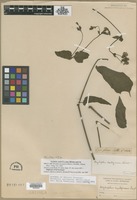
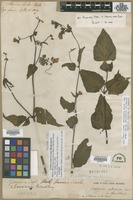
Isolectotype of Allionia ovata Pursh [family NYCTAGINACEAE]
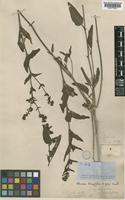
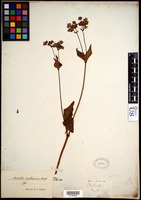
Mirabilis nyctaginea (Michx.) MacMill. [family NYCTAGINACEAE]
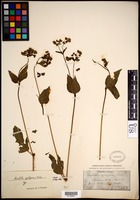
Mirabilis nyctaginea [family NYCTAGINACEAE]
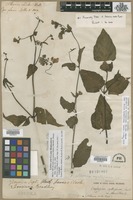
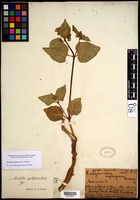
Filed as Mirabilis nyctaginea (Michx.) MacMill. [family NYCTAGINACEAE]
Mirabilis nyctaginea [family NYCTAGINACEAE]
Filed as Mirabilis nyctaginea (Michx.) MacMill. [family NYCTAGINACEAE]
Lectotype of Allionia ovata Pursh [family NYCTAGINACEAE]
Previous
Next

Name

Identification
Mirabilis nyctaginea (Michx.) MacMill. [family NYCTAGINACEAE ] (stored under name); Allionia oblongifolia (A.Gray) Small [family NYCTAGINACEAE ] Oxybaphus nyctagineus Porter & J.M.Coult. [family NYCTAGINACEAE ]
Related name
  • Allionia oblongifolia
  • Oxybaphus nyctagineus
  • Mirabilis nyctaginea

Flora

Entry for Mirabilis nyctaginea (Michaux ) MacMillan [family NYCTAGINACEAE]
Herbarium
Flora of North America (FNA)
Collection
Flora of North America
Resource Type
Reference Sources
Entry From
Flora of North America, Vol 4,
Names
Mirabilis nyctaginea (Michaux ) MacMillan [family NYCTAGINACEAE], Metasp. Minnesota Valley, 217. 1892
Allionia nyctaginea Michaux [family NYCTAGINACEAE], Fl. Bor.-Amer., 1: 100. 1803
Oxybaphus nyctagineus (Michaux) Sweet [family NYCTAGINACEAE]
Past names
nyctagineus
Treatment Author(s)
Richard W. Spellenberg
Information
Stems usually erect or ascending, occasionally decumbent, leafy mostly in proximal 2/3 of plant, openly forked distally, 4–15 dm, basally usually glabrous or puberulent in 2 lines, rarely spreading-pubescent; distally stems usually puberulent in 2 lines, occasionally glabrate, rarely spreading glandular-pubescent. Leaves ascending at 45–80°, abruptly reduced to inflorescence; petiole 0.2–2 cm; blade green, ovate-lanceolate to ovate or triangular, 3–10 × 2–6.5 cm, usually ± thin, base obtuse, round, truncate, or cordate, apex acute to acuminate, rarely rounded, surfaces usually glabrous, sometimes puberulent or sparsely hispidulous. Inflorescences terminal and in upper axils, subumbellate clusters at ends of long, forked branches; peduncle 5–20 mm, usually pubescent with ascending, often curved, glandular or eglandular hairs, crosswalls of hairs pale; involucres pale green, often tinged pinkish, widely bell-shaped to almost rotate, 4–6 mm in flower, 8–15 mm in fruit, glabrous or glabrate but with minute curved hairs on margins, or rarely puberulent or pilose throughout, 50–90% connate, lobes ovate to broadly ovate. Flowers (2–)3(–5) per involucre; perianth usually pink to reddish purple, rarely white, 1 cm. Fruits dark grayish brown to reddish brown (ribs and tubercles usually slightly paler), narrowly obovate and tapering at both ends, 3.4–5 mm, shaggy-pubescent with spreading, sometimes tufted, hairs, 0.3–0.4 mm, sometimes also with layer of minute hairs; ribs usually irregularly and deeply notched, especially toward apex, round to bluntly angled, 0.5–0.75 times width of sulci, 0.5–1 times as wide as high; sulci with pale small to tall tubercles that are sometimes horizontally lengthened and shelflike. 2n = 58.
Phenology
mar-may (spring), jun-aug (summer), sep-nov (fall)
Altitude range
100–2200 m;
Distribution
introduced in MexicoEurope.USA Ala.USA Ariz.USA Ark.USA Calif.USA Colo.USA Conn.USA D.C.USA Del.USA IdahoUSA Ill.USA Ind.USA IowaUSA Kans.USA Ky.USA La.USA MaineUSA Md.USA Mass.USA Mich.USA Minn.USA Mo.USA Mont.USA Nebr.USA Nev.USA N.H.USA N.J.USA N.Mex.USA N.Y.USA N.C.USA N.Dak.USA OhioUSA Okla.USA Oreg.USA Pa.USA R.I.USA S.Dak.USA Tenn.USA Tex.USA UtahUSA Vt.USA Va.USA Wash.USA W.Va.USA Wis.USA Wyo.Canada Alta.Canada B.C.Canada Man.Canada Ont.Canada Que.Canada Sask.
Discussion
Mirabilis nyctaginea is considered a noxious weed in some states. The holotype of Mirabilis ×collina Shinners is a hybrid between M. nyctaginea and M. albida. On the Great Plains, M. nyctaginea also appears to intergrade with M. albida. Prominence of the tubercles and redness of the fruits decreases in western populations. Near the Great Lakes, comparatively narrow-leaved plants with sparsely hirsute stems seem to be intergrades between M. nyctaginea and more or less hirsute M. albida. Mirabilis ×serotina Shinners is a hybrid between M. nyctaginea and M. glabra.

Related Materials

  • Terms and Conditions
  • Privacy Policy
  • Cookie Policy
  • Cookie Settings
  • Accessibility
  • Help
  • Contact Us
  • Facebook
  • Twitter
ITHAKA

JSTOR is part of ITHAKA, a not-for-profit organization helping the academic community use digital technologies to preserve the scholarly record and to advance research and teaching in sustainable ways.

©2000-2026 ITHAKA. All Rights Reserved. JSTOR®, the JSTOR logo, JPASS®, Aluka®, and ITHAKA® are registered trademarks of ITHAKA.

╳