JSTOR Global Plants Home
  • Home
  • Browse
  • About
  • Access
  • Account
    • Saved Items
    • Profile
  • Log in

Global Plants

Skip to Main Content
  • JSTOR Global Plants Home
  • Global Plants

    • Browse
    • About
    • Access
    • Account
      • Saved Items
      • Profile
Log in
  • Browse
  • About
  • Access
  • Account
    • Saved Items
    • Profile
Advanced Search

Compilation
Mimusops monroi

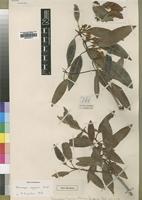
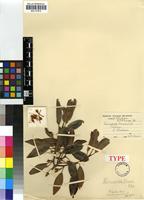
2 Images see all

Type of Mimusops monroi S.Moore [family SAPOTACEAE]
Type of Mimusops zeyheri Sond. [family SAPOTACEAE]
Previous
Next

Name

Identification
Mimusops zeyheri Sond. [family SAPOTACEAE ] (stored under name); Verified by Kupicha,F., Mimusops monroi S.Moore [family SAPOTACEAE ]
Related name
  • Mimusops zeyheri
  • Mimusops monroi

Flora

Entry for MIMUSOPS zeyheri Sond. [family SAPOTACEAE]
Herbarium
Royal Botanic Gardens, Kew (K)
Collection
Flora of Tropical East Africa
Resource Type
Reference Sources
Entry From
Flora of Tropical East Africa, page 1, (1968) Author: J. H. Hemsley
Names
MIMUSOPS zeyheri Sond. [family SAPOTACEAE], in Linnaea 23: 74 (1850); Engl., E.M. 8: 73, t. 27/C (1904); Meeuse in Fl. Pl. Afr. 30, t. 1164 (1954) & in Bothalia 7: 361 (1960), pro parte, excl. syn. M. kirkii; F.F.N.R.: 321 (1962); Meeuse in F.S.A. 26: 47 (1963), pro parte, excl. syn. M. kirkii. Type: South Africa, Transvaal, Magaliesberg Range, Zeyher 1130 (LY, holo.!, K, OXF, iso.!)
MIMUSOPS monroi S. Moore [family SAPOTACEAE], in J.B. 49: 154 (1911). Type: Rhodesia, Fort Victoria, Monro 761 (BM, holo. !)
Information
Small to medium tree (rarely a shrub), height up to 20 m., with much branched dense evergreen crown; bark grey or blackish, rough. Young branches and petioles with ferrugineous pubescence, later wearing away. Petioles 1–3 cm. long. Leaf-lamina thinly coriaceous to coriaceous, ± elliptic, obovate-elliptic to ± oblanceolate, (4-)5–9(–11) cm. long, (l.7-)2.3–4(–4.5) cm. wide, obtuse to ± broadly acute or rarely shortly acuminate, broadly cuneate; upper surface dark green and glossy, with slightly raised nervation, lower surface paler, practically glabrous except on and near midrib; lateral nerves ascending, finely raised. Flowers usually 2–3 per axil; pedicels l.5–2.5(–3.5) cm. long, curved, with dense ferrugineous or brownish pubescence. Outer sepals ± lanceolate, up to 11 mm. long, 4 mm. wide, externally with dense ferrugineous or brownish pubescence. Corolla-lobes cream or whitish, trifid; segments linear-lanceolate, up to 9.5 mm. long; tube up to 2 mm. long. Filaments up to 3 mm. long. Staminodes narrowly lanceolate, up to 5 mm. long, narrowly acute, simple or sometimes minutely laciniate. Ovary up to 2.5 mm. long, densely pilose; style tapering, up to 1 cm. long. Mature fruit an orange or yellowish ± ellipsoid or ovoid-subglobose berry, 1.5–3.5 cm. long and 1.5–2.5 cm. in diameter, with firm tough skin. Seeds 1–2 (very rarely more), variable in shape, generally ± ellipsoid or sometimes ± oblong when more than one seed present, l–2(–2.5) cm. long, up to 1.2 cm. wide and 6 mm. thick; testa shiny pale brown, hard and horny; hilum ± basal in small circular depression.
Range
DISTR. T4–7 Mozambique, Malawi, Zambia, Rhodesia and Botswana to Natal
Altitude range
1150–2100 m.
Distribution
TANGANYIKA Ufipa District Sumbawanga-Pito, 25 Nov. 1949 (fl.), Bullock 1935 !TANGANYIKA Dodoma District Saranda-Kondoa road, Ruwiri R., 30 Nov. 1932 (fl.), B. D. Burtt 3807 !TANGANYIKA Mbeya District Mbeya-Sao Hill road, Kinani R., 29 Oct. 1947 (fl.), Brenan & Greenway 8232 !
Notes
Closely related to and, over part of the range, difficult to distinguish from M. fruticosa A. DC. In East Africa, however, the two species are reasonably well defined both ecologically and geographically. Coupled with this are the ± elliptic to oblanceolate leaf-shapes and the ovoid to ellipsoid fruits of M. zeyheri. M. fruticosa has been treated as a distinct coastal species in the present work, see page 53.

Related Materials

  • Terms and Conditions
  • Privacy Policy
  • Cookie Policy
  • Cookie Settings
  • Accessibility
  • Help
  • Contact Us
  • Facebook
  • Twitter
ITHAKA

JSTOR is part of ITHAKA, a not-for-profit organization helping the academic community use digital technologies to preserve the scholarly record and to advance research and teaching in sustainable ways.

©2000-2026 ITHAKA. All Rights Reserved. JSTOR®, the JSTOR logo, JPASS®, Aluka®, and ITHAKA® are registered trademarks of ITHAKA.

╳