JSTOR Global Plants Home
  • Home
  • Browse
  • About
  • Access
  • Account
    • Saved Items
    • Profile
  • Log in

Global Plants

Skip to Main Content
  • JSTOR Global Plants Home
  • Global Plants

    • Browse
    • About
    • Access
    • Account
      • Saved Items
      • Profile
Log in
  • Browse
  • About
  • Access
  • Account
    • Saved Items
    • Profile
Advanced Search

Compilation
Mimusops dependens

4 Images see all

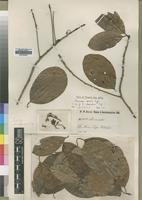
Isotype of Mimusops dependens Engl. [family SAPOTACEAE]
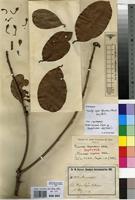
Type of Mimusops dependens Engl. [family SAPOTACEAE]
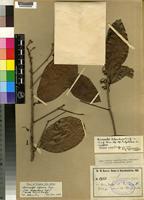
Isotype of Mimusops dependens Engl. [family SAPOTACEAE]
Previous
Next

Name

Identification
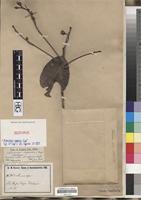
Mimusops riparia Engl. [family SAPOTACEAE ] (stored under name); Isotype of Mimusops dependens Engl. [family SAPOTACEAE ]
Related name
  • Mimusops riparia
  • Mimusops dependens

Flora

Entry for MIMUSOPS riparia Engl. [family SAPOTACEAE]
Herbarium
Royal Botanic Gardens, Kew (K)
Collection
Flora of Tropical East Africa
Resource Type
Reference Sources
Entry From
Flora of Tropical East Africa, page 1, (1968) Author: J. H. Hemsley
Names
MIMUSOPS riparia Engl. [family SAPOTACEAE], in E.J. 28: 448 (1900) & E.M. 8: 74, t. 28/C (1904); T.T.C.L.: 565 (1949); K.T.S.: 528 (1961). Type: Tanganyika, Kilosa/ Iringa District, Uhehe on Ruaha R., Goetze 451 (B, holo. †, K, iso. !)
MIMUSOPS useguhensis Engl. [family SAPOTACEAE], E.M. 8: 67, t. 26/B (1904); T.T.C.L.: 566(1949). Type: Tanganyika, Pangani District, Makinjumbe, Scheffler 258 (B, holo. †)
MIMUSOPS dependens Engl. [family SAPOTACEAE], E.M.: 69 (1904); T.T.C.L.: 565 (1949). Type: Tanganyika, Lindi District, Rondo [Mwera] Plateau, Liho R. at Palihope, Busse 2853 (B, holo. †, BM, EA, HBG, iso.!)
Information
Small to medium-sized tree with spreading crown, height up to 20 m. Young branches and petioles with brownish puberulence, later becoming glabrous. Petioles 1–2.5 cm. long. Leaf-lamina subcoriaceous to coriaceous, elliptic to elliptic-obovate, (6-)7.5–13 cm. long, (3-)4–7.7 cm. wide, obtuse to shortly acuminate, broadly cuneate, glabrous; nerves and veins finely raised on both upper and lower surfaces. Flowers 1–3 in current leaf axils. Pedicels 2–4 cm. long; both pedicels and outer sepals with dense closely appressed indumentum of short brownish hairs. Outer sepals ± lanceolate, up to 1.5 cm. long and 5 mm. wide. Corolla cream; lobes trifid, narrowly lanceolate, up to 1.7 cm. long; tube up to 2.5 mm. long. Filaments up to 3.5 mm. long; anthers up to 4.5 mm. long; staminodes ± oblong to elliptic, up to 6 mm. long, apex attenuate or ± obtuse, densely pilose externally. Ovary subglobose, up to 3 mm. in diameter, pilose; style up to 2 cm. long. Fruit a pale yellow to reddish-yellow subglobose berry, up to 3.5 cm. in diameter; pericarp firm. Seeds 1–5, elliptic-oblong and laterally compressed, up to 1.9 cm. long; testa pale brown and glossy; scar ± basal.
Range
DISTR. K7; T3, 6–8 not recorded outside these districts
Altitude range
100–1000 m.
Distribution
KENYA Teita District Taveta, Lumi R., 22 Jan. 1936 (fr.), Greenway 4473 !TANGANYIKA Pangani District between Hale and Makinjumbe, 1 July 1953 (fl. & fr.), Drummond da Hemsley 3132! & Mauri, 7 Sept. 1951 (fr.), Greenway 8701!TANGANYIKA Ulanga District near Ifakara, May 1960 (fl. & yng. fr.), Haerdi 450/0 !
Notes
A series of large-leaved and large-fruited riverine trees bearing close affinity with M. fruticosa A. DC. are brought together under the name M. riparia. Relationship between the two species is difficult to define, the obviously larger flowers and fruits of M. riparia confer upon the latter the appearance of a “giant” version, but few other characters except mere size exist upon which to base distinction. The species is maintained as such for the present, field investigation being required to further elucidate the true relationship between M. fruticosa and M. riparia.

Related Materials

  • Terms and Conditions
  • Privacy Policy
  • Cookie Policy
  • Cookie Settings
  • Accessibility
  • Help
  • Contact Us
  • Facebook
  • Twitter
ITHAKA

JSTOR is part of ITHAKA, a not-for-profit organization helping the academic community use digital technologies to preserve the scholarly record and to advance research and teaching in sustainable ways.

©2000-2026 ITHAKA. All Rights Reserved. JSTOR®, the JSTOR logo, JPASS®, Aluka®, and ITHAKA® are registered trademarks of ITHAKA.

╳