JSTOR Global Plants Home
  • Home
  • Browse
  • About
  • Access
  • Account
    • Saved Items
    • Profile
  • Log in

Global Plants

Skip to Main Content
  • JSTOR Global Plants Home
  • Global Plants

    • Browse
    • About
    • Access
    • Account
      • Saved Items
      • Profile
Log in
  • Browse
  • About
  • Access
  • Account
    • Saved Items
    • Profile
Advanced Search

Compilation
Mimusops aedificatoria

11 Images see all

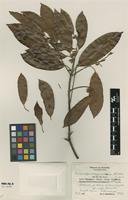
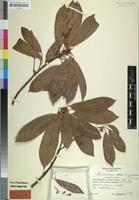
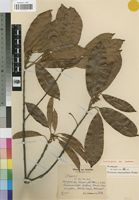
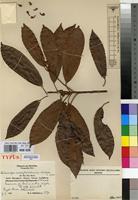
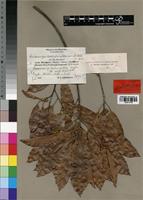
Isotype of Mimusops aedificatoria Mildbr. [family SAPOTACEAE]
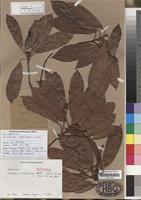
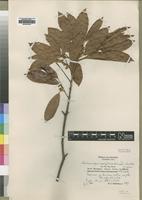
Type of Mimusops aedificatoria Mildbr. [family SAPOTACEAE]
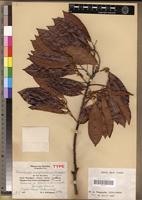
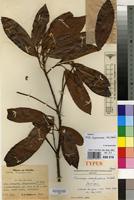
Isotype of Mimusops aedificatoria Mildbr. [family SAPOTACEAE]
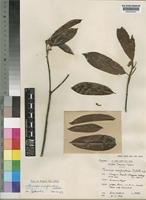
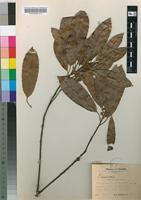
Type of Mimusops aedificatoria Mildbr. [family SAPOTACEAE]
Isotype of Mimusops aedificatoria Mildbr. [family SAPOTACEAE]
Previous
Next

Name

Identification
Isotype of Mimusops aedificatoria Mildbr. [family SAPOTACEAE ] (stored under name);
Related name
  • Mimusops aedificatoria

Flora

Entry for MIMUSOPS aedificatoria Mildbr. [family SAPOTACEAE]
Herbarium
Royal Botanic Gardens, Kew (K)
Collection
Flora of Tropical East Africa
Resource Type
Reference Sources
Entry From
Flora of Tropical East Africa, page 1, (1968) Author: J. H. Hemsley
Names
MIMUSOPS aedificatoria Mildbr. [family SAPOTACEAE], in N.B.G.B. 14: 109 (1938); T.T.C.L.: 565 (1949); K.T.S.: 527 (1961). Type: Tanganyika, NW. side of Uluguru Mts., Schlieben 3896 (B, holo. †, BM, K, iso. !)
Information
Medium-sized tree, height up to 30 m., slightly buttressed at base. Young branches and petioles with dense ferrugineous or dark brown pubescence, older branches glabrescent. Petioles 1.5–3 cm. long. Leaf-lamina oblong-elliptic to oblanceolate, 6–15.5 cm. long, 1.8–5.1 cm. wide, shortly acuminate, rarely acute, base tapering and narrowly cuneate; young leaves with dense ferrugineous pubescence on both surfaces, soon rubbing away; upper surface with fine raised and reticulate venation, lower surface with less prominent venation, practically glabrous or with hairs along midrib. Flowers 2–4 per axil; pedicels slightly curved, 5–10 mm. long, with dense ferrugineous hairs. Outer sepals ± ovate, up to 6 mm. long, densely ferrugineous pubescent externally. Corolla cream; lobes trifid; median lobe wider than two outer, up to 5.5 mm. long; tube up to 2 mm. long. Filaments up to 1.5 mm. long; staminodes ± lanceolate, up to 4 mm. long, acute, densely hairy externally. Ovary with dense straight hairs; style 1.5–3 mm. in length. Mature fruit a yellowish subglobose to broadly ellipsoid berry, up to 2 cm. long and 1.5 cm. in diameter; pericarp thick and leathery. Seed solitary, pale brown, up to 1.5 cm. long, ± triangular in cross-section and ridged along the broader margin with a small projection at base; scar basal.
Range
DISTR. K7; T3, 6, 7 and southwards into Malawi
Altitude range
200–1600 m.
Distribution
KENYA Kwale District Shimba Hills, Cha Shimba Forest, 22 July 1953 (fr.), Templer 3 ! & near Kwale in Cha Shimba Forest, Apr. 1938 (fl.), Dale in F.D. 3869 !TANGANYIKA Lushoto District Amani, Kiumba, 25 Mar. 1913 (fl.), Lommel in Herb. Amani 3968 ! & Mashewa, 19 Dec. 1938 (fl.), Chambo 10 !TANGANYIKA Morogoro District Mtibwa Forest Reserve [near Turiani], 20 Aug. 1951 (fr.), Greenway & Farquhar 8624 !
Notes
Relationships between this species and M. blantyreana Engl, are not clearly understood. Type material of the latter has not been seen but there is reason to believe the two to be closely related. Fruits of M. aedificatoria are small, ± ellipsoid or subglobose, and are borne on short stalks, ± 1 cm. long. In leaf characters there is close similarity between the two, the leaf shapes of M. aedificatoria falling near to some of those Malawi specimens thought to agree with the author’s original description of M. blantyreana. Present material, particularly of flowering and fruiting stages, is inadequate, however, and further action is not thought justifiable at the present time.

Related Materials

  • Terms and Conditions
  • Privacy Policy
  • Cookie Policy
  • Cookie Settings
  • Accessibility
  • Help
  • Contact Us
  • Facebook
  • Twitter
ITHAKA

JSTOR is part of ITHAKA, a not-for-profit organization helping the academic community use digital technologies to preserve the scholarly record and to advance research and teaching in sustainable ways.

©2000-2026 ITHAKA. All Rights Reserved. JSTOR®, the JSTOR logo, JPASS®, Aluka®, and ITHAKA® are registered trademarks of ITHAKA.

╳