JSTOR Global Plants Home
  • Home
  • Browse
  • About
  • Access
  • Account
    • Saved Items
    • Profile
  • Log in

Global Plants

Skip to Main Content
  • JSTOR Global Plants Home
  • Global Plants

    • Browse
    • About
    • Access
    • Account
      • Saved Items
      • Profile
Log in
  • Browse
  • About
  • Access
  • Account
    • Saved Items
    • Profile
Advanced Search

Compilation
Mimusops acutifolia

13 Images see all

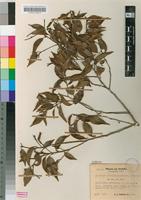
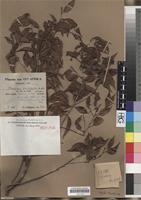
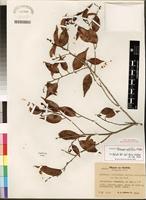
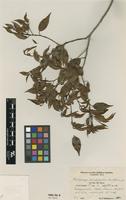
Type of Mimusops acutifolia Mildbr. [family SAPOTACEAE]
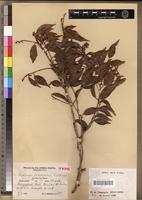
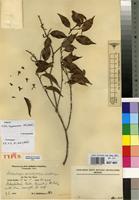
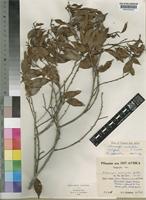
Isotype of Mimusops acutifolia Mildbr. [family SAPOTACEAE]
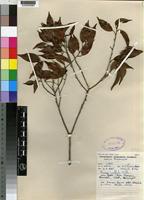
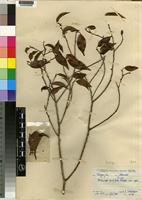
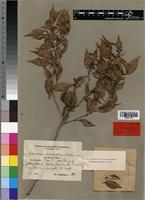
Type of Mimusops acutifolia Mildbr. [family SAPOTACEAE]
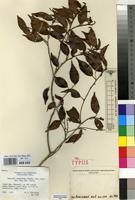
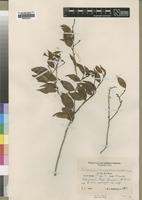
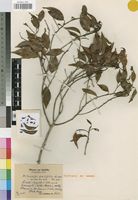
Isotype of Mimusops acutifolia Mildbr. [family SAPOTACEAE]
Previous
Next

Name

Identification
Mimusops acutifolia Mildbr. [family SAPOTACEAE ] (stored under name);
Related name
  • Mimusops acutifolia

Flora

Entry for MIMUSOPS acutifolia Mildbr. [family SAPOTACEAE]
Herbarium
Royal Botanic Gardens, Kew (K)
Collection
Flora of Tropical East Africa
Resource Type
Reference Sources
Entry From
Flora of Tropical East Africa, page 1, (1968) Author: J. H. Hemsley
Names
MIMUSOPS acutifolia Mildbr. [family SAPOTACEAE], in N.B.G.B. 14: 108 (1938); T.T.C.L.: 565 (1949). Type: Tanganyika, Lindi District, Lake Lutamba, Schlieben 6102 (B, holo. †, BM, K, iso.!)
Information
Shrub or small tree up to 15 m. high with slender branchlets, pubescent when young, later becoming glabrous. Petiole 5–10 mm. long. Leaf-lamina rigidly coriaceous, lanceolate to ovate, up to 5 cm. long and 2.2 cm. wide, gradually tapering into a long acuminate apex, base obtuse to broadly cuneate, nervation inconspicuous, primary nerves ± 10 and slightly raised on lower surface. Flowers in axils of current leaves; pedicels slender, curving, up to 6 mm. long, ferrugineous pilose. Outer sepals up to 6 mm. long and 2 mm. wide. Corolla white; lobes trifid; median segment up to 4 mm. long; outer segments up to 1.5 mm. long; tube short, up to 1.5 mm. long. Stamens 3; filaments ± 1 mm. long; anthers up to 2 mm. long; staminodes subequal in length to corolla-lobes. Ovary subglobose, tapering into a 6 mm. long style. Fruit and seeds unknown.
Range
DISTR. T ?3, 8 not known elsewhere
Altitude range
± 450 m.
Distribution
TANGANYIKA Lindi District Noto Plateau, Lake Lutamba, 9 Mar. 1935 (fl.), Schlieben 6102!
Notes
The species is known with certainty from a single collection. To this have been added two further gatherings from the E. Usambara region, Greenway 5852 ! from Mlinga Peak and Zimmerman in Herb. Amani G7671 ! from Monga, which, although by no means good matches, show enough characters in common to suggest ecotypic variation and to imply further that the type may indeed represent a reduced form from an extreme habitat. This addition would bring the taxon close to a series of specimens from South Africa and Mozambique, known as M. obovata Sond. (M. woodii Engl., M. rudatisii Engl. & Krause). M. acutifolia Mildbr. may well prove to be a northern extension of this species. Both M. obovata and M. acutifolia are to be compared in turn with the Kenya form of M. kummel, and all may be regarded as part of a longer series of closely related taxa varying from the form previously known as M. fragrans in West Africa, with gradual transitions in leaf-size and form, pedicel-length and flower-size, and to a lesser extent fruit-shape and size, to the other end of the scale in South Africa. For the present M. acutifolia Mildbr. is maintained at specific level, but with little conviction, and differs from other East African Mimusops species by the slender twiggy branchings and comparatively small leaves with the lamina tapering into a long acuminate apex.

Related Materials

  • Terms and Conditions
  • Privacy Policy
  • Cookie Policy
  • Cookie Settings
  • Accessibility
  • Help
  • Contact Us
  • Facebook
  • Twitter
ITHAKA

JSTOR is part of ITHAKA, a not-for-profit organization helping the academic community use digital technologies to preserve the scholarly record and to advance research and teaching in sustainable ways.

©2000-2026 ITHAKA. All Rights Reserved. JSTOR®, the JSTOR logo, JPASS®, Aluka®, and ITHAKA® are registered trademarks of ITHAKA.

╳