JSTOR Global Plants Home
  • Home
  • Browse
  • About
  • Access
  • Account
    • Saved Items
    • Profile
  • Log in

Global Plants

Skip to Main Content
  • JSTOR Global Plants Home
  • Global Plants

    • Browse
    • About
    • Access
    • Account
      • Saved Items
      • Profile
Log in
  • Browse
  • About
  • Access
  • Account
    • Saved Items
    • Profile
Advanced Search

Compilation
Mimosa lebbeck

7 Images see all

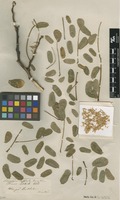
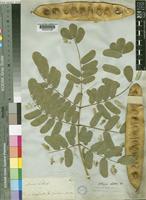
Filed as Albizia lebbeck (L.) Benth. [family FABACEAE]
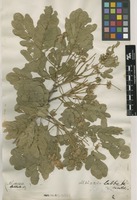
Lectotype of Mimosa lebbeck L. [family FABACEAE]
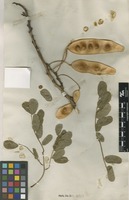
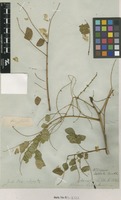
Albizia lebbek (L.) Benth. [family LEGUMINOSAE-MIMOSOIDEAE]
Filed as Albizia lebbeck (L.) Benth. [family FABACEAE]
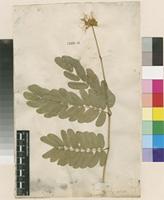
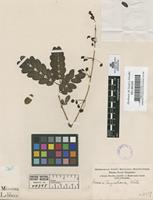
Filed as Acacia tequilana Wats. [family LEGUMINOSAE-MIMOSOIDEAE]
Previous
Next

Name

Identification
Mimosa lebbeck L. [family LEGUMINOSAE-MIMOSOIDEAE ] Albizia lebbek (L.) Benth. [family LEGUMINOSAE-MIMOSOIDEAE ] (stored under name);
Related name
  • Mimosa lebbeck
  • Acacia tequilana
  • Albizia lebbek
  • Albizia lebbeck

Flora

Entry for ALBIZIA lebbeck (L.) Benth. [family LEGUMINOSAE-MIMOSOIDEAE]
Herbarium
Royal Botanic Gardens, Kew (K)
Collection
Flora of Tropical East Africa
Resource Type
Reference Sources
Entry From
Flora of Tropical East Africa, page 1, (1959) Author: J. P. M. Brenan
Names
ALBIZIA lebbeck (L.) Benth. [family LEGUMINOSAE-MIMOSOIDEAE], in Hook., Lond. Journ. Bot. 3: 87 (1844); L.T.A.: 862 (1930); Bogdan in Nature in E. Afr., No. 2: 16 (1947); Lawrence in Gentes Herbarum 8: 44–5 (1949); T.T.C.L.: 342 (1949); U.O.P.Z.: 111, 112 (fig.) (1949); Gilb. & Bout. in F.C.B. 3: 187 (1952); Consp. Fl. Angol. 2: 292 (1956); F.W.T.A., ed. 2, 1: 502 (1958). Type: Egypt, Herb. Linnaeus 1228 .16 (LINN, syn.!)
Mimosa lebbeck L. [family LEGUMINOSAE-MIMOSOIDEAE], Sp. Pl.: 516 (1753)
Information
Tree 2.5–15 m. high; bark grey, rough. Young branchlets puberulous, sometimes pubescent. Leaves: rhachis subglabrous, puberulous or sometimes pubescent; pinnae (1–)2–4(–5) pairs; leaflets 3–11 pairs, 15–48 (–65) mm. long, (6–)8–24(–33) mm. wide, oblong or elliptic-oblong (terminal leaflets ± obovate), somewhat asymmetric with midrib nearer upper margin, rounded at apex, glabrous or rarely thinly pubescent above, beneath subglabrous or puberulous, rarely pubescent. Flowers pedicellate; pedicels 1.5–4.5(–7.5) mm. long, puberulous; bracteoles minute, about 2–3 mm. long, falling in early bud. Calyx (2.5–)3.5–5 mm. long, not slit unilaterally, ± puberulous outside. Corolla 5.5–9 mm. long, glabrous outside except for puberulence on outside of lobes. Staminal tube not or scarcely exserted beyond corolla; filaments 1.5–3 cm. long, pale green or greenish-yellow in upper part, white below. Pod oblong, (12–)15–33 cm. long, (2.4–)2.9–5.5 (–6) cm. wide, glabrous, or almost so except near base, coriaceous, glossy, ± venose, pale straw-coloured, not (or rarely to 5 mm.) stipitate at base. Seeds 7–11.5 mm. long and 7–9 mm. wide, flattened, marked by bumps on the outside of the valves, the alternate ones more projecting on each valve.
Range
DISTR. U1; K5; T1–3,?4, 6, 7; Z; P pantropical now, but probably nowhere native in Africa and originating from tropical Asia. I have not found it possible to distinguish in our area between those localities where it is more or less naturalized and those where it is only planted and not established; all the provinces are therefore given from which I have seen specimens
Altitude range
from near sea-level to about 1280 m.
Distribution
KENYA Kisumu-Londiani District Kisumu, Oct. 1944, Harger in C.M. 11915!TANGANYIKA Lushoto District Magila Road, 17 Nov. 1929, Greenway 1885!;TANGANYIKA Rufiji District Mafia Is., Chole Is., 19 Sept. 1937, Greenway 5264!;TANGANYIKA Rungwe District Mwakalele, 21 Oct. 1932, R. M. Davies 645!UGANDA West Nile District Arua golf links, Dec. 1931, Brasnett 317!ZANZIBAR Zanzibar Is. Zanzibar, Mnazi Moja, 3 Oct. 1926, Vaughan 11!
Notes
Vaughan 11 (EA!) is an extreme, with indumentum more developed than usual, the lower surface of the leaflets and the rhachis of the pinnae in particular being pubescent. This plant corresponds to var. pubescens Benth. in Hook., Lond. Journ. Bot. 3: 87 (1844); intermediates, however, occur between this and the commoner subglabrous plants. The pods of A. lebbeck, with their included seeds, are said when agitated by the breeze to make an incessant rattle that has been variously compared with women’s chatter and the sound of fish being fried. The epithet of A. lebbeck has often been misspelt “ lebbek ”.

Related Materials

  • Terms and Conditions
  • Privacy Policy
  • Cookie Policy
  • Cookie Settings
  • Accessibility
  • Help
  • Contact Us
  • Facebook
  • Twitter
ITHAKA

JSTOR is part of ITHAKA, a not-for-profit organization helping the academic community use digital technologies to preserve the scholarly record and to advance research and teaching in sustainable ways.

©2000-2026 ITHAKA. All Rights Reserved. JSTOR®, the JSTOR logo, JPASS®, Aluka®, and ITHAKA® are registered trademarks of ITHAKA.

╳