JSTOR Global Plants Home
  • Home
  • Browse
  • About
  • Access
  • Account
    • Saved Items
    • Profile
  • Log in

Global Plants

Skip to Main Content
  • JSTOR Global Plants Home
  • Global Plants

    • Browse
    • About
    • Access
    • Account
      • Saved Items
      • Profile
Log in
  • Browse
  • About
  • Access
  • Account
    • Saved Items
    • Profile
Advanced Search

Compilation
Mikania microptera

7 Images see all

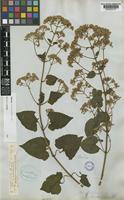
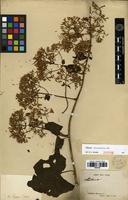
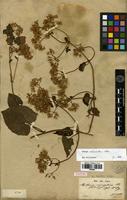
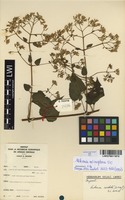
Mikania microptera DC. [family COMPOSITAE]
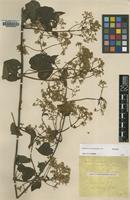
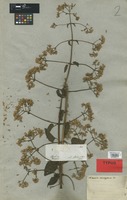
Syntype of Mikania microptera DC. [family ASTERACEAE]
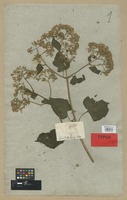
Filed as Mikania microptera DC. [family ASTERACEAE]
Isotype of Mikania microptera DC. [family ASTERACEAE]
Syntype of Mikania microptera DC. [family COMPOSITAE]
Previous
Next

Name

Identification
Isotype of Mikania microptera DC. [family ASTERACEAE ] (stored under name); Verified by Walter C. Holmes,
Related name
  • Mikania scandens
  • Mikania microptera
  • Mikania micrantha
  • Mikania umbellifera

Flora

Entry for Mikania microptera DC. [family COMPOSITAE]
Herbarium
Royal Botanic Gardens, Kew (K)
Collection
Flora of Tropical East Africa
Resource Type
Reference Sources
Entry From
Flora of Tropical East Africa, Part Part 3, page 547, (2005) Author: H. Beentje, C. Jeffrey & D.J.N. Hind
Names
Mikania microptera DC. [family COMPOSITAE], Prodr. 5: 196 (1836); W.C. Holmes in E.J. 103: 237, fig. 12 & 13 (map) (1982); Lisowski, Aster. Afr. Centr. 2: 463, fig. 94 (1991). Type: Brazil, Bahia, Blanchet 1710 (G-DC, holo., K!, MO, iso.)
Mikania scandens (DC.) Baker var. microptera [family COMPOSITAE], in Mart., Fl. Bras. 6(2): 250 (1876)
Mikania scandens [family COMPOSITAE], [?sensu Oliv. & Hiern, F.T.A. 3: 301 (1877) pro parte, non Willd., Sp. Pl. ed. 4, 3: 1743 (1803)]
Information
Shrub to 5 m; stems reddish-brown, poorly branched, usually 6-angled, sometimes minutely winged, glabrous to pubescent around nodes and along ridges. Leaves opposite, with petiole 1.5–9 cm, blade ovate, paler green beneath, 3–11.5 cm long, 2.7–11.3 cm wide, base cordate, margins dentate to crenate to minutely toothed, apex acuminate, lamina thin, glabrous to sub-glabrous, glandular-punctate beneath, usually with 3 distinct and 2 less distinct veins originating from base. Inflorescence a fairly lax leafy corymb borne on a pubescent, axillary peduncle, 4–12 cm long, usually conspicuously trichotomously branched; capitula 6–9 mm long, 1.5–2 mm diameter; individual stalks of capitula 2–9 mm, pubescent; phyllaries pale green, linear-lanceolate, boat-shaped, sometimes swollen at base, 4–7 mm long, inner 2 wider than outer 2, glabrous to pubescent, more so towards apex, 3-veined, outer 2 consistently more hairy and sometimes glandular, chaffy. Corolla 3–4 mm long, white, glandular, especially at lobes, lobes accounting for at least 3/4 of limb; anther appendages 1–2 times longer than wide, protruding beyond corolla lobes; style-arms exserted for ± 2 mm. Achenes fawn to black, 3–4 mm long, with scattered glands; carpopodium not evident or obscurely so; pappus 2.5–4 mm long, barbellate, connate at base.
Range
DISTR. U 2, 4; T 1, 4
Altitude range
200–1800 m
Distribution
TANZANIA Bukoba District Minziro Forest Reserve, SE of Minziro village, July 2001, Festo, Bayona & Wilbard 1612!TANZANIA Buha District Kakombe valley, 24 Feb. 1964, Pirozynski 442!TANZANIA Kigoma District Gombe National Park bottom of Mkenke valley at Lake Tanganyika shore, 27 Feb. 1996, Gereau, Mbago & Kayombo 5805!UGANDA Kabarole District Kibale Forest, Kanyawara, 19 Sep. 1997, Eilu 431!UGANDA Mengo District Entebbe, Sep. 1922, Maitland 120!
Distribution (external)
Sierra Leone
Liberia
Ivory Coast
Ghana
Benin
Nigeria
Cameroon
Gabon
Central African Republic
Congo (Kinshasa)
Angola
South America
Notes
USES. None recorded on specimens from our area CONSERVATION Least concern (LC) As discussed by Holmes, M. microptera shows the only case of continental disjunction within the genus. There is no evidence that it has been introduced to either South America or Africa. It is retained as a separate species due to the less dense inflorescence, noticeably longer stalks of individual capitula and corolla lobes, and the lower altitudes at which it is found.

Related Materials

  • Terms and Conditions
  • Privacy Policy
  • Cookie Policy
  • Cookie Settings
  • Accessibility
  • Help
  • Contact Us
  • Facebook
  • Twitter
ITHAKA

JSTOR is part of ITHAKA, a not-for-profit organization helping the academic community use digital technologies to preserve the scholarly record and to advance research and teaching in sustainable ways.

©2000-2026 ITHAKA. All Rights Reserved. JSTOR®, the JSTOR logo, JPASS®, Aluka®, and ITHAKA® are registered trademarks of ITHAKA.

╳