JSTOR Global Plants Home
  • Home
  • Browse
  • About
  • Access
  • Account
    • Saved Items
    • Profile
  • Log in

Global Plants

Skip to Main Content
  • JSTOR Global Plants Home
  • Global Plants

    • Browse
    • About
    • Access
    • Account
      • Saved Items
      • Profile
Log in
  • Browse
  • About
  • Access
  • Account
    • Saved Items
    • Profile
Advanced Search

Compilation
Microseris parishii

4 Images see all

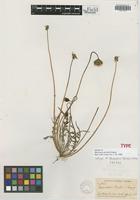
Isotype of Microseris parishii Greene [family ASTERACEAE]
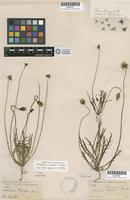
Holotype of Microseris parishii Greene [family ASTERACEAE]
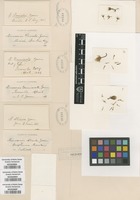
Original material of Microseris parishii Greene [family ASTERACEAE]
Previous
Next

Name

Identification
Microseris parishii Greene [family ASTERACEAE ] (stored under name); Verified by Not on sheet,
Related name
  • Microseris parishii
  • Microseris douglasii
  • Microseris bigelovii
Common name
  • Douglas’s silverpuffs, Flora of North America Vol. 19

Flora

Entry for Microseris douglasii (de Candolle) Schultz-Bipontinus subsp. douglasii [family COMPOSITAE]
Herbarium
Flora of North America (FNA)
Collection
Flora of North America
Resource Type
Reference Sources
Entry From
Flora of North America, Vol 19,
Names
Microseris douglasii (de Candolle) Schultz-Bipontinus subsp. douglasii [family COMPOSITAE]
Microseris attenuata Greene [family COMPOSITAE]
Microseris parishii Greene [family COMPOSITAE]
Microseris platycarpha (A. Gray) Schultz-Bipontinus var. parishii (Greene) H. M. Hall [family COMPOSITAE]
Treatment Author(s)
Kenton L. Chambers
Information
pappi of orbiculate to lanceolate, arcuate, involute (glabrous or villous) scales 1–6.5 mm, usually 1–6 mm shorter than cypselae. 2n = 18., slightly constricted below flaring, filled by embryos or distal 1/4–1/2 empty), ribs slightly flared apically, cypselae columnar, 4–10 mm (tapered to basal callosities).
Phenology
mar-may (spring), jun (summer)
Altitude range
10–800 m
Distribution
USA Calif.USA Oreg.
Discussion
Subspecies douglasii is the common subspecies away from the coast in cismontane California, north of the Transverse Ranges; it is relatively rare in southwestern California and southern Oregon. Some populations near the coast appear to be hybrids between it, or subsp. tenella, and Microseris bigelovii.

Related Materials

  • Terms and Conditions
  • Privacy Policy
  • Cookie Policy
  • Cookie Settings
  • Accessibility
  • Help
  • Contact Us
  • Facebook
  • Twitter
ITHAKA

JSTOR is part of ITHAKA, a not-for-profit organization helping the academic community use digital technologies to preserve the scholarly record and to advance research and teaching in sustainable ways.

©2000-2026 ITHAKA. All Rights Reserved. JSTOR®, the JSTOR logo, JPASS®, Aluka®, and ITHAKA® are registered trademarks of ITHAKA.

╳