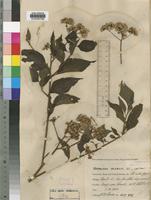
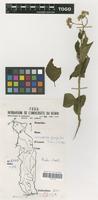
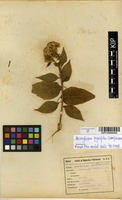
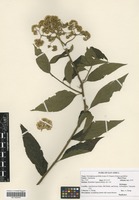
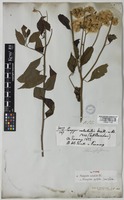
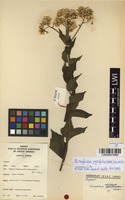
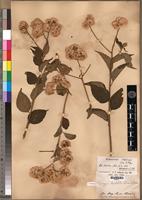
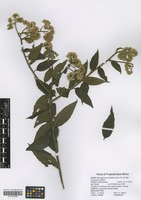
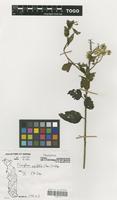
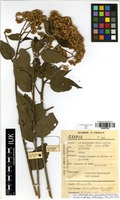
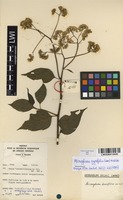
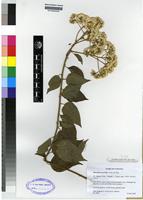
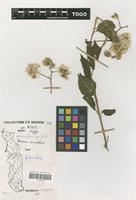
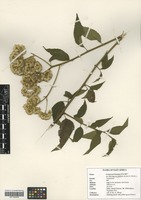
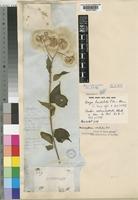
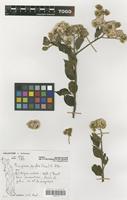
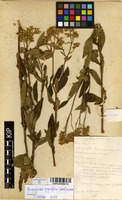
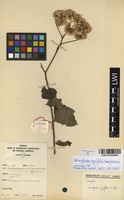
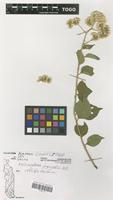
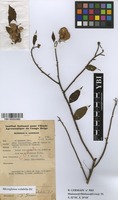
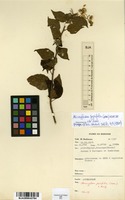
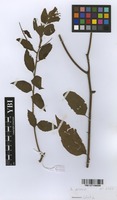
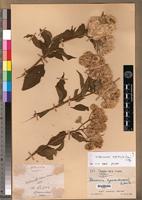
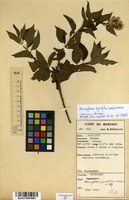
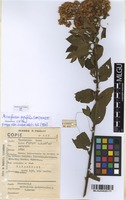
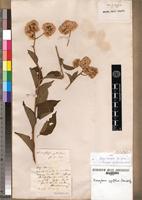
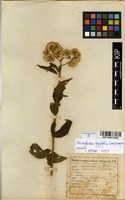
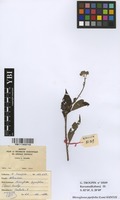
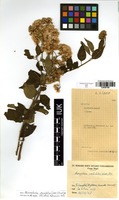
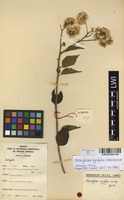
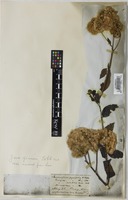
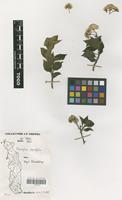
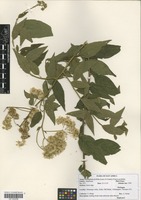
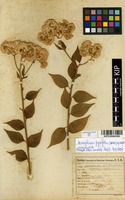
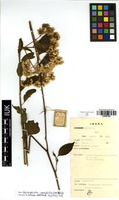
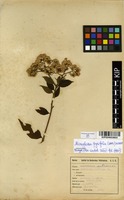
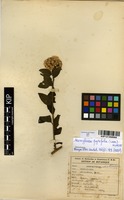
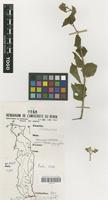
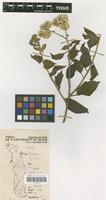
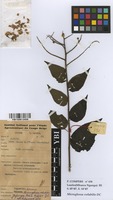
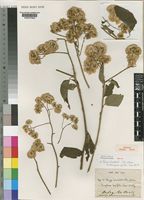
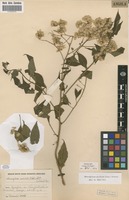
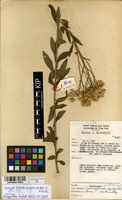
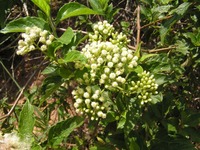
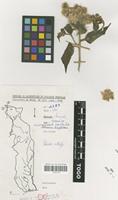
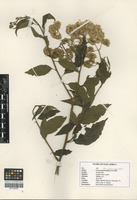
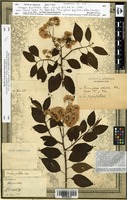
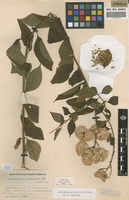
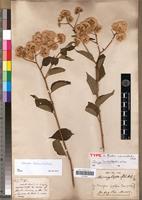
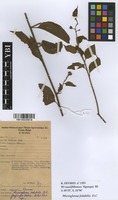
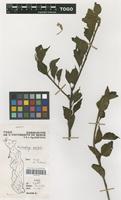
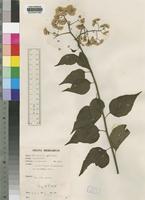
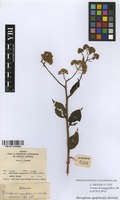
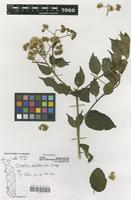
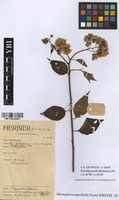
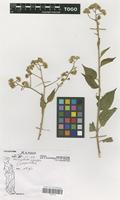
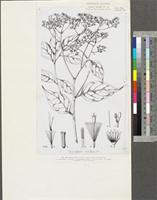
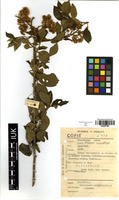
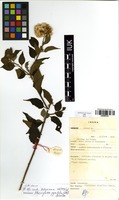
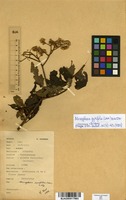
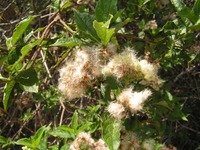
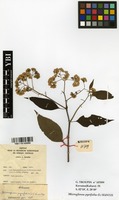
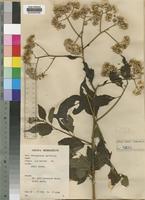
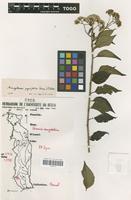
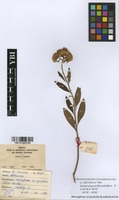
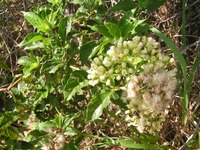
Shrub or scandent shrub, sometimes described as a woody herb, 1–3(–6) m high, much branched; branches terete, pubescent, glandular. Leaves: petiole 0.8–2 cm long, pubescent; lamina ovate, rarely lanceolate, 2.5–10 cm long, 1.5–4(–7) cm wide, cuneate or rounded at the base, entire to serrate-dentate at the margins, acuminate at the apex, slightly discolorous with a paler abaxial pubescent and glandular surface, and a darker sparsely pubescent to glabrescent and glandular adaxial surface, occasionally described as aromatic. Capitula many, 4–5 mm long, very shortly (–3 mm) stalked, in subglobose cymes of up to 24 capitula, the cymes in laxly to densely corymbose leafy inflorescences terminating branches, of up to 1200 capitula; axes of inflorescence brown-pubescent, bracteoles lanceolate, 1–5 mm long; phyllaries 3–4-seriate, 30–35, the outer small and linear, the inner longer and linear-elliptic, 0.6–4.5 mm long, 0.4–0.6 mm wide, with scarious margins, acute and often slightly ciliate near the apex, otherwise only the outermost slightly pubescent on the midrib; receptacle capitate, epaleate, verrucose with achene insertion points. Ray florets white, cream or pale yellow, 3–4-seriate, ± 32, filiform, the tube 1.8–2.6 mm long, the ray filiform, 0.9–1.4 mm long, < 0.2 mm wide, slightly notched at the apex, style 2.2–3.5 mm long, with linear branches; disc florets cream or pale yellow, 3–6, the tube 2.5–3.3 mm long, slightly widened at the base, proximal half cylindrical, distal half narrowly infundibuliform and slightly hairy, lobes 5, 0.5–0.9 mm long; anthers 1–1.3 mm long, with small triangular appendage, style 2.8–4.5 mm. Achenes narrowly obovoid, 1–1.3 mm long, slightly 4-angular, pubescent; pappus of white or tawny barbellate setae 4–4.5 mm long. Fig. 102 (page 483).