

Compilation
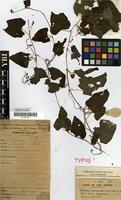
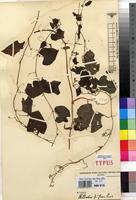
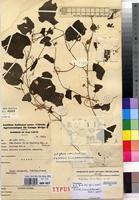
Melothria louisii
3 Images see all
Name
Identification
Melothria louisii Robyns [family CUCURBITACEAE ] Verified by Not on sheet, Zehneria scabra (L.f.) Sond. [family CUCURBITACEAE ] (stored under name); Verified by Jeffrey C., 1960
Related name
- Melothria louisii
- Zehneria scabra
Flora
Entry for ZEHNERIA scabra (Linn. f.) Sond. [family CUCURBITACEAE]
Herbarium
Royal Botanic Gardens, Kew (K)
Collection
Flora of Tropical East Africa
Resource Type
Reference Sources
Entry From
Flora of Tropical East Africa, page 1, (1967) Author: C. Jeffrey
Names
ZEHNERIA scabra (Linn. f.) Sond. [family CUCURBITACEAE], in Fl. Cap. 2: 486 (1862); F.T.A. 2: 560 (1871); C. Jeffrey in K.B. 15: 369 (1962); R. & A. Fernandes in Mem. Junta Invest. Ultram., sér. 2, 34: 123 (1962). Type: South Africa, Cape Province, Thunberg (UPS, holo.!)
Bryonia scabra Linn. f. [family CUCURBITACEAE], Suppl.: 423 (1871)
Bryonia punctata Thunb. [family CUCURBITACEAE], Prodr. Fl. Cap.: 13 (1800), non L. (1753), nom. illegit. Type: South Africa, Cape Province, Thunberg (UPS, holo.!)
Bryonia cordata Thunb. [family CUCURBITACEAE], Fl. Cap.: 149 (1811). Type: South Africa, Cape Province, Thunberg (UPS, holo.!)
Pilogyne velutina Eckl. & Zeyh. [family ], Enum.: 278 (1836). Type: South Africa, Cape Province, Ecklon & Zeyher (B, holo. †)
Zehneria velutina (Eckl. & Zeyh.) Arn. [family CUCURBITACEAE], in Hook., Journ. Bot. 3: 275 (1841); Fl. Cap. 2: 486 (1862); F.T.A. 2: 560 (1871)
Zehneria longepedunculata A. Rich. [family CUCURBITACEAE], Tent. Fl. Abyss. 1: 287 (1847). Type: Ethiopia, Tigre, R. Tacazze, Schimper 1625 (P, holo.!)
Zehneria scrobiculata A. Rich. [family CUCURBITACEAE], Tent. Fl. Abyss. 1: 287 (1847); F.T.A. 2: 559 (1871). Types: Ethiopia, Adua, Dillon & Petit 35 & Eritrea, R. Ferfer [Mai-Fera], Schimper 164 (P, syn., K, isosyn.!)
Zehneria cordata (Thunb.) Sond. [family CUCURBITACEAE], in Fl. Cap. 2: 486 (1862)
Zehneria deltoïdea Hook. f. [family CUCURBITACEAE], in F.T.A. 2: 560 (1871), non Miq. (1855), nom. illegit. Type: Cameroon Mt., Mann 1277 (K, holo.!)
Melothria cordata (Thunb.) Cogn. [family CUCURBITACEAE], in DC., Monogr. Phan. 3: 613 (1881); A. Meeuse in Bothalia 8: 19 (1962)
Melothria longepedunculata (A. Rich.) Cogn. [family CUCURBITACEAE], in DC., Monogr. Phan. 3: 612 (1881); W.F.K.: 30 (1948); F.P.S. 1: 178 (1950)
Melothria mannii Cogn. [family CUCURBITACEAE], in DC., Monogr. Phan. 3: 617 (1881); F.W.T.A. 1: 178 (1927) & ed. 2, 1: 209 (1954). Type: as Zehneria deltoïdea Hook. f.
Melothria punctata Cogn. [family CUCURBITACEAE], in DC., Monogr. Phan. 3: 615 (1881) excl. syn. Bryonia angulata Thunb.; Burtt Davy, Man. Fl. Pl. Ferns Transv. 1: 225 (1926); W.F.K.: 30 (1948); F.W.T.A., ed. 2, 1: 209 (1954); F.P.U.: 97 (1962), non Raf. (1836), nom. illegit.
Melothria scrobiculata (A. Rich.) Cogn. [family CUCURBITACEAE], in DC., Monogr. Phan. 3: 605 (1881); F.P.S. 1: 178 (1950)
Melothria tomentosa Cogn. [family CUCURBITACEAE], in DC., Monogr. Phan. 3: 614 (1881); A. Zimm., Cucurbitac. 2: 12, 31, 45, 91, 111, 118, figs. 20/11, 69/4, 81/9 (1922); W.F.K.: 30 (1948). Types: Ethiopia, near Bouladeki, Schimper 927 (P, syn., K, isosyn.!) & 1242 (K, syn.!) & near Ouedger, Dillon & Petit (P, syn.!)
Melothria lucida [family CUCURBITACEAE], [sensu Hiern, Cat. Welw. Afr. Pl. 2: 402 (1898), non (Naud.) Cogn.]
Melothria argyrea A. Zimm. [family CUCURBITACEAE], Cucurbitac. 2: 180, 12, 14, 17, 20, 31, 45, 91, 111, 118, figs. 20/1–6, 30/6–9, 69/1–3, 81/8, 84/7–8 (1922); T.T.CL.: 175 (1949). Type: Tanganyika, Lushoto District, Amani, Zimmermann (EA, lecto.!)
Melothria fernandensis Hutch. & Dalz. [family CUCURBITACEAE], F.W.T.A. 1: 179 (1927) & ed. 2, 1: 209 (1954). Type: Fernando Po, Mann 628 (K, holo.!)
Melothria louisii Robyns [family CUCURBITACEAE], in B.J.B.B. 27: 96 (1943); F.P.N.A. 2: 392 (1947). Type: E. Congo Republic, Semliki, Louis 5523 (BR, holo.!, K, iso.!)
Melothria minutiflora [family CUCURBITACEAE], [sensu Exell, Cat. Vasc. Pl. S. Tomé: 185 (1944), non Cogn.]
Information
Perennial herb climbing or trailing to 6 m.; young stems rather shortly and closely crisped-pubescent, sometimes densely so, but sometimes almost glabrous except at the nodes, less often sparsely spreading-hairy or completely glabrous; older stems thickened, woody, up to 15 mm. across, with greyish-brown slightly fissured bark. Leaf-blade ± ovate-cordate or ovate-subtruncate in outline, ± scabrid-punctate above, paler green and subglabrous or sparsely scabrid-hairy to densely cinereous-tomentose beneath, sinuate-toothed, acute to rounded, apiculate and often ± acuminate, 25–110 mm. long, 19–110 mm. broad, sometimes shallowly 3-lobed with large middle lobe and small triangular lateral lobes, rarely palmately 5-lobed with the lobes triangular, or obovate and distinctly narrowed below, sometimes heterophyllous; petiole usually rather shortly and sparsely hairy, 7–85 mm. long. Dioecious. Male flowers 2–60 in sessile or up to 85 mm. pedunculate umbelliform clusters, often with a coaxillary long-pedicellate solitary flower, rarely the inflorescence compound with more than one umbelliform cluster borne at intervals along the peduncle; bracts usually absent; receptacle-tube 2.5–4 mm. long, hairy within; lobes ± subulate, 0.5–0.8 mm. long; petals white, becoming creamy-yellow when old, 1.8–3 mm. long, 1.3–2 mm. broad; stamens 3, on fairly long filaments. Female flowers occasionally solitary, usually 2–16 in sessile or up to 26 mm. pedunculate umbelliform groups, often with a coaxillary solitary flower; pedicels 1–10 mm. long; ovary subglobose to fusiform, sometimes beaked, 3–6 mm. long, 1.5–2.3 mm. across; receptacle-tube campanulate, hairy within, 2–4 mm. long; lobes subulate, ± 0.5 mm. long; petals 2–2.5 mm. long, 1–1.5 mm. broad. Fruits solitary or more often in sessile or pedunculate axillary clusters of up to 10 (rarely more), with 2–20 mm. long pedicels, baccate, sphaeroid, rounded or more rarely slightly apiculate, 6–12 mm. long, 5–11 mm. across, scarlet, ± scrobiculate when dry. Seeds ovate in outline, smooth, compressed, lenticular, 2.2–4 × 1.3–2.5 × 0.5–0.8 mm. Fig. 21/1–8, p. 120.
Range
DISTR. U1–4; K1–7; T1–8; Z tropical Africa
Altitude range
80–3350 m.
Distribution
KENYA Northern Frontier Province Mt. Kulal, 11 Oct. 1947, Bally 5623!KENYA Uasin Gishu District near Kapsaret [Kaposoret] Forest Reserve, 8 May 1951, G. R. Williams 166!KENYA Kiambu District Kikuyu, Ondiri swamp, 21 June 1952, Verdcourt 671!TANGANYIKA Moshi District Lyamungu, 10 Oct. 1943, Wallace 1131!TANGANYIKA Lushoto District Makuyuni, 16 Dec. 1935, Koritschoner 1247!TANGANYIKA Uluguru Mts., Lukwangule, 30 Jan. 1935, E. M. Bruce 732!UGANDA Kigezi District Kachwekano Farm, Apr. 1949, Purseglove 2766!UGANDA Busoga District about 19 km. N. of Jinja, Kagoma Forest Reserve, 5 Dec. 1952, G. H. S. Wood 637!UGANDA Mubende District on Kakumiro-Nkoko road, 8 Oct. 1956, Lind 2056!ZANZIBAR Zanzibar I., Muyuni, 16 July 1933, Vaughan 2147!
Distribution (external)
South Africa
Arabia
peninsular India
Java
Philippines
Notes
This is a very widespread species, showing a wide range in altitudinal and ecological tolerance and a corresponding high degree of local probably ecotypic differentiation. Two main variants can be recognized in the Flora area: lowland plants (usually found below 1000 m.) with rather larger fruits, small seeds, leaves subglabrous beneath, and stems with long rather sparse spreading pubescence, and upland plants (above 1000 m.) with larger seeds, leaves ± cinereous-pubescent beneath, and a short rather dense and close stem pubescence. Intermediates occur, however, and other puzzling forms are known, particularly slender subglabrous plants from lowland rain-forest remnants, and plants with sparsely scabrid-hairy rather coriaceous leaves and many-flowered inflorescences from higher regions (1600 m. and above) on various mountain peaks and massifs.