JSTOR Global Plants Home
  • Home
  • Browse
  • About
  • Access
  • Account
    • Saved Items
    • Profile
  • Log in

Global Plants

Skip to Main Content
  • JSTOR Global Plants Home
  • Global Plants

    • Browse
    • About
    • Access
    • Account
      • Saved Items
      • Profile
Log in
  • Browse
  • About
  • Access
  • Account
    • Saved Items
    • Profile
Advanced Search

Compilation
Melinis nyassana

6 Images see all

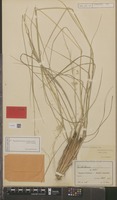
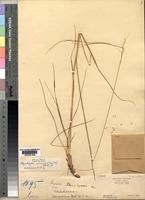
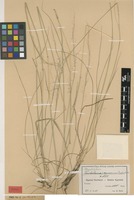
Isotype of Melinis nyassana Mez [family GRAMINEAE]
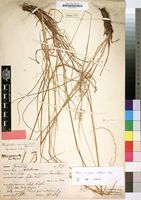
Type of Melinis nyassana Mez [family GRAMINEAE]
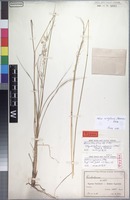
Isotype of Melinis nyassana Mez [family POACEAE]
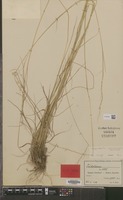
Isotype of Melinis nyassana Mez [family GRAMINEAE]
Isotype of Melinis nyassana Mez [family POACEAE]
Type of Melinis nyassana Mez [family POACEAE]
Previous
Next

Name

Identification
Melinis nyassana Mez [family GRAMINEAE ] Verified by Not on sheet., Melinis nerviglumis (Franch.) Zizka [family GRAMINEAE ] (stored under name); Verified by Not on sheet.,
Related name
  • Melinis nyassana
  • Rhynchelytrum nyassanum
  • Melinis nerviglumis

Flora

Entry for RHYNCHELYTRUM nyassanum Stapf & Hubbard [family POACEAE]
Herbarium
Royal Botanic Gardens, Kew (K)
Collection
Flora of Tropical Africa
Resource Type
Reference Sources
Entry From
Flora of Tropical Africa, Vol 9, page 1, (1917) Author: (By O. STAPF.)
Names
RHYNCHELYTRUM nyassanum Stapf & Hubbard [family POACEAE]
Melinis nyassana Mez [family POACEAE], in Engl. Bot. Jahrb. lvii. 199.
Information
A densely tufted perennial with intravaginal innovations. Culms erect or geniculately ascending, up to 4 ft. high and 1 1/2 lin. in diameter at the base, moderately stout below, terete, simple, 2–4-noded, glabrous and smooth. Leaf-sheaths finely striate, loose, as long as or longer than the internodes, pilose to villous at the nodes (at least the lower), the lower pubescent to glabrous, the intermediate and upper usually glabrous and smooth; ligule reduced to a densely ciliate rim up to 1/3 lin. long; blade filiform to narrowly linear, 4–10 in. long, convolute or involute, sometimes becoming unrolled and then up to 1 1/2 lin. wide, straight or slightly flexuous, shortly hairy at the base, the remainder glabrous and smooth. Panicle linear, contracted and dense, 6–9 in. long, up to 1 1/4 in. wide, silky-villous, white, purplish or crimson-purple; rhachis finely striate, minutely scaberulous, finely pubescent at the nodes; branches erect or slightly spreading, solitary, finely filiform, flexuous, like the branches and pedicels pubescent, or almost glabrous; pedicels flexuous, very finely filiform, 1/2–3 lin. long, usually with several silky hairs up to 1/2 lin. long from beneath their tips. Spikelets oblong, 2–2 3/4 lin. long, 1 lin. wide, densely silky-villous with long white purplish or purple spreading or erect hairs. Glumes approximate; lower ovate, obtuse, 1/4 lin. long, hyaline, nerveless, densely villous with hairs up to 3/4 lin. long; upper obliquely lanceolate in profile, gibbous in the lower two-thirds and tapering upwards into a shortly 2-lobed beak with a bristle up to 1 lin. long from the sinus, firmly chartaceous, finely 5-nerved, densely villous from below upwards, with the hairs from minute tubercles, increasing in length to beyond the middle and then forming a fringe up to 2 1/2 lin. long, the remainder glabrous except for the ciliate margins. Lower floret ♂: valve similar to the upper glume but slightly narrower and shorter and sometimes less hairy below the middle, awn up to 2 lin. long; valvule linear, 1 3/4 lin. long, membranous, ciliate above the middle. Upper floret hermaphrodite: valvule narrowly elliptic-oblong when flattened, emarginate, 1 1/2 lin. long, membranous, obscurely 5-nerved, glabrous.
Distribution
Tanganyika Mozamb. Dist. Kyimbila; Bomalakilana, 3300 ft., Stolz, 1095! Mfimbwa Mt., 7600 ft., Munzner, 207!Southern Rhodesia Mozamb. Dist. Salisbury, 4800–5200 ft., Eyles, 3271! 4745! Craster, 31! cultivated at Salisbury Experimental Station, Mundy, 38 a! (Herb. no. 2843). Mainwaring, 2627! Inyanga District, Mundy !

Related Materials

  • Terms and Conditions
  • Privacy Policy
  • Cookie Policy
  • Cookie Settings
  • Accessibility
  • Help
  • Contact Us
  • Facebook
  • Twitter
ITHAKA

JSTOR is part of ITHAKA, a not-for-profit organization helping the academic community use digital technologies to preserve the scholarly record and to advance research and teaching in sustainable ways.

©2000-2026 ITHAKA. All Rights Reserved. JSTOR®, the JSTOR logo, JPASS®, Aluka®, and ITHAKA® are registered trademarks of ITHAKA.

╳