JSTOR Global Plants Home
  • Home
  • Browse
  • About
  • Access
  • Account
    • Saved Items
    • Profile
  • Log in

Global Plants

Skip to Main Content
  • JSTOR Global Plants Home
  • Global Plants

    • Browse
    • About
    • Access
    • Account
      • Saved Items
      • Profile
Log in
  • Browse
  • About
  • Access
  • Account
    • Saved Items
    • Profile
Advanced Search

Compilation
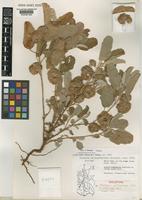
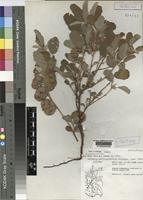
Melhania latibracteolata

2 Images see all

Holotype of Melhania latibracteolata Dorr [family STERCULIACEAE]
Isotype of Melhania latibracteolata Vollesen not on the sheet not on the sheet Not on the sheet [family STRCULLIACEAE]
Previous
Next

Name

Identification
Isotype of Melhania latibracteolata Vollesen [family STRCULLIACEAE ] (stored under name); Verified by Not on the sheet,
Related name
  • Melhania latibracteolata

Flora

Entry for MELHANIA denhamii R. Br. [family STERCULIACEAE]
Herbarium
Royal Botanic Gardens, Kew (K)
Collection
Flora Somalia
Resource Type
Reference Sources
Entry From
Flora Somalia, Vol 2, (1999) Author: by M. Thulin [updated by M. Thulin 2008]
Names
MELHANIA denhamii R. Br. [family STERCULIACEAE], (1826). Fig. 12 E–G.
MELHANIA denhamii Chiov. var. benadirensis [family STERCULIACEAE], Fl. Somala 1: 103 (1929);. type: C2, between “Avorrei” and “Bulo Burti”, Puccioni & Stefanini 174 (FT holo.).
MELHANIA latibracteolata Dorr [family STERCULIACEAE], (2007).
MELHANIA praemorsa Dorr [family STERCULIACEAE], (2007).
Information
Perennial herb or shrublet up to 60 cm or more tall; young stems tomentose to lanate. Leaves pubescent to lanate; petiole 4–30 mm long; stipules 3–10 mm long; blade ovate to elliptic or narrowly oblong, 10–70 x 5–32 mm, subacute to emarginate at the apex, with entire to dentate, serrate or crenate margins. Flowers in 2–6-flowered pubescent to tomentose cymes or some solitary; peduncle 5–40 mm long; pedicels 5–10 mm long; epicalyx bracts 8–25 x 10–32 mm in fruit, broadly cordate to reniform, tomentose when young, with 0–8 mm deep sinus. Sepals 3–9 x 1–3 mm, densely pilose to pubescent all over. Petals 2.5–7 mm long. Staminodes 2–5 mm long. Style c. 0.5–1 mm long. Capsule 4–7 mm long, ovoid to subglobose, pubescent, with 1–2-seeded cells. Seeds 2–3 mm long, smooth.
Range
N1; C1, 2 Eritrea, Ethiopia, NE Kenya, S Egypt, Sudan and westwards to Senegal,
Altitude range
60–1300 m.
Distribution
SOMALIA Gillett & Hemming 24634; Thulin 5652; Bally & Melville 15371.
Distribution (external)
Arabia
India
Notes
Durod (Som.). M. denhamii is here taken in a broader sense than in Fl. Eth. 2(2) (1995) and includes “ M. sp. = Hemming 1465” and “ M. sp. = Friis et al. 2971”. These two preliminary taxa were described as, respectively, M. praemorsa and M. latibracteolata, both with types from Ethiopia, by Dorr in Fl. Trop. E. Afr. (2007). M. praemorsa was keyed out from M. latibracteolata by having leaves three times as long as wide and with margin entire or denticulate only in the upper half, young stems canescent (as opposed to lanate, whitish tomentose), and seeds with an umbonate projection. However, in the description of M. praemorsa the young stems were said to be “whitish tomentose to canescent or lanate”, and in the description of M. latibracteolata the seeds were said to have “an umbonate projection” despite the statement to the contrary in the key. How M. latibracteolata is to be distinguished from M. denhamii was not mentioned at all. The variation, particularly in leaf shape and shape and size of the epicalyx bracts, is striking, but seems continuous at a broader scale even if local forms sometimes may be distinguished. However, the characters are not always correlated in the way stated by Dorr in Fl. Trop. E. Afr. (2007). For example, Thulin 5652 from central Somalia has leaves more than three times as long as wide that are dentate almost to the base. Therefore, I still prefer to treat these forms as a single variable species.

Related Materials

  • Terms and Conditions
  • Privacy Policy
  • Cookie Policy
  • Cookie Settings
  • Accessibility
  • Help
  • Contact Us
  • Facebook
  • Twitter
ITHAKA

JSTOR is part of ITHAKA, a not-for-profit organization helping the academic community use digital technologies to preserve the scholarly record and to advance research and teaching in sustainable ways.

©2000-2026 ITHAKA. All Rights Reserved. JSTOR®, the JSTOR logo, JPASS®, Aluka®, and ITHAKA® are registered trademarks of ITHAKA.

╳