JSTOR Global Plants Home
  • Home
  • Browse
  • About
  • Access
  • Account
    • Saved Items
    • Profile
  • Log in

Global Plants

Skip to Main Content
  • JSTOR Global Plants Home
  • Global Plants

    • Browse
    • About
    • Access
    • Account
      • Saved Items
      • Profile
Log in
  • Browse
  • About
  • Access
  • Account
    • Saved Items
    • Profile
Advanced Search

Compilation
Maxillaria parviflora

9 Images see all

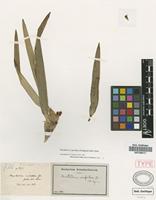
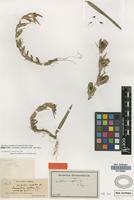
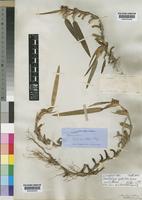
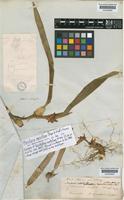
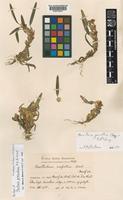
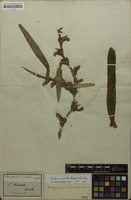
Syntype of Ornithidium confertum Griseb. [family ORCHIDACEAE]
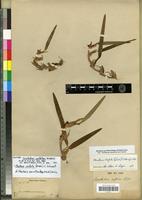
Isotype of Ornithidium confertum Grisebach [family ORCHIDACEAE]
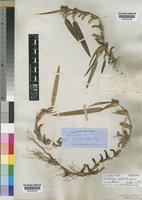
Isoparatype of Ornithidium confertum Griseb. [family ORCHIDACEAE]
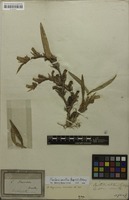
Filed as Camaridium vestitum (Sw.) Lindl. [family ORCHIDACEAE]
Holotype of Ornithidium confertum Griseb. [family ORCHIDACEAE]
Maxillaria parviflora (Poepp. & Endl.) Garay [family ORCHIDACEAE]
Syntype of Ornithidium confertum Griseb. [family ORCHIDACEAE]
Isotype of Maxillaria grisebachiana Nir & Dod [family ORCHIDACEAE]
Filed as Camaridium vestitum (Sw.) Lindl. [family ORCHIDACEAE]
Previous
Next

Name

Identification
Maxillaria parviflora (Poepp. & Endl.) Garay [family ORCHIDACEAE ] (stored under name); Verified by Atwood, J.T., 1995 Ornithidium confertum Griseb. [family ORCHIDACEAE ] Verified by Cogniaux, A., Ornithidium confertum Griseb. [family ORCHIDACEAE ] Verified by Atwood, J.T., 1995 Ornithidium confertum Griseb. [family ORCHIDACEAE ] Verified by Not on sheet,
Related name
  • Ornithidium confertum
  • Camaridium vestitum
  • Camaridium unrecorded
  • Cymbidium vestitum
  • Pseudomaxillaria vestita
  • Callionemis conferta
  • Maxillaria parviflora
  • Maxillaria conferta
  • Camaridium imbricatum
  • Maxillaria grisebachiana

Flora

Entry for Maxillaria parviflora (Poeppig & Endlicher) Garay [family ORCHIDACEAE]
Herbarium
Flora of North America (FNA)
Collection
Flora of North America
Resource Type
Reference Sources
Entry From
Flora of North America, Vol 26,
Names
Maxillaria parviflora (Poeppig & Endlicher) Garay [family ORCHIDACEAE], Bot. Mus. Leafl., 21: 258. 1967
Scaphyglottis parviflora Poeppig & Endlicher [family ORCHIDACEAE], Nov. Gen. Sp. Pl., 1: 58, plate 97. 1836
Maxillaria conferta (Grisebach) C. Schweinfurth ex León [family ORCHIDACEAE]
Ornithidium confertum Grisebach [family ORCHIDACEAE]
Treatment Author(s)
John T. Atwood
Information
Plants epiphytic, climbing. Stems with pseudobulbs distributed 2–8 cm along conspicuous rhizome; pseudobulbs nearly cylindric to ovoid, 1.5–3 cm. Leaves 1 per shoot; blade lanceolate, 9–20 × 0.9–2 cm, almost leathery, apex acute. Inflorescences several, at base of mature shoots, less than 1 cm. Flowers white to light yellow [purplish in Jamaican populations] with yellow-orange lip; sepals ovate, 6–7 × 3–3.5 mm, leathery, apex acute; lateral sepals 1/3 connate; petals ovate-elliptic, 4.5–5 × 2–2.5 mm, apex keeled, acute; lip continuous with column foot, deltate to 3-lobate, 2.5–4 × 3 mm when spread, lateral lobes somewhat erect; callus a simple transverse ridge connecting lateral lobes; column cylindric, stout, less than 2.5 mm, foot less than 1 mm. Capsules 7–8 mm.
Phenology
sep-nov (fall)
Altitude range
0–10[–1200] m;
Distribution
MexicoWest IndiesCentral America (to Honduras)South America.USA Fla.
Discussion
Maxillaria parviflora flowers in September in Florida and in November in Central America.
The Florida occurrence is based on a collection by Roger Hammer from a single host tree; other unconfirmed sightings have been made. The several large plants reported by Hammer, the occurrence in Cuba, and the presence of other widespread tropical species locally leaves little doubt of the identity and presence of this outlier in the flora.
The types of Scaphyglottis parviflora and Ornithidium confertum agree well with the Florida plant often recognized as Maxillaria conferta.

Related Materials

  • Terms and Conditions
  • Privacy Policy
  • Cookie Policy
  • Cookie Settings
  • Accessibility
  • Help
  • Contact Us
  • Facebook
  • Twitter
ITHAKA

JSTOR is part of ITHAKA, a not-for-profit organization helping the academic community use digital technologies to preserve the scholarly record and to advance research and teaching in sustainable ways.

©2000-2026 ITHAKA. All Rights Reserved. JSTOR®, the JSTOR logo, JPASS®, Aluka®, and ITHAKA® are registered trademarks of ITHAKA.

╳