JSTOR Global Plants Home
  • Home
  • Browse
  • About
  • Access
  • Account
    • Saved Items
    • Profile
  • Log in

Global Plants

Skip to Main Content
  • JSTOR Global Plants Home
  • Global Plants

    • Browse
    • About
    • Access
    • Account
      • Saved Items
      • Profile
Log in
  • Browse
  • About
  • Access
  • Account
    • Saved Items
    • Profile
Advanced Search

Compilation
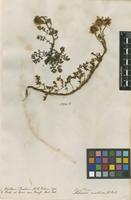
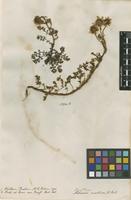
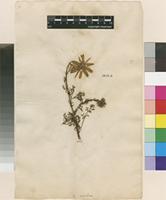
Matricaria maritima

3 Images see all

Filed as Pyrethrum maritimum Sm. [family ASTERACEAE]
Lectotype of Matricaria maritima L. [family ASTERACEAE]
Previous
Next

Name

Identification
Matricaria maritima L. [family ASTERACEAE ] (stored under name); Verified by Not on sheet, Tripleurospermum maritimum (L.) W.D.J.Koch [family ASTERACEAE ] Verified by Not on sheet,
Related name
  • Pyrethrum maritimum
  • Matricaria maritima
  • Tripleurospermum maritimum
Common name
  • Seashore or wild chamomile, Flora of North America Vol. 19
  • matricaire à capitules brunâtres, Flora of North America Vol. 19
  • False mayweed, Flora of North America Vol. 19

Flora

Entry for Tripleurospermum maritimum (Linnaeus) W. D. J. Koch [family COMPOSITAE]
Herbarium
Flora of North America (FNA)
Collection
Flora of North America
Resource Type
Reference Sources
Entry From
Flora of North America, Vol 19,
Names
Tripleurospermum maritimum (Linnaeus) W. D. J. Koch [family COMPOSITAE], Syn. Fl. Germ. Helv. ed., 2, 1026. 1845
Matricaria maritima Linnaeus [family COMPOSITAE], Sp. Pl., 2: 891. 1753
Chamomilla maritima (Linnaeus) Rydberg [family ]
Treatment Author(s)
Luc Brouillet
Information
Perennials (sometimes biennials), 10–50(–80) cm. Stems 1–5+, usually procumbent, sometimes ascending (± erect), branched distally, glabrous or sparsely hairy. Leaf blades 2–8 cm, ultimate lobes ± cylindric, 4–20 mm, ± fleshy, apices obtuse or mucronate. Heads (3–)10–50 in corymbiform arrays or borne singly. Phyllaries centrally dark greenish or brownish, oblong to narrowly triangular or broadly triangular, unequal, scarious margins pale to dark brown or blackish brown, 0.2–1 mm wide. Ray florets 10–34+; corollas 10–16[–20] mm. Disc corollas ca. 2.5 mm. Cypselae pale to dark blackish brown, ribs ± contiguous or separated by less than 1/4 their widths (1–2 supernumerary ribs sometimes present), abaxial-apical resin glands elongate (lengths 2+ times widths), abaxial faces transversely rugose, minutely roughened on faces and between ribs. 2n = 18, 36.
Distribution
North AmericaEurasia.

Related Materials

  • Terms and Conditions
  • Privacy Policy
  • Cookie Policy
  • Cookie Settings
  • Accessibility
  • Help
  • Contact Us
  • Facebook
  • Twitter
ITHAKA

JSTOR is part of ITHAKA, a not-for-profit organization helping the academic community use digital technologies to preserve the scholarly record and to advance research and teaching in sustainable ways.

©2000-2026 ITHAKA. All Rights Reserved. JSTOR®, the JSTOR logo, JPASS®, Aluka®, and ITHAKA® are registered trademarks of ITHAKA.

╳