JSTOR Global Plants Home
  • Home
  • Browse
  • About
  • Access
  • Account
    • Saved Items
    • Profile
  • Log in

Global Plants

Skip to Main Content
  • JSTOR Global Plants Home
  • Global Plants

    • Browse
    • About
    • Access
    • Account
      • Saved Items
      • Profile
Log in
  • Browse
  • About
  • Access
  • Account
    • Saved Items
    • Profile
Advanced Search

Compilation
Marsilea fischeri

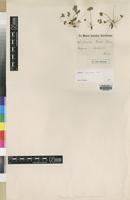
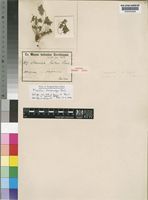
2 Images see all

Marsilea macrocarpa C.Presl [family MARSILEACEAE]
Syntype of Marsilea fischeri Hieron. [family MARSILEACEAE]
Previous
Next

Name

Identification
Marsilea fischeri Hieron. [family MARSILEACEAE ] Marsilea macrocarpa C.Presl [family MARSILEACEAE ] (stored under name); Verified by Launert,E.,
Related name
  • Marsilea macrocarpa
  • Marsilea fischeri

Flora

Entry for MARSILEA farinosa subsp. farinosa [family MARSILEACEAE]
Herbarium
Royal Botanic Gardens, Kew (K)
Collection
Flora of Tropical East Africa
Resource Type
Reference Sources
Entry From
Flora of Tropical East Africa, page 1, (2003) Author: E. LAUNERT
Names
MARSILEA farinosa subsp. farinosa [family MARSILEACEAE], ; J.E. Burrows, S. Afr. Ferns: 73, t. 10. 4, fig. 17/69, 69a, b (1990)
MARSILEA fischeri [family MARSILEACEAE], [sensu Peter in F.D.-O.A. 1: 92 (1929) quoad Peter 1834b, non Hieron.]
Information
Sporocarps held at ± 90° to the pedicel; pedicels arising from stipe axes only
Range
DISTR. K 4; T 2
Altitude range
1350–1700 m
Distribution
KENYA Machakos District SW of Lukenya Hill, 30 Mar. 1969, Greenway & Napper 13597! & Lukenya road, 15 km from Nairobi–Mombasa road, 20 Dec. 1970, Faden et al. 70/902!TANZANIA Mbulu District Mbulumbul, 24 June 1944, Greenway 7949!;TANZANIA Arusha District Arusha to Moshi, Feb. 1914, Peter 1834b! & Arusha National Park, Maji ya Chai, 6 Jan. 1972, Greenway & Fitzgerald 14965!
Distribution (external)
; Ethiopia
Angola
Mozambique (fide Burrows)
Zimbabwe
Botswana
Namibia
South Africa
Notes
This is the plant which Dinter distributed widely under the manuscript name M. pubescens. It is closely related to both M. macrocarpa and M. unicornis Launert but clearly distinguished from these species by its peculiar indument which consists of a mixture of two different types of hair. The laterally attached hairs are peculiar to the genus Marsilea and besides minor variations fairly uniform throughout. M. farinosa is the only species in which ordinary uniseriate hairs could be found. In dried specimens their cells are usually collapsed and thus the hair is coiled or bent. In this state the entire plant appears greyish-farinose. In shape the sporocarps are almost identical to those of M. unicornis. In the latter species, however, the superior tooth is generally much more prominent and always acute. The assumption that M. farinosa is a segregate of M. macrocarpa is strengthened by the disjunct area of distribution. As is the case in M. macrocarpa the East African specimens are slightly larger and lozenge-shaped rather than bean-shaped; the angle between its longitudinal axis and the pedicel is usually much larger than in the South African specimens. M. farinosa seems to be semi-aquatic or terrestrial. I have not seen any specimen with floating leaves.J.E. Burrows (Bothalia 19: 169 (1989)) divided this species into two subspecies. Subsp. arrecta occurs only in NW Transvaal and S Botswana.

Related Materials

  • Terms and Conditions
  • Privacy Policy
  • Cookie Policy
  • Cookie Settings
  • Accessibility
  • Help
  • Contact Us
  • Facebook
  • Twitter
ITHAKA

JSTOR is part of ITHAKA, a not-for-profit organization helping the academic community use digital technologies to preserve the scholarly record and to advance research and teaching in sustainable ways.

©2000-2026 ITHAKA. All Rights Reserved. JSTOR®, the JSTOR logo, JPASS®, Aluka®, and ITHAKA® are registered trademarks of ITHAKA.

╳