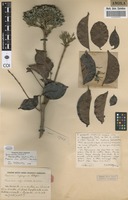
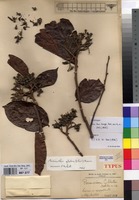
Entry From
Burkill, H.M. 1985. The useful plants of west tropical Africa, Vol 1
Uses
seed Food: general bark root Medicines: skin, mucosae bark Medicines: diarrhoea, dysentery sap Phytochemistry: ordeal-poisons seed Phytochemistry: fatty acids, etc. Agri-horticulture: veterinary medicine wood Products: building materials bark Products: exudations-gums, resins, etc. wood Products: fuel and lighting
Description
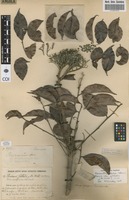
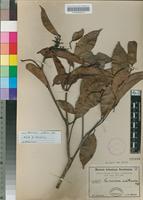
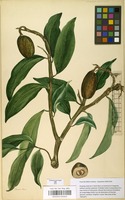
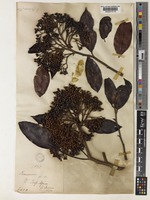
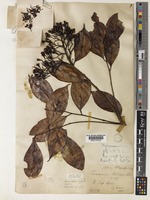
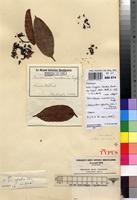
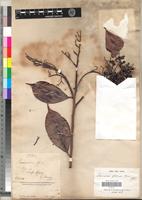
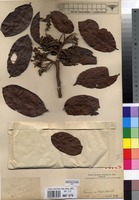
A large tree to over 30 m high, bole cylindrical and straight (Ghana, 13) or low-branched (1), up to 4 m in girth, sometimes slightly buttressed; crown dense and spreading; of evergreen and deciduous forests, from Sierra Leone to S Nigeria, and extending across central Africa to Zaïre and Angola.The wood is hard and heavy, sinking when fresh (6, 14). Sap-wood is white to yellow-brown with attractive longitudinal veining; heart-wood pink or reddish (5, 6, 10, 13). The wood is throughout its range considered of little value for carpentry. In Sierra Leone it is said to be difficult to work and has no use (12) except for making canoes (8). In Ghana it is used for beams and stakes and provides an excellent, though expensive fuel (8, 9).The bark-slash exudes a little colourless or pinkish liquid (10, 12, 13). The inner bark is soaked for 24 hours in Liberia to treat dysentery (4, 5), and sap from the cambial area is instilled into the eye as an ordeal-poison in Zaïre (11). An aqueous decoction of the bark is used in Congo to wash a person suffering from chronic itch, after which the patient is covered with a prescription consisting of palm-oil, sap of the leaves of Tephrosia vogelii (Leguminosae: Papilionniideae) and powdered root of Maranthes glabra. A similar prescription in which the Tephrosia is replaced by bark of Croton haumanianus (Euphorbiaceae, but not recorded for W Africa) is applied to domestic animals for skin-troubles (2, 11).The flowers have a strong smell of honey when fresh which turns to that of cows [!] when old (7). The fruit is used in Zaïre as a bait in traps for river-hog (Potamochoerus) and antelope (11). The seeds are edible and oily.Maranthes kerstingii (Engl.) Prance is not recorded for Ivory Coast and a reference to Parinari kerstingii sensu Bouquet & Debray (3) used in that territory is probably to P. glabra Oliv. (=M. glabra (Oliv.) Prance): a bark decoction is drunk three times daily for anaemia, and as a tonic for pregnant women.
References
References:1. Aubréville, 1959: 1, 175–82 as Parinari glabra Oliv. 2. Bouquet, 1969: 204, as P. glabra Oliv. 3. Bouquet & Debray, 1974: 146, as P. kerstingii sensu Bouq. & Deb. 4. Cooper 345, K. 5. Cooper & Record, 1931: 59–60, as Parinarium kerstingii sensu Cooper & Record with timber characteristics. 6. Dalziel, 1937. 7. Deighton 2482, K. 8. Deighton 3716, K. 9. Irvine, 1961: 265, as P. glabra Oliv. 10. King 68, K. 11. Letouzey & White, 1978: 108–12. 12. Savill & Fox, 1967, 220, as P. glabra Oliv. 13. Taylor, 1960: 285, as P. glabra Oliv. 14. Vigne 216, K.