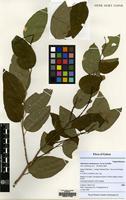
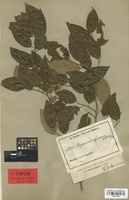
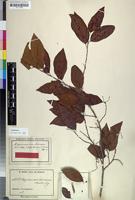
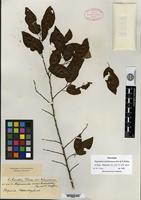
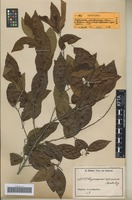
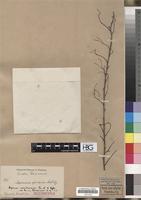
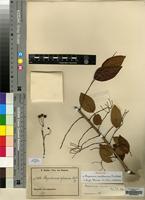
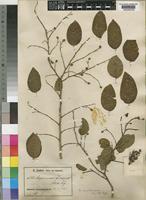
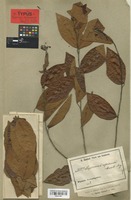
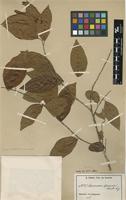
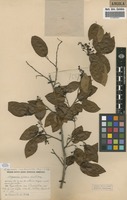
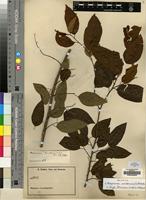
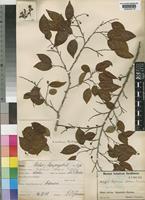
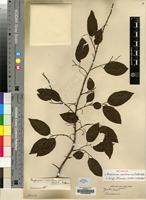
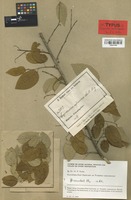
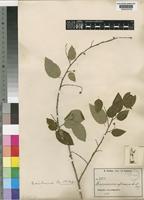
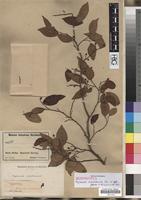
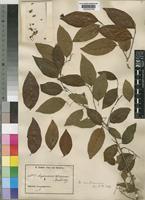
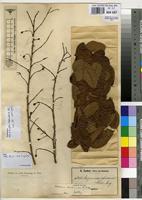
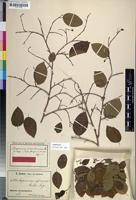
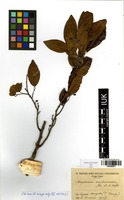
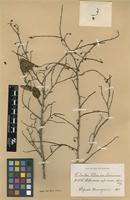
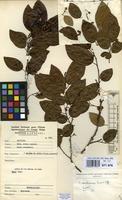
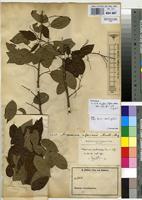
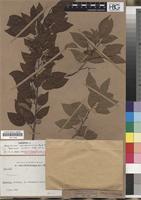
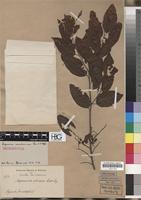
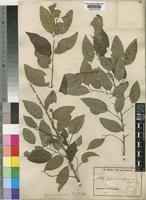
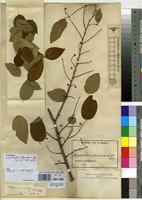
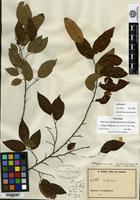
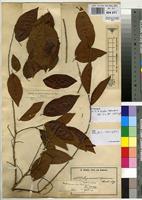
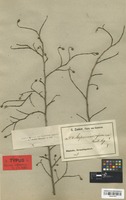
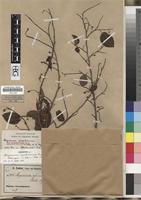
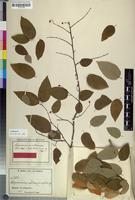
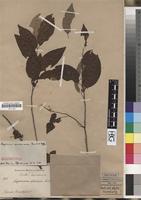
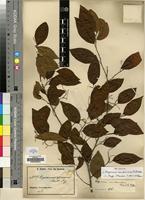
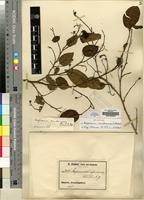
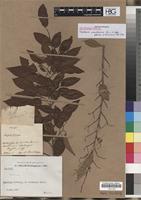
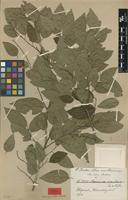
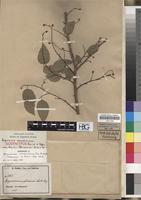
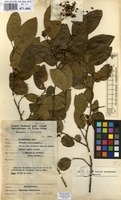
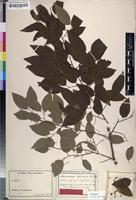
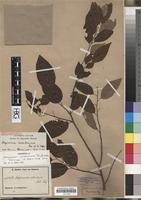
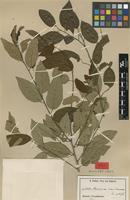
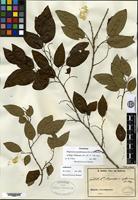
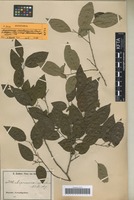
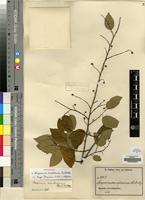
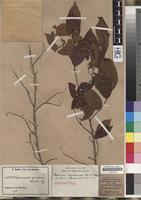
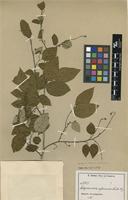
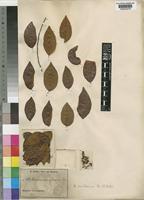
A tree up to 50 ft. high, all parts glabrous; ultimate twigs passing into the inflorescence 1–1 1/2 in. long. Leaves short-petioled, thinly membranous, with age becoming firmly papery, lanceolate or oblong-lanceolate, bluntly acuminate, base cuneate or somewhat rounded, margin entire, 1 1/2–3 in. long, 3/4–1 1/4 in. wide, finely nerved and reticulate; petiole slender, 1/3 in. long; stipules small, triangular. Inflorescence usually 1-sexual, diœcious or monœcious, occasionally androgynous. Male spikes globose or subglobose, 1/5 in. long, dense-flowered, with usually only a few empty basal female bracts; male bracts 2-glandular at the base, wide-triangular, acute, each 3–5-flowered; bracts and flowers red. Female racemes few-flowered, occasionally, even when 1-sexual, accompanied by a much-reduced abortive male spike; pedicels in fruit up to 3/4 in. long. Male calyx thinly membranous, 2–3-lobed, very small. Stamens 2, exserted. Ovary ovoid. Capsule red, globose, about 1/5 in. across. Seeds black, ovoid, irregularly rugulose, 1/6 in. long; caruncle vermilion, as large as the body of the seed.