JSTOR Global Plants Home
  • Home
  • Browse
  • About
  • Access
  • Account
    • Saved Items
    • Profile
  • Log in

Global Plants

Skip to Main Content
  • JSTOR Global Plants Home
  • Global Plants

    • Browse
    • About
    • Access
    • Account
      • Saved Items
      • Profile
Log in
  • Browse
  • About
  • Access
  • Account
    • Saved Items
    • Profile
Advanced Search

Compilation
Manilkara multinervis

8 Images see all

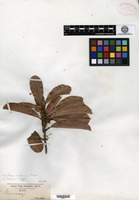
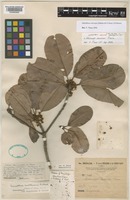
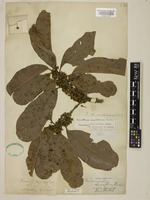
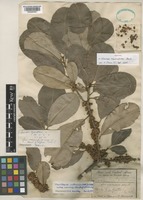
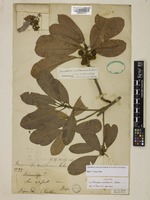
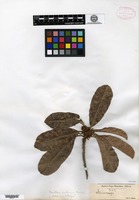
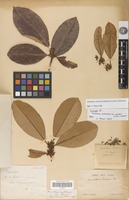
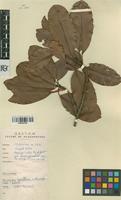
Isotype of Mimusops multinervis Baker [family SAPOTACEAE]
Isotype of Mimusops chevalieri Pierre [family SAPOTACEAE]
Manilkara obovata (Sabine & G.Don) J.H.Hemsl. [family SAPOTACEAE]
Isotype of Mimusops schweinfurthii Baill. [family SAPOTACEAE]
Holotype of Mimusops multinervis Baker [family SAPOTACEAE]
Isotype of Mimusops multinervis Baker [family SAPOTACEAE]
Syntype of Manilkara multinervis (Baker) Dubard var. poissonii Dubard [family SAPOTACEAE]
Filed as Manilkara multinervis (Baker) Dubard [family SAPOTACEAE]
Previous
Next

Name

Identification
Manilkara multinervis (Baker) Dubard [family SAPOTACEAE ] (stored under name); Verified by A. Fournier, 1985
Related name
  • Manilkara multinervis
Common name
  • doke (def. -ei) (SKS) sukai (JMD) (SIERRA LEONE, MENDE), Burkill, H.M. 1985. The useful plants of west tropical Africa, Vol. 5
  • sisina de galeries (Aubréville); petit karité (Bailleul)., Burkill, H.M. 1985. The useful plants of west tropical Africa, Vol. 5
  • tuntumi (AH (SIERRA LEONE, TEMNE), Burkill, H.M. 1985. The useful plants of west tropical Africa, Vol. 5
  • kisa (Aub.; K&A) kugé (K&A) kuko (K&A) kusé (Aub.; K&A) kusi (Aub.; K&A) sisina (K&A) (SENEGAL, MANINKA), Burkill, H.M. 1985. The useful plants of west tropical Africa, Vol. 5
  • bullet-wood tree; sleeper wood (Unwin)., Burkill, H.M. 1985. The useful plants of west tropical Africa, Vol. 5
  • koya (JB) kugé (K&A) kusé (K&A) (SENEGAL, MANDING-BAMBARA), Burkill, H.M. 1985. The useful plants of west tropical Africa, Vol. 5
  • kuko (K&A) (SENEGAL, BANYUN), Burkill, H.M. 1985. The useful plants of west tropical Africa, Vol. 5

Flora

Entry for Manilkara butugi Chiov. [family SAPOTACEAE]
Herbarium
Royal Botanic Gardens, Kew (K)
Collection
Flora of Tropical East Africa
Resource Type
Reference Sources
Entry From
Flora of Tropical East Africa, page 1, (1968) Author: J. H. Hemsley
Names
Manilkara butugi Chiov. [family SAPOTACEAE], in Atti R. Accad. Ital. 11: 46 (1940); K.T.S.: 525 (1961). Types: Ethiopia, Galla-Sidamo, Dulli Forest, Giordano 2465 & Humbi [? Umbi] Forest, Giugliarelli 596 (both Fl, syn.!)
Mimusops cuneifolia [family SAPOTACEAE], [sensu Dale, T.S.K.: 123 (1936), pro parte, non Baker]
Manilkara sp. [family SAPOTACEAE], sensu I.T.U.: 226, fig. 65/b (1940) & ed. 2: 399, fig. 81/b (1952), based on Eggeling 1512 & 3163
Manilkara multinervis [family SAPOTACEAE], [sensu I.T.U., ed. 2: 399 (1952), non (Baker) Dubard]
Mimusops sp. [family SAPOTACEAE], sensu I.T.U., ed. 2: 402 (1952)
Mimusops sp. [family SAPOTACEAE], sensu Wimbush, Cat. Kenya Timbers: 53 (1956), pro max. parte, excl. nom. mugambwa (Kik.)
Information
Tall tree with spreading crown, height up to 35 m., with long straight cylindrical or slightly fluted bole; bark grey-brown, rough and finely fissured. Young shoots subglabrous, usually with pale raised lenticels. Petioles l–3(–4.3) cm. long, glabrous. Leaf-lamina elliptic to oblanceolate, rarely ± obovate, (5-)8–17(–20) cm. long, (l.6-)3–6.3 cm. wide, upper third of leaf tapering to acuminate apex (especially in crown leaves), rarely acute or ± obtuse, narrowly to broadly cuneate, thinly coriaceous, dull green above, greyish-green beneath with a sparse indumentum of minute closely appressed hairs; lateral nerves ascending, finely raised, looped near margin, intracostal veins present. Flowers 1–6, congested in axils of current leaves. Pedicels stiffly erect or horizontal, 8–12 mm. long, puberulous. Calyx up to 5 mm. long, ± densely pubescent; lobes fused at base forming a cupular structure up to 2 mm. long; outer lobes ovate, up to 3 mm. wide; inner lobes slightly smaller. Corolla pale yellow; tube 1.5–2 mm. long; outer lobes narrowly lanceolate, up to 5.5 mm. long; median lobe elliptic, up to 5.5 mm. long. Filaments 2.5–3 mm. long; anthers up to 2 mm. long. Staminodes narrowly oblong to ligulate, up to 2 mm. long, apex with 1–3 (usually 2) slender laciniate processes up to 2 mm. long. Ovary depressed globose, pubescent, 10–12-locular; style 6–8 mm. long, with a base ± swollen and pubescent. Fruits subglobose, up to 3 cm. in diameter, glabrous, with milky pulp. Seed shiny brown, ± obovoid and flattened, 1.3–1.7 cm. long, 7–8.5 mm. wide; hilum lateral, oblique and extending to base.
Range
DISTR. U1–3; K2, 3, ? 4, 5
Altitude range
1500–2300 m.
Distribution
KENYA Baringo District Kabarnet, Apr. 1941 (fr.), Wimbush 1217! & 14 June 1957, Trapnell 2323 !KENYA N. Kavirondo District Kakamega Forest, June 1933, Dale in F.D. 3086 !UGANDA W. Nile District near Payida, Feb. 1934 (fl.), Eggeling 1512 in F.D. 1412 !UGANDA Karamoja District Timu Forest, June 1946 (fr.), Eggeling 5676!UGANDA Mbale District Elgon, Kyosoweri [Kivesoweri], Jan. 1948 (fl.), Eggeling 5734 !
Distribution (external)
Ethiopia
southern Sudan Republic
Notes
This tree, in general outline, bears a superficial resemblance to Mimusops bagshawei. This is especially marked in the leaf-shape, but the two may be distinguished by the following leaf-characters. In M. bagshawei the midrib is raised on the upper surface, the lower surface is glabrescent with no suggestion of a silvery-grey appearance and the vein reticulation is apparent to the naked eye. In Manilkara butugi the midrib is immersed in a channel-like fold, the lower surface has a covering of minute appressed hairs imparting a greyish or a silvery-green colour and the vein reticulum is very fine and hair-like and is not easily visible to the naked eye.

Related Materials

  • Terms and Conditions
  • Privacy Policy
  • Cookie Policy
  • Cookie Settings
  • Accessibility
  • Help
  • Contact Us
  • Facebook
  • Twitter
ITHAKA

JSTOR is part of ITHAKA, a not-for-profit organization helping the academic community use digital technologies to preserve the scholarly record and to advance research and teaching in sustainable ways.

©2000-2026 ITHAKA. All Rights Reserved. JSTOR®, the JSTOR logo, JPASS®, Aluka®, and ITHAKA® are registered trademarks of ITHAKA.

╳