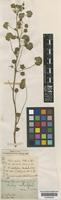
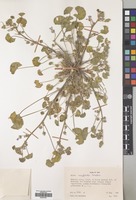
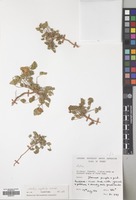
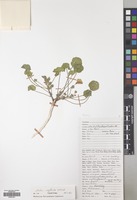
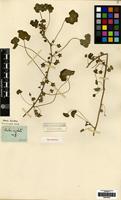
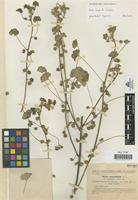
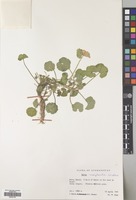
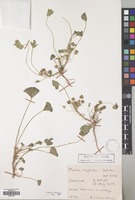
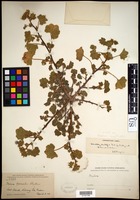
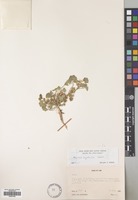
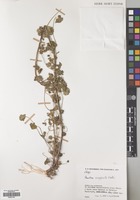
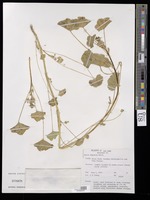
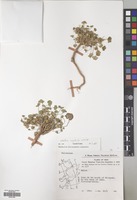
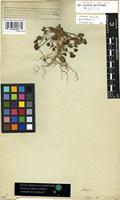
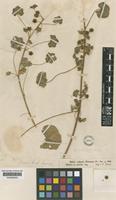
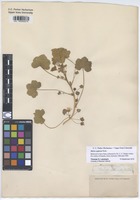
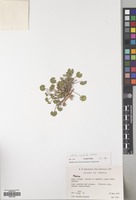
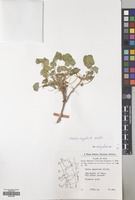
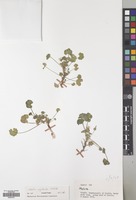
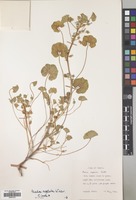
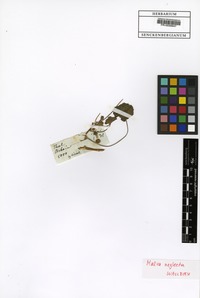
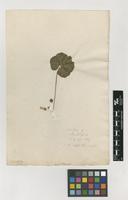
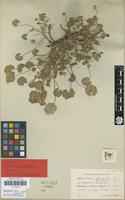
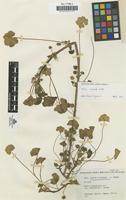
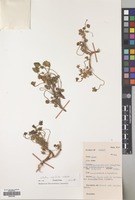
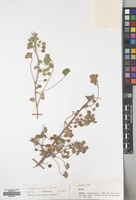
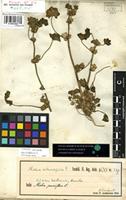
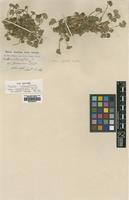
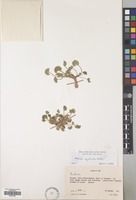
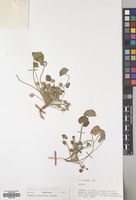
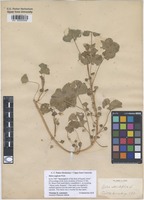
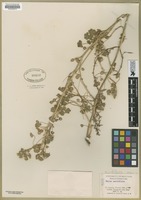
Entry for Malva neglecta Wallr. [family MALVACEAE]
Herbarium
Royal Botanic Gardens, Kew (K)
Collection
Flora Zambesiaca
Resource Type
Reference Sources
Entry From
FZ, Vol 1, Part 2, page 420, (1961) Author: A. W. Exell
Names
Malva neglectaWallr. [family MALVACEAE], in Syll. Ratisb. 1: 140 (1824). Type from Europe.
Information
Perennial herb with strong deep penetrating taproot up to 20 cm. in length; stems stout and woody in basal portion, those developing in the warmer season decumbent and forming flat rosettes up to about 1 m. in diam., those formed in colder seasons abbreviated with very short internodes, all sparsely and more or less appressed-stellate-pubescent. Leaf-lamina 1–6 × 1–6 cm., orbicular-reniform with deep triangular basal sinus, crenate-denticulate, that of leaves on elongated branches very shallowly 5–7-lobed, sparsely strigose on both sides, the hairs often simple on upper surface and stellate on lower surface; petiole 3–20 cm. long, softly and sparsely stellate-pilose; stipules ovate-acuminate or ovate-lanceolate, acute. Flowers in fascicles of up to 4 or (in lower portions of stems) solitary; pedicels 2–5 cm. long, sparsely stellate-pubescent. Epicalyx-lobes 3–4 mm. long, linear-lanceolate. Calyx 5–7 mm. long, stellate-pilose, lobed to or a little beyond the middle, later somewhat accrescent and enclosing the fruit; lobes triangular-ovate, acute, ± ciliate. Petals 10–13 mm. long, white, usually with mauve or purplish veins and mauve or pale purple towards the apex, the claws barbate. Staminal tube pubescent. Fruit 6–8 mm. in diam., of 12–15 smooth shortly stellate-pilose mericarps with rounded lateral angles.
Range
A ruderal or semi-ruderal species of Old World origin, naturalised as a weed of cultivation in many parts of the world, e.g. in N. America and S. Africa
Distribution
Zimbabwe E Chipinga, Sabi Valley Experimental Station, fl. & fr. x.1959, Soane 76 (BM; PRE; SRGH).
Notes
The cited gathering is the first record from southern tropical Africa, but specimens from S. Africa indicate that this species was introduced there about 50 years ago (before 1913).