JSTOR Global Plants Home
  • Home
  • Browse
  • About
  • Access
  • Account
    • Saved Items
    • Profile
  • Log in

Global Plants

Skip to Main Content
  • JSTOR Global Plants Home
  • Global Plants

    • Browse
    • About
    • Access
    • Account
      • Saved Items
      • Profile
Log in
  • Browse
  • About
  • Access
  • Account
    • Saved Items
    • Profile
Advanced Search

Compilation
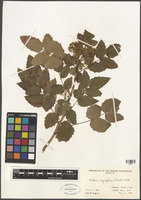
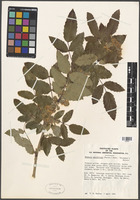
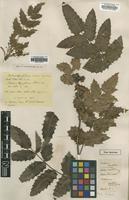
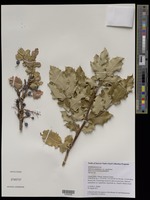
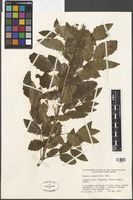
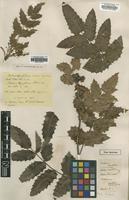
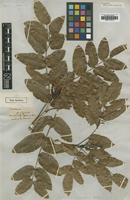
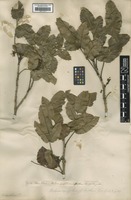
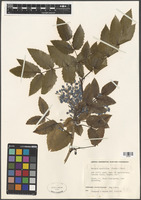
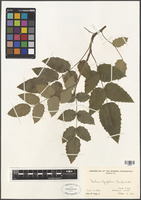
Mahonia aquifolium

14 Images see all

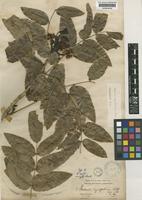
Filed as Mahonia aquifolium (Pursh) Nutt. [family BERBERIDACEAE]
Type of Berberis aquifolium Pursh [family BERBERIDACEAE]
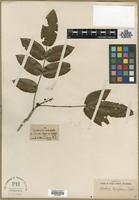
Mahonia aquifolium (Pursh) Nutt. variety aquifolium [family BERBERIDACEAE]
Filed as Mahonia aquifolium (Pursh) Nutt. [family BERBERIDACEAE]
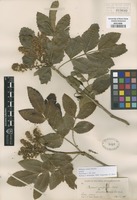
Type? of Berberis aquifolium Pursh [family BERBERIDACEAE]
Type of Mahonia undulata Nutt. [family BERBERIDACEAE]
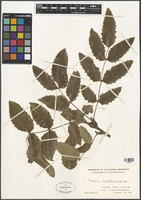
Type of Mahonia aquifolium DC. [family BERBERIDACEAE]
Type of Mahonia aquifolium (Pursh) Nutt. var. lyallii Ahrendt [family BERBERIDACEAE]
Type? of Mahonia undulata Nutt. [family BERBERIDACEAE]
Isotype of Mahonia sonnei Abrams [family BERBERIDACEAE]
Filed as Mahonia aquifolium (Pursh) Nutt. [family BERBERIDACEAE]
Mahonia aquifolium (Pursh) Nutt. [family BERBERIDACEAE]
Previous
Next

Name

Identification
Mahonia aquifolium (Pursh) Nutt. [family BERBERIDACEAE ] (stored under name); Berberis aquifolium Pursh [family BERBERIDACEAE ]
Related name
  • Mahonia undulata
  • Mahonia aquifolium
  • Berberis aquifolium
Common name
  • Oregon-grape, Flora of North America Vol. 3

Flora

Entry for Berberis aquifolium Pursh [family BERBERIDACEAE]
Herbarium
Flora of North America (FNA)
Collection
Flora of North America
Resource Type
Reference Sources
Entry From
Flora of North America, Vol 3,
Names
Berberis aquifolium Pursh [family BERBERIDACEAE], Fl. Amer. Sept., 219. 1814
Mahonia aquifolium (Pursh) Nuttall [family BERBERIDACEAE]
Information
Shrubs, evergreen, 0.3-3(-4.5) m. Stems usually monomorphic, seldom with short axillary shoots. Bark of 2d-year stems gray-brown or purplish, glabrous. Bud scales 4-8(-14) mm, deciduous. Spines absent. Leaves 5-9-foliolate; petioles 1-6 cm. Leaflet blades thin and flexible or rather rigid; surfaces abaxially glossy, smooth, adaxially glossy, green; terminal leaflet stalked, blade 5.1-8.7(-14.5) × 2.4-4.5(-5.5) cm, 1.7-2.5 times as long as wide; lateral leaflet blades lance-ovate to lance-elliptic, 1(-3)-veined from base, base obtuse or truncate, rarely weakly cordate, margins plane or undulate, toothed, each with 5-21 teeth 0-2 mm tipped with spines to 0.8-2.2 × 0.2-0.3 mm, apex acute or sometimes obtuse or rounded. Inflorescences racemose, dense, 30-60-flowered, 3-9(-11) cm; bracteoles membranous, apex rounded or obtuse, sometimes apiculate. Flowers: anther filaments with distal pair of recurved lateral teeth. Berries blue, glaucous, oblong-ovoid, 6-10 mm, juicy, solid. 2n = 28, 56.
Phenology
Flowering winter-spring (Mar-Jun)
Altitude range
0-2100 m
Distribution
USA Calif.USA IdahoUSA Mont.USA Oreg.USA Wash.Canada B.C.
Discussion
Berberis aquifolium is the state flower of Oregon. It is widely used as an ornamental and has been reported as an escape from cultivation in scattered localities across the continent (Ontario, Quebec, central California, Michigan, and Nevada).
Berberis aquifolium is resistant to infection by Puccinia graminis.
Medicinally, various root preparations of Berberis aquifolium were used by Native Americans for stomach trouble, hemorrhages, and tuberculosis; as a panacea, a tonic, a gargle, and an eye wash; and to purify blood. Leaves and roots were used in steam baths to treat yellow fever; karok was used as a poison; and the tips of stems were used to treat stomach aches (D. E. Moermann 1986).

Related Materials

  • Terms and Conditions
  • Privacy Policy
  • Cookie Policy
  • Cookie Settings
  • Accessibility
  • Help
  • Contact Us
  • Facebook
  • Twitter
ITHAKA

JSTOR is part of ITHAKA, a not-for-profit organization helping the academic community use digital technologies to preserve the scholarly record and to advance research and teaching in sustainable ways.

©2000-2026 ITHAKA. All Rights Reserved. JSTOR®, the JSTOR logo, JPASS®, Aluka®, and ITHAKA® are registered trademarks of ITHAKA.

╳