JSTOR Global Plants Home
  • Home
  • Browse
  • About
  • Access
  • Account
    • Saved Items
    • Profile
  • Log in

Global Plants

Skip to Main Content
  • JSTOR Global Plants Home
  • Global Plants

    • Browse
    • About
    • Access
    • Account
      • Saved Items
      • Profile
Log in
  • Browse
  • About
  • Access
  • Account
    • Saved Items
    • Profile
Advanced Search

Compilation
Macrotyloma chrysanthum

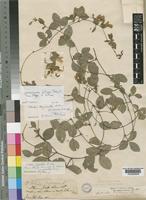
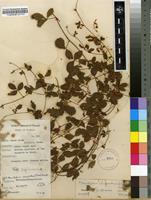
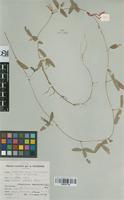
3 Images see all

Type of Dolichos biflorus L. [family LEGUMINOSAE-PAPILIONOIDEAE]
Filed as Macrotyloma chrysanthum (Chev) Verdc. [family FABACEAE]
Filed as Macrotyloma chrysanthum (Chev.) Verdc. [family FABACEAE]
Previous
Next

Name

Identification
Macrotyloma chrysanthum (Chev) Verdc. [family FABACEAE ] (stored under name); Verified by Ekwuno,P.O., 1978
Related name
  • Macrotyloma biflorum
  • Dolichos chrysanthus
  • Dolichos biflorus
  • Macrotyloma chrysanthum

Flora

Entry for Macrotyloma biflorum var. biflorum [family LEGUMINOSAE]
Herbarium
Royal Botanic Gardens, Kew (K)
Collection
Flora Zambesiaca
Resource Type
Reference Sources
Entry From
FZ, Vol 3, Part 5, (2001) Author: B. Mackinder, R. Pasquet, R. Polhill and B. Verdcourt
Names
Macrotyloma biflorum var. biflorum [family LEGUMINOSAE], —Mackinder in Kirkia 17: 83 (1998).
Dolichos biflorus var. occidentalis Harms [family LEGUMINOSAE], in Bot. Jahrb. Syst. 26: 313 (1899); in Engler, Pflanzenw. Afrikas [Veg. Erde 9] 3: 677 (1915). —E.G. Baker, Legum. Trop. Africa: 449 (1929). Several syntypes from Nigeria, Angola, Dem. Rep. Congo and Sudan.
Dolichos chrysanthus A. Chev. [family LEGUMINOSAE], in Bull. Soc. Bot. France 58, Mém. 8: 164 (1912). —Brenan in Mem. New York Bot. Gard. 8: 419 (1954). —Hepper in F.W.T.A., ed. 2, 1: 570 (1958). —Torre in C.F.A. 3: 295 (1966). Type from Ivory Coast.
Dolichos chrysanthus var. occidentalis Harms R. Wilczek [family LEGUMINOSAE], in F.C.B. 6: 324 (1954) quoad lecotypum non sensu Wilczek.
Macrotyloma chrysanthum A.Chev. Verdc. [family LEGUMINOSAE], in Kew Bull. 24: 402 (1970).
Macrotyloma chrysanthum var. occidentale Harms Verdc. [family LEGUMINOSAE], in Kew Bull. 24: 402 (1970) quoad lecotypum non sensu Verdc.
Information
Prostrate or scandent herb to 2 m long from a woody rootstock. Stems annual, slender, often slightly flexuous, all axes with a spreading whitish pubescence. Leaves 3-foliolate; leaflets 1–4 × 0.5–1.4 cm, elliptic to oblong-elliptic, appressed pubescent on both surfaces, rounded at base and apex, occasionally apiculate; petiole 8–20 mm long; rhachis 1–2 mm long; petiolules 2 mm long; stipules 2–3 × 1 mm, acute; stipels 1 mm long, filiform. Flowers axillary, in pairs or in 3–5-flowered fascicles; fascicles sessile or with a short peduncle up to 2 mm long; pedicels 1–2 mm long; bracts 2–3 mm long, ovate, truncate at the base, striate; bracteoles 3–4 mm long, linear. Calyx pubescent; tube 2 mm long; lobes 3–5 mm long, lanceolate, the upper pair fused along half to three-quarters of their length. Standard whitish to yellow with purple blotch at base, 14–20 × 8–14 mm, narrowly obovate, emarginate at the apex, with cultrate appendages 4–6 mm long; wings 10–15 × 2 mm; keel 10–13 × 3 mm. Ovary 5–7 mm long, linear, margins puberulous. Pods straw-coloured, 3.5–4.5 cm long, linear, glabrous or sparsely pubescent, 4–10-seeded. Seeds reddish-black, shiny, 3–4 × 2–3 × 1 mm, ovate-oblong, modified into an elaiosome at one end; hilum small, central.
Habitat
Miombo woodland, on sandy soils
Range
Widespread in western tropical Africa from Guinea Bissau to Sudan and south to Dem. Rep. Congo and Angola
Altitude range
900 m.
900
900
Distribution
Zambia N Nchelenge Distr., Lake Mweru, Nchelenge, fl. & fr. 22.iv.1957, Richards 9395 (K).
Notes
Verboom LK114, from Nyika Plateau, Zambia, appears to be intermediate between M. biflorum and M. axillare var. macranthum.Var. appresse-puberulum Verdc. (Dolichos chrysanthus var. occidentalis R. Wilczek in F.C.B. 6: 324 (1954)) is a plant with appressed hairs and is found over much of the northern and western part of the species range.

Related Materials

  • Terms and Conditions
  • Privacy Policy
  • Cookie Policy
  • Cookie Settings
  • Accessibility
  • Help
  • Contact Us
  • Facebook
  • Twitter
ITHAKA

JSTOR is part of ITHAKA, a not-for-profit organization helping the academic community use digital technologies to preserve the scholarly record and to advance research and teaching in sustainable ways.

©2000-2026 ITHAKA. All Rights Reserved. JSTOR®, the JSTOR logo, JPASS®, Aluka®, and ITHAKA® are registered trademarks of ITHAKA.

╳