JSTOR Global Plants Home
  • Home
  • Browse
  • About
  • Access
  • Account
    • Saved Items
    • Profile
  • Log in

Global Plants

Skip to Main Content
  • JSTOR Global Plants Home
  • Global Plants

    • Browse
    • About
    • Access
    • Account
      • Saved Items
      • Profile
Log in
  • Browse
  • About
  • Access
  • Account
    • Saved Items
    • Profile
Advanced Search

Compilation
Machaeranthera riparia

5 Images see all

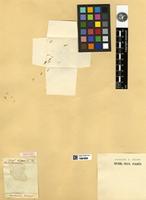
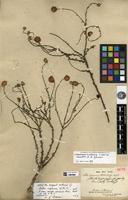
Isotype of Machaeranthera riparia (Kunth) A.G.Jones [family ASTERACEAE]
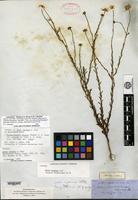
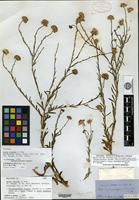
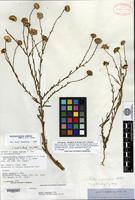
Isotype of Aster sonorae A. Gray [family ASTERACEAE]
Holotype of Aster sonorae A. Gray [family ASTERACEAE]
Isotype of Aster sonorae A. Gray [family ASTERACEAE]
Isotype of Machaeranthera riparia (Kunth) A.G.Jones [family ASTERACEAE]
Previous
Next

Name

Identification
Arida riparia (Kunth) D. R. Morgan & R. L. Hartman [family ASTERACEAE ] (stored under name); Verified by W. T. Kittredge, 2007 Isotype of Aster sonorae A. Gray [family ASTERACEAE ] Verified by A. Gray, 1853 Machaeranthera riparia (Kunth) A. G. Jones [family ASTERACEAE ] Verified by S. Sundberg, 1986
Related name
  • Machaeranthera riparia
  • Aster riparius
  • Arida riparia
  • Aster sonorae
Common name
  • alkali aster, Flora of North America Vol. 20
  • Chiricahua mountain tansy-aster, Flora of North America Vol. 20

Flora

Entry for Arida riparia (Kunth) D. R. Morgan & R. L. Hartman [family ]
Herbarium
Flora of North America (FNA)
Collection
Flora of North America
Resource Type
Reference Sources
Entry From
Flora of North America, Vol 20,
Names
Arida riparia (Kunth) D. R. Morgan & R. L. Hartman [family ], Sida, 20: 1414. 2003
Aster riparius Kunth [family COMPOSITAE], in A. von Humboldt et al., Nov. Gen. Sp., 4(fol.): 72. 1818; 4(qto): 92. 1820
Machaeranthera riparia (Kunth) A. G. Jones [family COMPOSITAE]
Machaeranthera sonorae (A. Gray) Stucky [family COMPOSITAE]
Treatment Author(s)
Ronald L. Hartman
David J. Bogler
Information
Annuals, 25–60 cm; taproots slender to thick. Stems 1–12+, erect or ascending, straight and rigid, sometimes sprawling from base, branching from base and distally, glabrous, glaucous. Leaves mostly cauline; sessile (± appressed); blades oblanceolate, 20–30 × 3–5 mm, reduced distally, (thick, succulent) bases broadened, margins entire (incised to dentate in hybrids with A. parviflora) eciliate or with 1–8 cilia per side, apices linear, spiny-mucronate, glabrous; distal subulate, entire. Heads borne singly (terminal), often in loose, leafy, cymiform arrays. Involucres hemispheric, 10–12 × 10–16 mm (fresh). Phyllaries in 4–5 series, appressed, linear-lanceolate, 2–8 mm, bases whitish to tan, margins entire to laciniate, apices green, acute to acuminate, glabrous. Ray florets 50–80+; laminae bluish purple to lavender, 10–12 mm, coiled after flowering. Disc florets 45–100+; corollas yellow, 3.5–5 mm. Cypselae oblanceoloid, 2.5–3 mm, 11–13-nerved per face, faces sparsely sericeous; pappi: white, setose; ray 3–3.5 mm; disc 3–4 mm. 2n = 10.
Phenology
apr-may (spring), jun-aug (summer), sep (fall)
Altitude range
1300–1400 m;
Distribution
Mexico (Chihuahua).Mexico (Coahuila).Mexico (Durango).Mexico (Zacatecas).USA Ariz.USA N.Mex.
Discussion
Arida riparia is a distinctive species recognized by its V-shaped branching, narrow, succulent, somewhat appressed, spiny-tipped leaves, and relatively large heads. It is known to hybridize with A. parviflora in southeastern Arizona and adjacent New Mexico. Specimens with dentate leaf margins usually represent hybrids.

Related Materials

  • Terms and Conditions
  • Privacy Policy
  • Cookie Policy
  • Cookie Settings
  • Accessibility
  • Help
  • Contact Us
  • Facebook
  • Twitter
ITHAKA

JSTOR is part of ITHAKA, a not-for-profit organization helping the academic community use digital technologies to preserve the scholarly record and to advance research and teaching in sustainable ways.

©2000-2026 ITHAKA. All Rights Reserved. JSTOR®, the JSTOR logo, JPASS®, Aluka®, and ITHAKA® are registered trademarks of ITHAKA.

╳