JSTOR Global Plants Home
  • Home
  • Browse
  • About
  • Access
  • Account
    • Saved Items
    • Profile
  • Log in

Global Plants

Skip to Main Content
  • JSTOR Global Plants Home
  • Global Plants

    • Browse
    • About
    • Access
    • Account
      • Saved Items
      • Profile
Log in
  • Browse
  • About
  • Access
  • Account
    • Saved Items
    • Profile
Advanced Search

Compilation
Mtonia glandulifera

2 Images see all

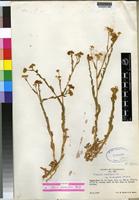
Isotype of Mtonia glandulifera Beentje [family COMPOSITAE]
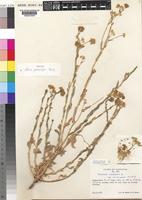
Holotype of Mtonia glandulifera Beentje [family COMPOSITAE]
Previous
Next

Name

Identification
Isotype of Mtonia glandulifera Beentje [family COMPOSITAE ] (stored under name); Verified by Not on sheet,
Related name
  • Mtonia glandulifera
  • Nidorella resedifolia

Flora

Entry for MTONIA glandulifera Beentje [family COMPOSITAE]
Herbarium
Royal Botanic Gardens, Kew (K)
Collection
Flora of Tropical East Africa
Resource Type
Reference Sources
Entry From
Flora of Tropical East Africa, page 315, (2002) Author: H.J. BEENTJE
Names
MTONIA glandulifera Beentje [family COMPOSITAE], in K.B. 54: 97 (1999). Type: Tanzania, Dodoma District, W of Logi, Thulin & Mhoro 789 (K!, holo., EA!, iso.)
Information
Annual herb, 30–60 cm high; stems long-pilose, glandular and sticky. Leaves sessile, oblong, lanceolate or slightly panduriform, 0.5–4.5 cm long, 0.2–1 cm wide, base semi-amplexicaul and sometimes auriculate, sometimes narrowed above the very base, margins entire, sometimes distally dentate, apex obtuse and mucronate, sparsely long-pilose and densely glandular. Capitula 3–4 mm long, in dense cymes organized into small corymbs; stalks of individual capitula 1–4 mm long; phyllaries few-seriate, subequal, lanceolate, 1.5–2 mm long, acuminate, densely glandular; receptacle convex to toroid, minutely toothed. Florets yellow; outer florets in 1–2 series, several tens, tube cylindrical, 0.5–0.7 mm long, glandular, “ray” erect, slightly hooded, 0.3–0.6 mm long, ± 0.3 mm wide, style 0.8–1.2 mm long; inner florets many, tube infundibuliform, 0.7–1.2 mm long, glandular (all florets sticking together), lobes 0.5–0.6 mm, anthers 0.7–0.8 mm, style 0.8–1.2 mm long. Achenes flattened ellipsoid, 0.6–0.8 mm long, pilose or pubescent, glandular; pappus a minutely toothed or almost smooth ring. Fig. 96 (page 465).
Range
DISTR. T 2, 4, 5, 7 not known elsewhere
Altitude range
700–1400 m
Distribution
TANZANIA Mbulu District Tarangire, Sep. 1958, Mahinde 245!;TANZANIA Dodoma District W of Logi, Aug. 1970, Thulin & Mhoro 789! (type)TANZANIA Tabora/Dodoma/Chunua District Rungwa Game Reserve, 1 km W of Itigi–Mbeya road, Jan. 1969, Edong in CAWM 4453!
Notes
This genus is closest to Grauanthus, but plants strongly resemble Nidorella microcephala. The lack of pappus (as well as the larger number of inner florets) serves to distinguish the two.

Related Materials

  • Terms and Conditions
  • Privacy Policy
  • Cookie Policy
  • Cookie Settings
  • Accessibility
  • Help
  • Contact Us
  • Facebook
  • Twitter
ITHAKA

JSTOR is part of ITHAKA, a not-for-profit organization helping the academic community use digital technologies to preserve the scholarly record and to advance research and teaching in sustainable ways.

©2000-2026 ITHAKA. All Rights Reserved. JSTOR®, the JSTOR logo, JPASS®, Aluka®, and ITHAKA® are registered trademarks of ITHAKA.

╳