JSTOR Global Plants Home
  • Home
  • Browse
  • About
  • Access
  • Account
    • Saved Items
    • Profile
  • Log in

Global Plants

Skip to Main Content
  • JSTOR Global Plants Home
  • Global Plants

    • Browse
    • About
    • Access
    • Account
      • Saved Items
      • Profile
Log in
  • Browse
  • About
  • Access
  • Account
    • Saved Items
    • Profile
Advanced Search

Compilation
Mkilua fragrans

11 Images see all

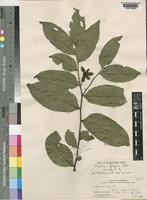
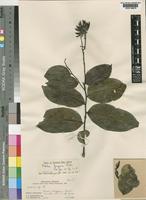
Mkilua fragrans Verdc. [family ANNONACEAE]
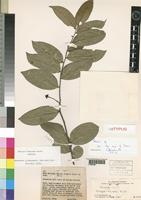
Isotype of Mkilua fragrans Verdc. [family ANNONACEAE]
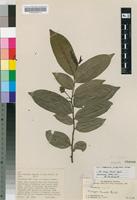
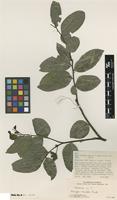
Type of Mkilua fragrans Verdc. [family ANNONACEAE]
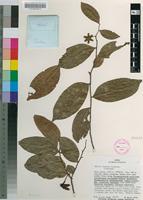
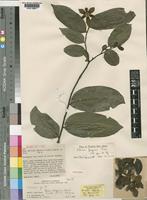
Isotype of Mkilua fragrans Verdc. [family ANNONACEAE]
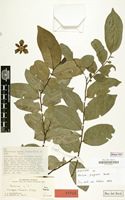
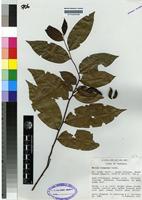
Mkilua fragrans Verdc. [family ANNONACEAE]
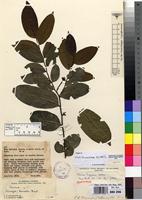
Isotype of Mkilua fragrans Verdc. [family ANNONACEAE]
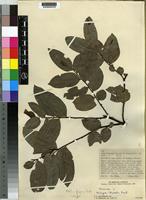
Holotype of Mkilua fragrans Verdc. [family ANNONACEAE]
Isotype of Mkilua fragrans Verdc. [family ANNONACEAE]
Previous
Next

Name

Identification
Isotype of Mkilua fragrans Verdc. [family ANNONACEAE ] (stored under name); Verified by van Setten, A.K.,
Related name
  • Mkilua fragrans
  • Unona sp.
  • Uvaria unrecorded

Flora

Entry for MKILUA fragrans Verdc. [family ANNONACEAE]
Herbarium
Royal Botanic Gardens, Kew (K)
Collection
Flora of Tropical East Africa
Resource Type
Reference Sources
Entry From
Flora of Tropical East Africa, page 1, (1971) Author: B. Verdcourt
Names
MKILUA fragrans Verdc. [family ANNONACEAE], in K.B. 24: 451, fig. 1 (1970). Type: Kenya, Kwale District, Mafisini, Buda Forest, Drummond & Hemsley 3803 (K, holo.!)
Uvaria sp. [family ANNONACEAE], sensu U.O.P.Z.: 480, fig (1949); K.T.S.: 40 (1961)
Information
Shrub or small tree 2.7–4.5(–10) m. tall, often branched from near the base; bark dark grey, smooth; young twigs dark, very sparsely adpressed pubescent, very soon glabrous or glabrescent, the stem roughened with anastomosing raised parts enclosing narrowly elliptic depressions. Leaf-blades elliptic or oblong-elliptic, mostly rather asymmetrical, 1.7–14 cm. long, 0.7–7 cm. wide, narrowed to the apex, but varying from obtuse to bluntly acuminate, asymmetrically cuneate at the base, thin, glabrous and ± glossy above save for a few hairs on the midrib in very young leaves, densely hairy beneath in the youngest leaf-buds, but soon quite glabrous; midrib and lateral nerves impressed above in life, prominent beneath; venation reticulate and enclosing very numerous microscopic raised dots in the dried state; petioles 1–2 mm. long. Flowers usually sweetly scented, solitary or in 2–3-flowered cymes, extra-axillary; peduncles (possibly actually short side branches) 3–8 mm. long; pedicels of main flowers stout, thickened towards the apex, others more slender, 2–4 cm. long; bracts lanceolate, 0.3–1.1 cm. long, 1.2–4.5 mm. wide, glabrous. Sepals reniform or semicircular, 4–6 mm. long, 4–7 mm. wide, sparsely puberulous or glabrescent save for the margins. Petals at first all green, but later greenish-yellow, yellow, cream, apricot or white, with a broad basal area of reddish-purple inside, very rapidly lengthening as theyoung flowers develop, elliptic, obtuse, the outer larger, 2.1–3.5 cm. long, 1.2–2.3 cm. wide, the inner 1.9 cm. long, 0.9–1.1 cm. wide, tomentose on both surfaces. Stamens orange-buff, 2–2.7 mm. long. Carpels 30–40; ovary 2.2 mm. long; style 1.5 mm. long, densely puberulous. Monocarps green then scarlet, 20–30, spreading, the apices roughly forming a sphere in outline, (1.8–) 4.5–5 cm. long, 6.5–10 mm. wide, finely rugulose when dry, practically glabrous save for a few sparse hairs. Seeds 1.2–1.6 cm. long, 5–6 mm. wide; aril ± 4 mm. long. Fig. 12.
Range
DISTR. K7; T3; Z; P not known elsewhere
Altitude range
0–400 m.
Distribution
KENYA Kwale District about half-way between Lungalunga and Msambweni, Mrima Hill, 5 Sept. 1957, Verdcourt 1892! & 16 Jan. 1964, Verdcourt 3941!;KENYA Lamu District Utwani Forest Reserve, Mambosasa, 16 Oct. 1957, Greenway & Rawlins 9345!TANGANYIKA Tanga District near Moa, Mtotohovu, 12 Nov. 1947, Brenan & Greenway 8314! & 10 Sept. 1951, Greenway 8703!ZANZIBAR Zanzibar I. , Kitope, Oct. 1949, R. O. Williams !ZANZIBAR Pemba I. , Mkanjuni, 18 Aug. 1929, Vaughan 564!
Notes
Since the flowers are widely employed for perfume by Swahili and Arab women, R. O. Williams (U.O.P.Z.: 480) has assumed that this is a cultivated plant originating from India, but I have no evidence to support this. He is probably correct, however, in assuming it not to be wild in Zanzibar. It occurs in so many quite wild places on the mainland that it seems very improbable that it is not native; moreover I have not been able to find anything like it in Asia. A number of sheets collected by A. Peter are merely labelled “O. Usambara” and probably come from the foothills; it is possible that it occurs at higher altitudes, however.

Related Materials

  • Terms and Conditions
  • Privacy Policy
  • Cookie Policy
  • Cookie Settings
  • Accessibility
  • Help
  • Contact Us
  • Facebook
  • Twitter
ITHAKA

JSTOR is part of ITHAKA, a not-for-profit organization helping the academic community use digital technologies to preserve the scholarly record and to advance research and teaching in sustainable ways.

©2000-2026 ITHAKA. All Rights Reserved. JSTOR®, the JSTOR logo, JPASS®, Aluka®, and ITHAKA® are registered trademarks of ITHAKA.

╳