JSTOR Global Plants Home
  • Home
  • Browse
  • About
  • Access
  • Account
    • Saved Items
    • Profile
  • Log in

Global Plants

Skip to Main Content
  • JSTOR Global Plants Home
  • Global Plants

    • Browse
    • About
    • Access
    • Account
      • Saved Items
      • Profile
Log in
  • Browse
  • About
  • Access
  • Account
    • Saved Items
    • Profile
Advanced Search

Compilation
Martretia quadricornis

18 Images see all

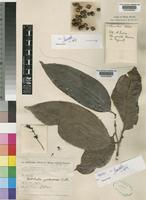
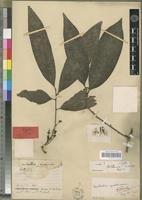
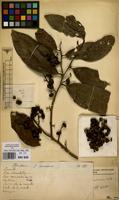
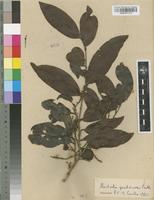
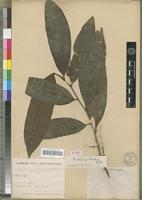
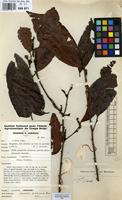
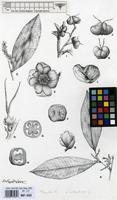
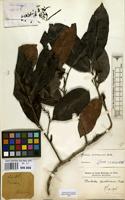
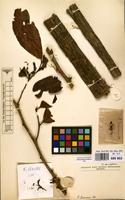
Martretia quadricornis Beille [family EUPHORBIACEAE]
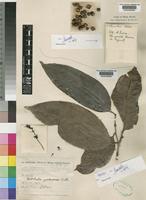
Type of Martretia quadricornis Beille [family EUPHORBIACEAE]
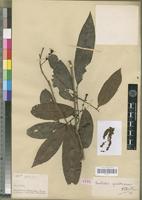
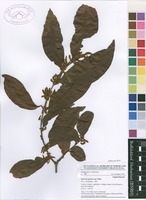
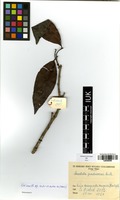
Isotype of Martretia quadricornis Beille [family EUPHORBIACEAE]
Type of Martretia quadricornis Beille [family EUPHORBIACEAE]
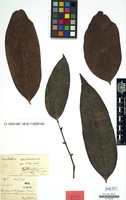
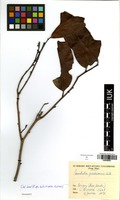
Filed as Martretia quadricornis Beille [family EUPHORBIACEAE]
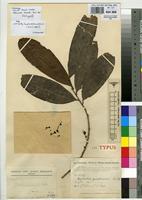
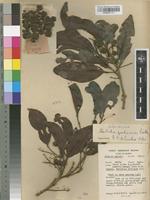
Type of Martretia quadricornis Beille [family EUPHORBIACEAE]
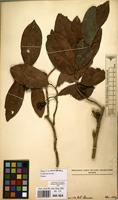
Filed as Martretia quadricornis Beille [family EUPHORBIACEAE]
Isotype of Martretia quadricornis Beille [family EUPHORBIACEAE]
Filed as Martretia quadricornis Beille [family EUPHORBIACEAE]
Previous
Next

Name

Identification
Isotype of Martretia quadricornis Beille [family EUPHORBIACEAE ] (stored under name); Verified by Leonard J., 1988
Related name
  • Martretia quadricornis
Common name
  • ε-soεnt (NWT) (SIERRA LEONE, TEMNE), Burkill, H.M. 1985. The useful plants of west tropical Africa, Vol. 2

Flora

Entry for MARTRETIA quadricornis Beille [family EUPHORBIACEAE]
Herbarium
Royal Botanic Gardens, Kew (K)
Collection
Flora of Tropical Africa
Resource Type
Reference Sources
Entry From
Flora of Tropical Africa, Vol 6, Part 1, page 441, (1913) Author: (By J. G. Baker, with additions by C. H. Wright.)
Names
MARTRETIA quadricornis Beille [family EUPHORBIACEAE], in Bull. Soc. Bot. France, lv. Mém. viii. 64.
Information
Branches clothed with a dull-grey bark; young branchlets up to 3 in. long, terete, glabrous. Leaves lanceolate, oblong-lanceolate or ovate-elliptic, gradually acuminate to an acute or mucronate apex, cuneate at the base, 4–9 in. long, 1 1/4–3 1/2 in. broad, entire, chartaceous, glabrous and somewhat dull on both surfaces; lateral nerves 10–15 on each side, very slender, looped and anastomosing freely well within the margin, distinct and slightly prominent on both surfaces; petiole 2–3 lin. long, deeply grooved on the upper side, wrinkled, otherwise glabrous; stipules ovate-lanceolate, small, soon falling off. Male racemes axillary on the young shoots, solitary or subsolitary, about 2 in. long; axis slightly flexuous, sulcate, glabrous; bracts ovate, slightly keeled, ciliate; pedicels about 3/4 lin. long, glabrous. Sepals 4, oblanceolate, 3/4 lin. long, ciliate towards the apex, otherwise glabrous. Stamens 5–7; filaments 1/3 lin. long, glabrous; anthers ellipsoid, nearly 1/2 lin. long, mucronate. Rudimentary ovary short, bifid, glabrous. Female racemes solitary or geminate towards the base of the young shoots or on the two-year-old wood, 1 1/2–2 in. long; axis angular or deeply sulcate, glabrous; bracts ovate or ovate-triangular, about half the length of the pedicels, ciliate; pedicels stout, angular, 1 lin. long, glabrous. Sepals 5 or 6, ovate-anceolate or lanceolate, gradually acuminate, 3/4 lin. long, ciliate. Ovary 2-lobed (resembling 2 shoulders), each lobe very slightly bifid, glabrous; styles connate for about 1/2 lin. at the base, linear and undivided, glabrous, 3 lin. long. Fruits not seen.
Distribution
Ubangi-Shari North Central valley of the Tomi River, between Fort Sibut and Fort Possel, Chevalier, 10577!

Related Materials

  • Terms and Conditions
  • Privacy Policy
  • Cookie Policy
  • Cookie Settings
  • Accessibility
  • Help
  • Contact Us
  • Facebook
  • Twitter
ITHAKA

JSTOR is part of ITHAKA, a not-for-profit organization helping the academic community use digital technologies to preserve the scholarly record and to advance research and teaching in sustainable ways.

©2000-2026 ITHAKA. All Rights Reserved. JSTOR®, the JSTOR logo, JPASS®, Aluka®, and ITHAKA® are registered trademarks of ITHAKA.

╳