JSTOR Global Plants Home
  • Home
  • Browse
  • About
  • Access
  • Account
    • Saved Items
    • Profile
  • Log in

Global Plants

Skip to Main Content
  • JSTOR Global Plants Home
  • Global Plants

    • Browse
    • About
    • Access
    • Account
      • Saved Items
      • Profile
Log in
  • Browse
  • About
  • Access
  • Account
    • Saved Items
    • Profile
Advanced Search

Compilation
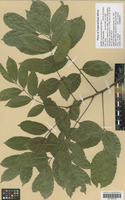
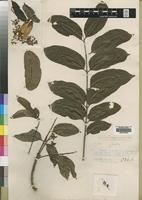
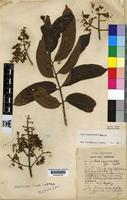
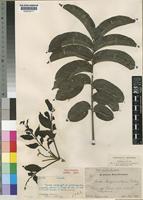
Lovoa swynnertonii

6 Images see all

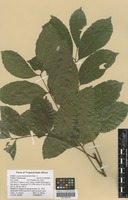
Filed as Lovoa swynnertonii Baker f. [family MELIACEAE]
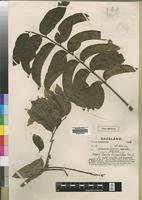
Type of Lovoa swynnertonii Baker f. [family MELIACEAE]
Type? of Lovoa swynnertonii Baker f. [family MELIACEAE]
Type of Lovoa swynnertonii Baker f. [family MELIACEAE]
Filed as Lovoa swynnertonii Baker f. [family MELIACEAE]
Type of Lovoa swynnertonii Baker f. [family MELIACEAE]
Previous
Next

Name

Identification
Lovoa swynnertonii Baker f. [family MELIACEAE ] Verified by Styles,B.T. & White,F., Lovoa swynnertonii Baker f. [family MELIACEAE ] (stored under name);
Related name
  • Lovoa swynnertonii

Flora

Entry for Lovoa swynnertonii Bak. f. [family MELIACEAE]
Herbarium
Royal Botanic Gardens, Kew (K)
Collection
Flora Zambesiaca
Resource Type
Reference Sources
Entry From
FZ, Vol 2, Part 1, page 285, (1963) Author: F. White and B. T. Styles
Names
Lovoa swynnertonii Bak. f. [family MELIACEAE], in Journ. Linn. Soc., Bot. 40: 41, t. 3 (1911). — Eyles in Trans. Roy. Soc. S. Afr. 5: 390 (1916). — Steedman, Trees etc. S. Rhod.: 33 (1933). — Staner in Bull. Jard. Bot. Brux. 16: 249 (1941). — Brenan, T.T.C.L.: 317 (1949). — Eggeling & Dale, Indig. Trees Uganda Prot.: 193 (1952). — Staner & Gilbert, F.C.B. 7: 195 (1958). — Dale & Greenway, Kenya Trees and Shrubs: 269 (1961). TAB. 56. Type: S. Rhodesia, Chirinda, fl. ii.1906, Swynnerton 16 (BM, holotype; K).
Information
Large evergreen tree occasionally reaching a height of 50 m.; bole fluted or slightly buttressed at the base to a height of 2 m., tall and straight, sometimes 30 m. to first branch, slender, up to 2 m. in diam.; bark similar to that of Khaya nyasica but lacking its bitter taste. Leaves paripinnate, petiole and rhachis up to 30 cm. long, minutely puberulous; leaflets up to 10 × 3·5 cm., opposite or alternate, 3–5 (6)-jugate, up to 10 × 4 cm., more or less oblong-elliptic or lanceolate-elliptic, slightly falcate, apex shortly and bluntly acuminate, base markedly asymmetric, upper surface glossy, lateral nerves closely spaced in c. 16 pairs, lower surface glabrous except for a few hairs on nerves when young; petiolules 5–10 mm. long. Flowers white, in large axillary panicles; peduncles 6–9 cm. long; inflorescence-axes densely puberulous; bracts very small, less than 1 mm. long, puberulous; pedicels ± 1 mm. long. Calyx 1 mm. long, puberulous, especially on the margins. Petals 2·5–3·5 mm. long, elliptic, hooded, glabrous inside and outside. Staminal tube 1–1·5 mm. long, appendages 1–1·5 mm. long; anthers inserted between the appendages on short filaments, exserted. Ovary 1 mm. in diam., subglobose, minutely papillose; style 1 mm. long. Capsule up to 5·5 × 2 cm.; valves brownish-black outside with scattered white lenticels, separating first from the apex and remaining attached to the base for some time before falling. Seeds (including wing) up to 4·5 × 1 cm., falling from the columella without leaving conspicuous scars.
Habitat
forests where it prefers well-drained slopes of banks of streams.
Range
In our area known only from the Garuso forests of Mozambique and the Chirinda forest in S. Rhodesia
Distribution
Mozambique MS Chimoio, Garuso, st. iv.1935, Gilliland 1816 (BM; FHO).Zimbabwe E Chirinda Forest, fl. i.1948, McGregor 16/48 (FHO; SRGH).
Distribution (external)
Congo
Uganda
Kenya
Tanganyika
Notes
In S. Rhodesia the timber is known as “Brown Mahogany”. The heart-wood is grey-brown and handsome, but frequently cross-grained and difficult to work. It has been used a great deal for outdoor work, being very durable and untouched by insects (Swynnerton).

Related Materials

  • Terms and Conditions
  • Privacy Policy
  • Cookie Policy
  • Cookie Settings
  • Accessibility
  • Help
  • Contact Us
  • Facebook
  • Twitter
ITHAKA

JSTOR is part of ITHAKA, a not-for-profit organization helping the academic community use digital technologies to preserve the scholarly record and to advance research and teaching in sustainable ways.

©2000-2026 ITHAKA. All Rights Reserved. JSTOR®, the JSTOR logo, JPASS®, Aluka®, and ITHAKA® are registered trademarks of ITHAKA.

╳