JSTOR Global Plants Home
  • Home
  • Browse
  • About
  • Access
  • Account
    • Saved Items
    • Profile
  • Log in

Global Plants

Skip to Main Content
  • JSTOR Global Plants Home
  • Global Plants

    • Browse
    • About
    • Access
    • Account
      • Saved Items
      • Profile
Log in
  • Browse
  • About
  • Access
  • Account
    • Saved Items
    • Profile
Advanced Search

Compilation
Lotus goetzei

12 Images see all

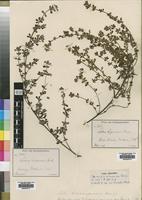
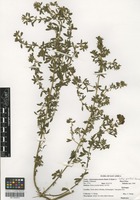
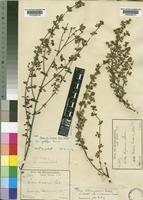
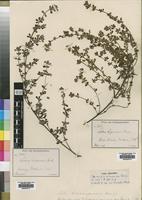
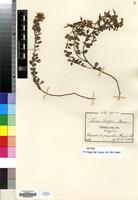
Lotus goetzei Harms [family LEGUMINOSAE]
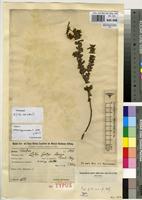
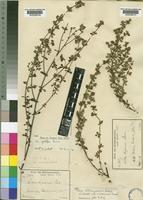
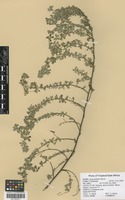
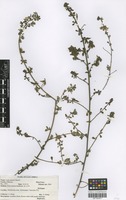
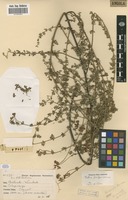
Isotype of Lotus goetzei Harms [family FABACEAE]
Filed as Lotus goetzei Harms [family FABACEAE]
Isotype of Lotus goetzei Harms [family LEGUMINOSAE-PAPILIONOIDEAE]
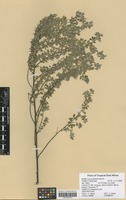
Lotus goetzei Harms [family LEGUMINOSAE-PAPILIONOIDEAE]
Filed as Lotus goetzei Harms [family FABACEAE]
Lotus goetzei Harms [family LEGUMINOSAE-PAPILIONOIDEAE]
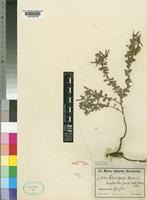
Type of Lotus kilimanjaricus Baker [family LEGUMINOSAE]
Type of Lotus goetzei Harms [family LEGUMINOSAE]
Previous
Next

Name

Identification
Lotus goetzei Harms [family LEGUMINOSAE ] (stored under name);
Related name
  • Lotus tigrensis
  • Lotus kilimnajaricus
  • Lotus discolor
  • Lotus goetzei
  • Lotus kilimanjaricus

Flora

Entry for Lotus goetzei Harms [family LEGUMINOSAE]
Herbarium
Royal Botanic Gardens, Kew (K)
Collection
Flora Zambesiaca
Resource Type
Reference Sources
Entry From
FZ, Vol 3, Part 7, (2003) Author: various authors
Names
Lotus goetzei Harms [family LEGUMINOSAE], in Bot. Jahrb. Syst. 30: 324 (1901). —E.G. Baker, Legum. Trop. Africa: 88 (1926). —Brenan, Check-list For. Trees Shrubs Tang. Terr.: 431 (1949). —J.B. Gillett in Kew Bull. 13: 369 (1959); in F.T.E.A., Leguminosae, Pap.: 1045, fig. 146/1–12 (1971). —Brummitt in Wye Coll. Malawi Proj. Rep.: 65 (1973). —Lock, Leg. Afr. Check-list: 345 (1989). —Agnew, Upland Kenya Wild Fl., ed. 2: 149, t. 52 (1994). Type from Tanzania.
Lotus discolor var. microcarpus Brand [family LEGUMINOSAE], in Bot. Jahrb. Syst. 25: 214 (1898). Type from Tanzania.
Lotus nyikensis Baker f. [family LEGUMINOSAE], Legum. Trop. Africa: 89 (1926). Type: Malawi, Nyika Plateau, Crawshay s.n. (BM, holotype).
Lotus oehleri Harms [family LEGUMINOSAE], in Notizbl. Bot. Gart. Berlin-Dahlem 10: 79 (1927). Type from Tanzania.
Lotus sp. nr. oehleri Harms [family LEGUMINOSAE], sensu Brenan in Mem. New York Bot. Gard. 8: 250 (1953).
Lotus discolor [family LEGUMINOSAE], sensu auct. non E. Mey. —Thulin in Fl. Ethiopia 3: 225 (1989).
Information
Subshrub up to 50 cm tall from a woody rootstock. Stems erect, ascending or prostrate and up to 1(2) m long and up to 3 mm in diameter, woody below, pilose with ± dense white spreading hairs up to 1 mm long, the epidermis dark purple when dry. Leaves very variable in size, only the leaf base and rhachis persisting on older branches; basal leaflets asymmetrical, up to 15 × 8 mm, rhombic with the basal angle usually 70–90º; lateral and apical leaflets up to 18 × 7 mm, the apical one a little longer than the lateral ones, cuneate-obovate; all leaflets with margins revolute, pilose on upper and lower surfaces with spreading hairs up to 1.5(3) mm long, or subglabrous but with some hairs on the midrib and margins, subcoriaceous, densely marked with purple dots on upper surface and purple dots or wavy lines beneath; rhachis 1.5–2.5(?6) mm long, usually less than half the length of the basal leaflets; stipular glands purple, minute. Umbels 2–5-flowered; peduncle 0.5–4 cm long, pubescent; foliage leaf on the peduncle usually 3-foliolate; pedicels 1–2 mm long, pubescent. Calyx reddish, with ± sparse, spreading hairs up to 1.5 mm long; hypanthium c. 1.5 mm long; calyx tube c. 2 mm above the insertion of the stamens; calyx lobes 2.5–3.5 × 1.2–1.5 mm, triangular-acuminate. Corolla white or cream, the standard streaked with red and, at least when dry, the tip of the keel reddish or purplish; standard 8.5–10 × 4–5.5 mm, slightly violin-shaped, wedge-shaped at the base, retuse; wings 8.5–9 mm long including the 3 mm long claw, the blade oblong, laterally pouched, auriculate, the auricles of both wings often adhering to each other; keel c. 10 mm long including claws 3–3.5 mm long, curved, pointed. Filament sheath c. 6 mm long, often papillose near the base; free parts of the shorter filaments c. 2 mm long, those of the longer filaments c. 3 mm long. Ovary c. 7 mm long, glabrous, c. 26-ovulate; style 4 mm long, slightly curved upwards. Pod brownish-red, up to 25 × 2.2 mm, terete. Seeds 16 or less, c. 1.1 mm long, ovoid.
Habitat
Montane grasslands
Altitude range
2200–2350 m in the Flora Zambesiaca area, from 1500–3700 m in East Africa.
2350
2200
Distribution
Malawi N Chipita Distr., 2 km from Mzengapakweru, 2225 m, fl. & fr. immat. 30.viii.1972, Synge WC337 (K; PRE; SRGH).
Distribution (external)
Ethiopia
Uganda
Kenya
Tanzania
Notes
L. goetzei belongs to a taxonomically very difficult complex endemic to the African mountains. The L. discolor complex includes L. goetzei, L. robsonii, L. wildii, L. discolor sensu stricto, L. mlanjeanus, L. namulensis, L. subdigitatus Boutique and L. becquetii Boutique. There are no constant distinctions between the species in floral and fruit morphology except sometimes for the indumentum of the calyx. Principal diagnostic features are leaflet shape, rhachis length, indumentum density and hair type. However, these features are also variable, and transitional forms occur, especially between the three basic species, L. goetzei, L. discolor and L. becquetii. It is uncertain whether these transitional forms are hybrids; they are at least fertile and easily produce fruits with mature seeds. In Ethiopia, transitional forms are so common that it was impossible to segregate separate species (Thulin, 1989, loc. cit.). Sometimes it is difficult to regard unusual forms simply as hybrids between two or three basic species, and a number of specimens from Ethiopia cannot be effectively identified. However, in other regions of Africa intermediate forms are less frequent and specific boundaries are more evident. It is reasonable therefore to adopt here a narrow specific concept in the L. discolor complex. D.D. Sokoloff also considers that the complex needs a revision based on the study of variability in natural populations throughout their range.

Related Materials

  • Terms and Conditions
  • Privacy Policy
  • Cookie Policy
  • Cookie Settings
  • Accessibility
  • Help
  • Contact Us
  • Facebook
  • Twitter
ITHAKA

JSTOR is part of ITHAKA, a not-for-profit organization helping the academic community use digital technologies to preserve the scholarly record and to advance research and teaching in sustainable ways.

©2000-2026 ITHAKA. All Rights Reserved. JSTOR®, the JSTOR logo, JPASS®, Aluka®, and ITHAKA® are registered trademarks of ITHAKA.

╳